Togo’s mounting crisis: over six in ten citizens warn of national decline
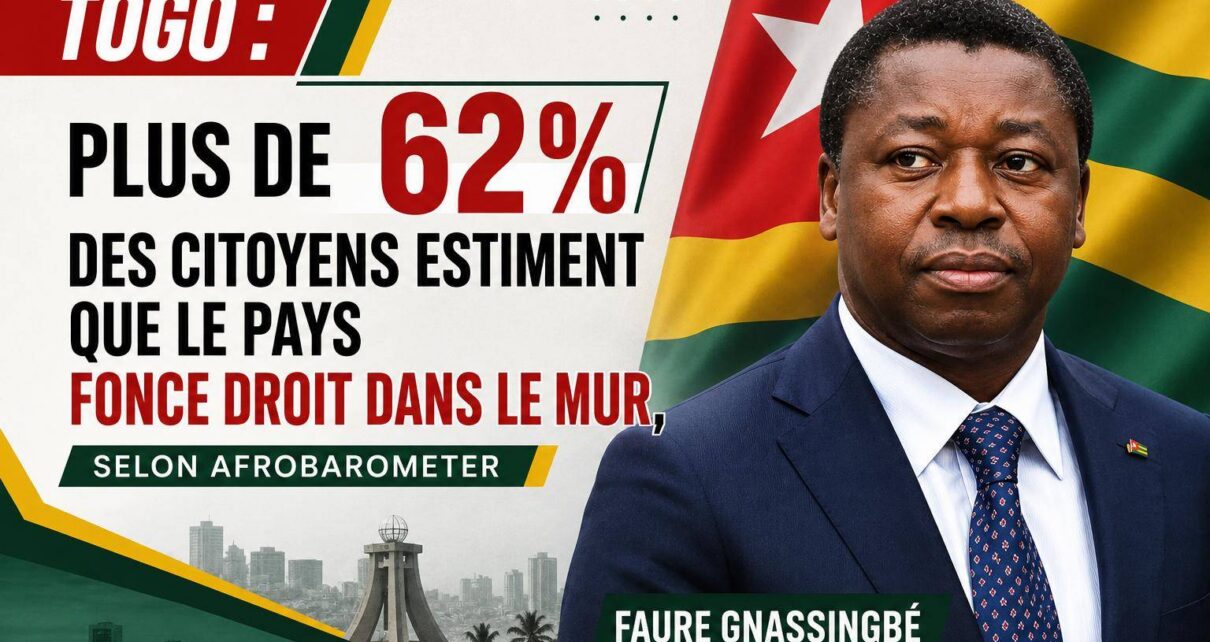
While official narratives often highlight a National Development Plan and robust economic growth in Togo, the everyday reality for many Togolese citizens presents a stark contrast. A recent Afrobarometer study reveals a significant disconnect, with 62% of Togolese expressing deep concern that their nation is spiraling towards disarray. This sentiment is fueled by a dramatic increase in poverty, critical water shortages, and inadequate access to healthcare, widening the chasm between the government and its people.
These statistics paint a clear picture: a staggering six out of ten Togolese perceive a worsening national situation, marking an 11-point rise since 2021. Such widespread apprehension isn’t without cause; it mirrors considerable disillusionment with current economic stewardship, which 63% of citizens deem either poor or very poor. This pervasive pessimism is deeply rooted in a dramatic decline in purchasing power and a pronounced scarcity of opportunities for a vibrant yet struggling youth yearning for a brighter future.
Lived poverty: a daily struggle for survival for Togolese households
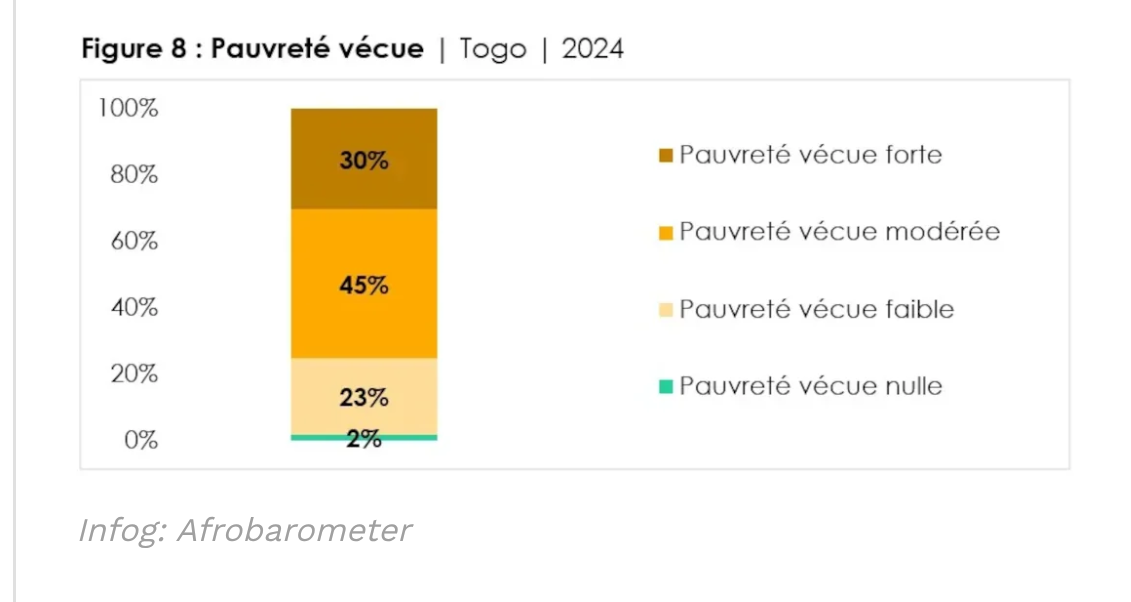
The Afrobarometer research extends beyond mere macroeconomic figures, delving into the authentic living conditions experienced by Togolese families. The findings are sobering: most respondents characterize their current circumstances as unfavorable, and over half acknowledge a significant deterioration in their financial standing over the past year. Presently, a staggering three-quarters of Togolese endure either moderate or extreme poverty, underscoring that the supposed advantages of economic growth are not translating into tangible improvements for the general populace.
The everyday existence for many in Togo is defined by ongoing hardships: insufficient stable income, restricted access to medical care, and critical shortages of potable water. It’s a relentless battle for basic survival, where each passing day often feels more challenging than the last.
Stark territorial and social inequalities in Togo
The burden of precarity in Togo is unevenly distributed across its regions. Some areas bear a disproportionate weight of this crisis, notably the Kara region, where an alarming 88% of the population struggles with poverty. This statistic directly challenges official claims of balanced development. Furthermore, women and residents of rural areas are disproportionately impacted by these systemic failures. Even education, once a reliable pathway to social mobility, now often falls short in securing a decent livelihood within a saturated and clientelist job market.

A failing political system: elite opulence amidst widespread popular distress
How has Togo reached this critical juncture? The stark disparity between the lavish lifestyles of a select few and the pervasive misery of the general populace is deeply unsettling. Prestige projects have consistently overshadowed crucial social investments, leaving millions of Togolese citizens feeling increasingly hopeless. The Afrobarometer “confidence thermometer” indicates a society teetering on the brink, as dwindling trust in public institutions and the denial of fundamental rights breed a profound sense of neglect and abandonment.
Togo can no longer rely solely on economic growth figures to obscure the escalating national decline and widespread hardship. When a majority of its citizens perceive their nation as heading down an unfavorable path, the very foundation of current governance is fundamentally challenged. The much-touted “Togolese miracle” proves to be nothing more than an illusion for those who continue to live in the shadow of this purported progress.
Without a profound and radical change that genuinely prioritizes the well-being of its people, Togo faces the risk of irreversible decline. Togolese citizens have unequivocally voiced their exhaustion and desperation. The crucial question remains whether the leadership in Lomé possesses the capacity to acknowledge this profound distress and implement the necessary corrective actions.