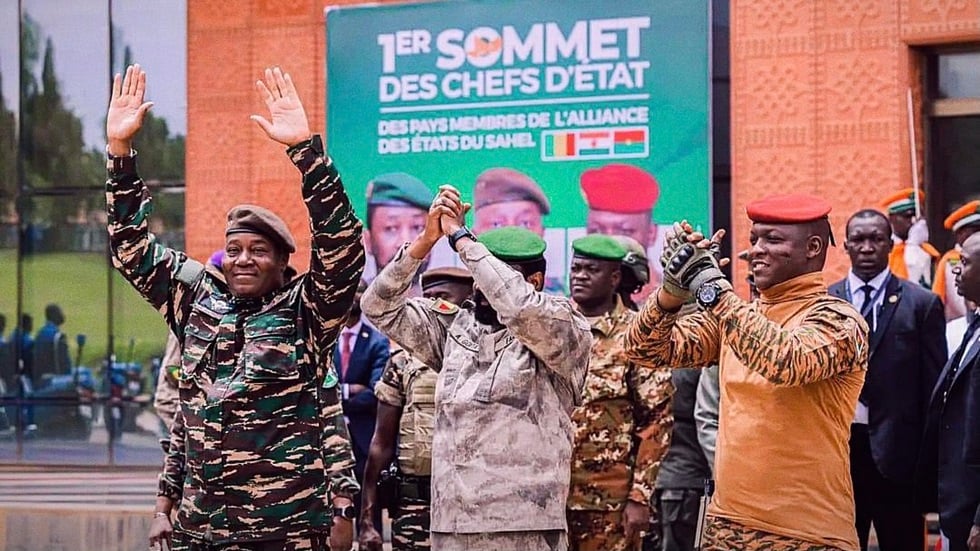
When Fragmentation Becomes a Threat to West African Stability
In the high-stakes arena of geopolitics, timing shapes destinies. The recent decision by the Alliance of Sahel States (AES)—comprising Mali, Burkina Faso, and Niger, all under military leadership—to sever ties with the Economic Community of West African States (ECOWAS) may appear as a bold assertion of sovereignty, but the reality unfolding suggests a high-risk gamble with diminishing returns.
At a critical juncture when the Sahel region faces relentless pressure from extremist groups like Boko Haram and ISWAP, unity should be the cornerstone of any effective strategy. Instead, the region is witnessing fragmentation, and in matters of security, division is not just counterproductive—it is perilous.
The AES bloc justified its withdrawal by accusing ECOWAS of being a tool of neo-colonial influence, particularly under French sway. While historical grievances hold weight, dismissing regional security structures without a viable alternative is not a move toward independence—it is an invitation to vulnerability. The harsh truth is that regional stability cannot be achieved in isolation.
Russia’s Tactical Support: A Double-Edged Sword
The AES’s pivot toward Russia as a security ally was framed as a strategic recalibration. However, the realities on the ground reveal a different story. Moscow’s approach to international partnerships is inherently transactional—support is extended only as long as it aligns with its geopolitical interests. History serves as a stark reminder: when the cost-benefit analysis shifts, so too does commitment. This is not conjecture; it is a documented pattern.
Recent coordinated insurgent attacks across key Mali cities—Bamako, Sévaré, Mopti, Tessalit, Gao, Kati, and Kidal—have laid bare the vulnerabilities of the AES strategy. The promised protection from external allies proved insufficient, and the muted response from fellow members Burkina Faso and Niger raises serious concerns about the coalition’s operational credibility.
ECOWAS’s Legacy: A Model of Collective Action
The ECOWAS Monitoring Group (ECOMOG), led by Nigeria, demonstrated the power of regional unity during crises in Liberia and Sierra Leone, where collective intervention helped stabilize collapsing governments. Though not flawless, ECOMOG’s actions underscored the strength of shared purpose in the face of adversity.
A similar test occurred in The Gambia, where then-President Yahya Jammeh refused to concede defeat in the 2016 election. Under ECOWAS’s mandate, Nigerian troops swiftly intervened, compelling Jammeh to step down and flee to Equatorial Guinea. These examples highlight a fundamental truth: in West Africa, geography does not negotiate. Borders, cultures, and the ripple effects of instability bind these nations together. When Mali faces turmoil, Niger feels the impact. When Burkina Faso struggles, Ghana bears the consequences. Security in this region is indivisible; no nation can afford to stand alone.
The Iranian Example: Self-Reliance Over Strategic Dependency
The Alliance of Sahel States often cites Iran as a model of resistance against foreign domination. However, the lesson from Tehran is not merely about defiance—it is about building indigenous capacity. A robust defense strategy requires domestic military strength, intelligence infrastructure, and technological innovation. External partnerships can play a supporting role, but they can never replace internal resilience.
Iran, despite its isolation, invested in self-sufficiency rather than relying on foreign mercenaries. Its ability to withstand intense aerial confrontations with Israel and the United States for weeks demonstrates the power of homegrown solutions. For the Sahel, this means developing localized intelligence networks, rapid-response units, and cross-border early warning systems in collaboration with neighbouring West African states. Terrorist groups like Boko Haram, ISWAP, and Lakurawa do not respect political boundaries; they exploit the gaps between them.
For the AES nations, the path forward demands both strategic and mindset shifts. First, prioritize investment in indigenous security frameworks: local intelligence, community-based defense systems, and regional rapid-response capabilities. Second, re-engage with ECOWAS—not from a position of weakness, but of strategic necessity. Collaboration does not undermine sovereignty; it fortifies survival.
For ECOWAS, there is an equal responsibility to address perceptions of external influence, improve governance, and reaffirm its role as an authentically African institution serving the continent’s interests.
Stronger Together: The Future of West African Security
This is not a call to revert to the past. It is a call for a smarter balance—one that harmonizes sovereignty with solidarity and independence with interdependence. The Sahel does not need isolation; it needs alignment—not just with distant powers, but with its immediate neighbours who share its risks, realities, and ultimately, its destiny.
The time has come for the Alliance of Sahel States to reconsider its decision. There is no disgrace in acknowledging a miscalculation; the true failure lies in persisting with a failing strategy while cities burn. ECOWAS, in turn, must be prepared to welcome the AES back without punitive measures. A united West Africa has survived civil wars and coups; divided, it will succumb to a common enemy that fears no flag—French, Russian, or otherwise.
The AES must retrace its steps, place its trust in homegrown solutions, and rebuild the collaborative structures that only neighbours can provide. There is no alternative path to security in the Sahel.