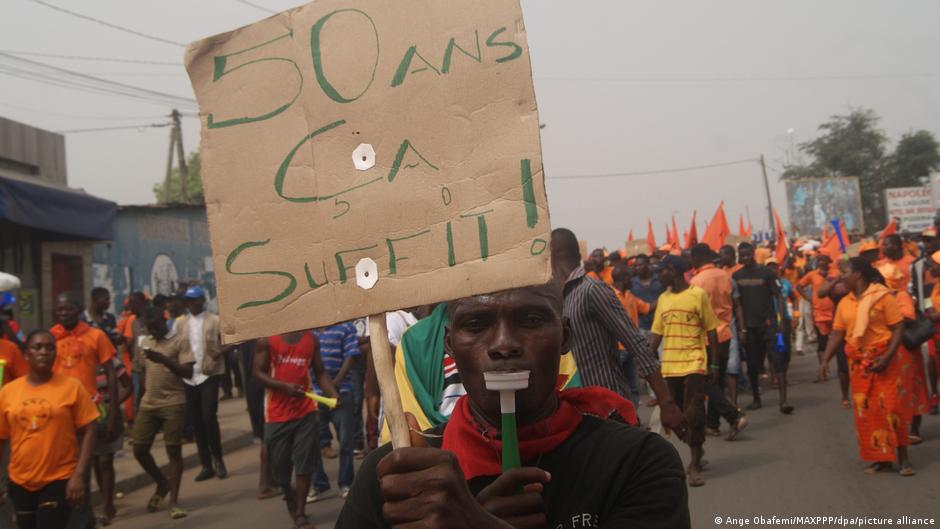
For the first time in several years, Togo’s opposition received official permission to hold a public gathering this past Saturday.

Following a prolonged period of severe restrictions and outright bans on public demonstrations, the Togolese opposition successfully organized a rally in Lomé this weekend. This event, officially sanctioned by the authorities, sparks crucial questions: does this signify a genuine political opening in Togo, or is it merely a fleeting moment of calm?
the CNCC coalition convenes
On Saturday, hundreds of individuals gathered for the inaugural public meeting of the newly formed National Framework for Dialogue for Change in Togo (CNCC). This influential coalition unites four distinct opposition political parties and various civil society organizations.
David Dosseh, a key organizer from the Citizen Front ‘Togo Debout,’ articulated the group’s objectives: “Our aim is a fundamental shift in governance. Togo is plagued by systemic corruption, its essential social services are crumbling, and frankly, the nation is stagnant; it’s failing to progress.”
He further emphasized, “For numerous years, spurious reasons have consistently been provided to systematically ban peaceful public gatherings. However, we will never yield.”
a provisional easing of restrictions
Does this authorization truly signal a profound political transformation? According to Paul Amégankpo, a political analyst and director of the Togolese Tamberma Institute for Governance, it remains premature to declare a definitive political opening.
The researcher noted, “The Togolese government’s decision to permit the opposition’s peaceful march on May 9, 2026, in Lomé, is commendable. Nevertheless, within the broader political landscape, this gesture of openness warrants careful consideration. It reflects a potential willingness by the Togolese government to ease limitations on peaceful assembly, association, and political activities across the nation.”
Despite this approved gathering, Paul Amégankpo maintains a cautious stance: “Further indications of political will toward genuine openness will be necessary to confirm a clear trend towards greater political and associative freedom within the country.”
Attempts to obtain an official government response regarding these developments proved unsuccessful.
The coming weeks will likely reveal whether this recent demonstration signifies the dawn of a new democratic era or merely a temporary interlude within an persistently tense political atmosphere.