unrest shakes Gabon’s grand lodge as power struggles intensify
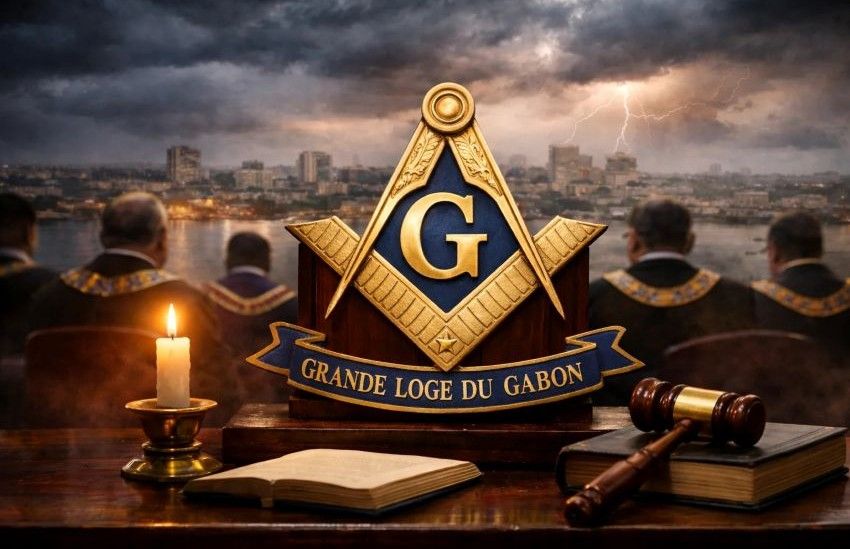
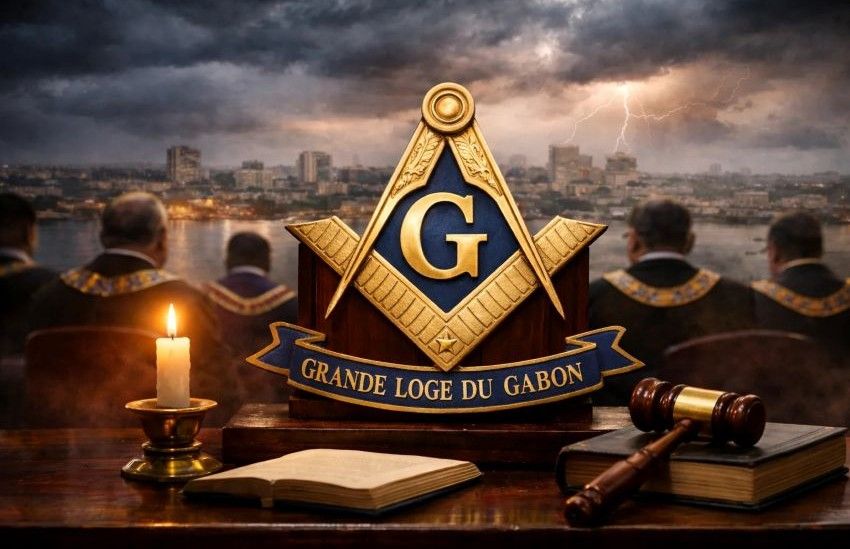
Libreville — June 19, 2026 For decades, Gabon’s Grand Lodge (GLG) operated as a model of quiet influence, maintaining its unity even amid political turbulence. Today, that carefully constructed facade is cracking under the weight of internal fractures that threaten its very foundations.
The obédience, long revered for its moral elevation and brotherhood, now finds itself at the epicenter of a storm where succession battles, financial irregularities, and clan rivalries have erupted into open confrontation. What began as whispered grievances has evolved into a full-blown crisis, exposing divisions that extend far beyond the walls of its temples.
The collapse of a long-standing order
The roots of today’s turmoil trace back to a critical shift in Gabon’s power dynamics. For years, the country’s highest political office and the Grand Mastership of the GLG were held by the same individual, creating an unassailable hierarchy. This arrangement, while stifling individual ambition, ensured stability within the institution.
Everything changed after the events of August 30, 2023. When the new head of state, Brice Clotaire Oligui Nguema, chose not to assume the Grand Mastership in February 2024, the stage was set for a power vacuum. Jacques-Denis Tsanga’s subsequent appointment marked the end of an era—and the beginning of one defined by uncertainty.
Analysts remain divided on whether this decision signaled a deliberate move toward depoliticizing the GLG or simply unleashed long-suppressed rivalries. What is clear is that the absence of a unifying authority has emboldened factions that were once kept in check.
A succession crisis laid bare
Three years into his tenure, Jacques-Denis Tsanga faces mounting criticism. Supporters credit him with modernizing provincial structures, overhauling asset management, and expanding the obédience’s international reach. Detractors, however, accuse him of centralizing power, operating opaquely, and mishandling sensitive matters.
The numbers tell a stark story. Once boasting six hundred members, the GLG now struggles to maintain regular participation, with barely two hundred active members. A wave of expulsions, suspensions, and voluntary departures has eroded trust and deepened divisions. The upcoming general assembly has taken on unprecedented significance, with multiple candidates—from veteran leaders to rising figures—vying for the top position. This election is no longer just about a symbolic role; it will determine the future direction of the institution.
Searching for a new gravitational pull
Beyond its immediate struggles, the GLG’s crisis reflects broader shifts in Gabon’s power landscape. Decades of close ties with the state once shielded the obédience from internal strife, as political patronage helped suppress dissent. Now, freed from that dependency, the GLG must confront the consequences of its newfound autonomy—a autonomy that has, ironically, revealed fractures that were once papered over.
The stakes are high. Can the institution forge a new consensus in an environment where authority is no longer absolute? The answer will hinge on whether Gabon’s oldest and most influential obédience can transition from a culture of secrecy to one of transparent governance—or risk fragmentation that could prove irreversible.
For an organization that long equated discretion with strength, the current spectacle is jarring. It serves as a reminder that even the most entrenched institutions must grapple with the same fundamental question: How do you preserve unity when the authority that once held it together is no longer unchallenged?