Who is Kémi Séba, the controversial pan-African influencer linked to Russian narratives?
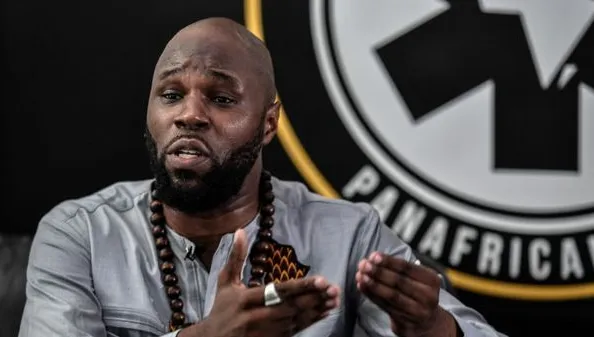
In the digital sphere of Francophone Africa, few personalities spark as much debate as Kémi Séba. This Beninese activist, with a massive online following, has become a polarizing figure due to his anti-Western rhetoric and controversial ties to Moscow. His recent loss of French citizenship has only intensified scrutiny over his role as a potential amplifier of Russian influence campaigns across the continent.
From controversial past to digital influence
Born in 1981 in Benin, Kémi Séba—whose real name is Stellio Gilles Robert Capo Chichi—emerged as a vocal panafricanist voice in the 2000s. His early notoriety stemmed from his leadership of the Ka Tribe, a now-dissolved group accused of promoting racial supremacy and antisemitic ideologies. Despite a 2006 conviction for inciting racial hatred, he reinvented himself as a revolutionary figure, leveraging social media to amplify his message.
Today, his digital footprint is undeniable: over a million followers on Facebook and viral YouTube content attracting hundreds of thousands of views. His recent tweet upon losing French citizenship—”No more French nationality, glory to God. I am freed from this burden“—underscored his defiant stance against Western institutions.
Russia’s alleged ally in Africa’s information wars
The Kremlin’s interest in Kémi Séba aligns with its broader strategy to expand influence in Africa through proxy actors. According to reports, including Jeune Afrique’s 2023 investigation, Yevgeny Prigozhin—the late founder of the Wagner Group—allegedly funded Séba’s activities as part of a coordinated effort to undermine French interests on the continent.
Séba’s activism dovetails with Moscow’s playbook: he vehemently opposes the Françafrique legacy and the CFA franc, framing them as colonial relics. His support for juntas in Niger, Mali, and Burkina Faso—regimes that have pivoted toward Russia—has earned him accusations of serving as a mouthpiece for anti-French sentiment.
Global outreach and diplomatic controversies
Séba’s influence extends beyond Africa. His Urgence Panafricaine NGO organizes international conferences, from Brazil to Russia, including a high-profile appearance at the Russia-Africa Summit in Saint Petersburg. French lawmakers have directly accused him of being a “conduit for Russian propaganda” and a tool for a foreign power fueling Francophobia.
Despite his denials of direct Russian control, Séba’s actions consistently align with Kremlin objectives: amplifying anti-Western narratives, justifying coups in Francophone states, and positioning Moscow as Africa’s new partner. His rhetoric resonates with audiences disillusioned by decades of French policy on the continent.
Why his story matters for Africa’s digital landscape
The rise of influencers like Kémi Séba reflects deeper shifts in Africa’s information ecosystem. Social media has democratized activism, but it has also created platforms for foreign actors to exploit local grievances. Séba’s case highlights the challenges of regulating digital discourse while countering external interference.
For observers of Africa’s geopolitical dynamics, his trajectory underscores how ideology, social media virality, and state-backed influence operations can converge—sometimes with far-reaching consequences.