Burkina Faso is set to shake up its sports infrastructure with the construction of a new 15,000-seat stadium in Koudougou. Announced under the presidential initiative for elite athlete development, the project promises to boost local sporting capabilities—but a critical question lingers: who is really funding it?
While official announcements highlight the initiative’s ambitious goals, key financial details remain conspicuously absent. Who bears the cost of this major undertaking? Is the funding entirely domestic, or does it involve international partners? The answers could reshape public understanding of the project’s viability and transparency.
What do we know about the stadium project in Koudougou?
Positioned as a cornerstone of Burkina Faso’s sports infrastructure expansion, the stadium is designed to accommodate 15,000 spectators and serve as a training hub for young athletes. The project is framed as part of a broader push to modernize sporting facilities nationwide. However, the lack of publicly available financial data has left stakeholders and citizens with more questions than answers.
While authorities have confirmed the project’s inclusion in the IP-RELIS program—a presidential initiative aimed at nurturing elite athletes—the specifics of funding remain shrouded in ambiguity. What is the estimated total cost? Which entities are contributing, and in what proportions? These are not minor details; they are central to assessing the project’s long-term sustainability and alignment with national priorities.
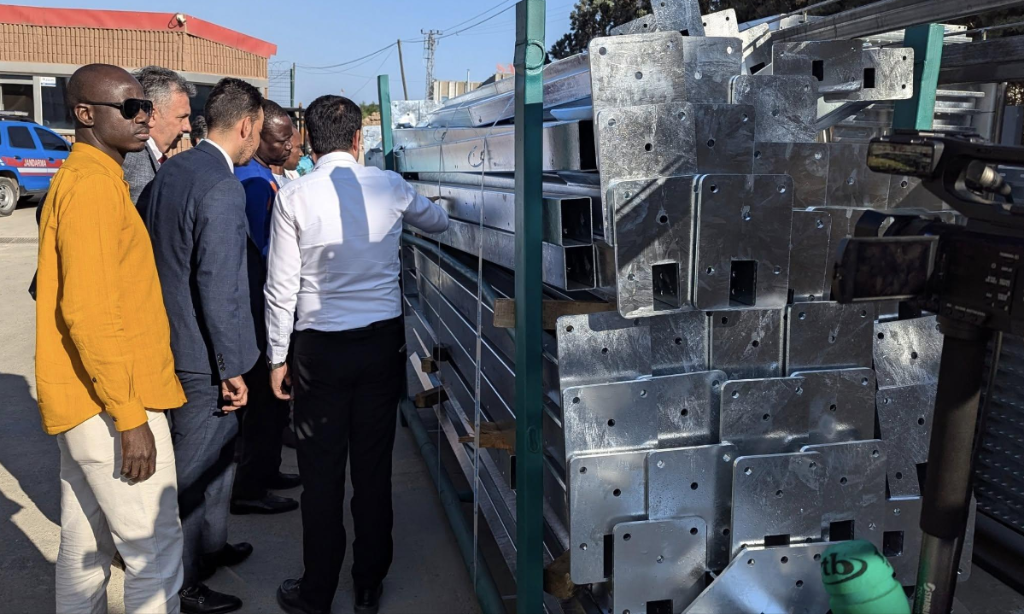
Adding to the uncertainty is the involvement of a foreign firm in the construction process. Integral Sport, a Turkish company, has been named as the lead contractor, collaborating with Faso Mêbo, Burkina Faso’s national sports agency. This raises further questions about the project’s financing structure: is the company simply fulfilling a construction contract, or is it playing a deeper financial role?
Integral Sport’s role: contractor, investor, or both?
The presence of a Turkish firm in a high-profile public works project naturally draws attention. Integral Sport is not only leading the Koudougou stadium construction but is also involved in a similar project in Bobo-Dioulasso. Does this mean the company is solely responsible for the financial outlay? Or does it represent a broader financing arrangement that includes other stakeholders?
In public procurement, a foreign company executing a project does not necessarily imply that it is also funding the entire endeavor. The contract could be financed through Burkina Faso’s national budget, a loan from an international financial institution, or a mix of public and private funding. Without access to the signed contract or an official financial breakdown, speculation about the source of funds remains unfounded.
Similarly, Faso Mêbo’s role needs clarification. As the agency tasked with overseeing sports infrastructure, its operational contribution—whether human, technical, or financial—must be clearly defined. Is Faso Mêbo merely facilitating administrative processes, or is it contributing capital toward the project? Public documents should clarify its exact involvement.
State funding: is the government fully footing the bill?
The stadium falls under the presidential initiative for elite athlete development, suggesting a high level of state involvement. Yet, this does not automatically confirm that the entire cost will be covered by domestic public funds. To validate this assumption, one would need to review budget allocations, official financial commitments, or construction agreements that explicitly state the funding sources.
Public finances are a matter of national interest, particularly in a country where transparency in large infrastructure projects is crucial for maintaining public trust. The absence of clear financial disclosures does not inherently indicate mismanagement—it does, however, create a void where public scrutiny should be applied. Citizens deserve clarity on how their resources are being deployed, especially when national prestige is at stake.
The urgent need for financial transparency
Transparency in infrastructure financing is not a luxury; it is a necessity. For a project as significant as the Koudougou stadium, the public deserves to know:
- The total estimated cost of construction
- The breakdown of funding sources—whether entirely public, partially foreign, or a mixed model
- The tender process details and contract award criteria
- The expected timelines for construction and fund disbursement
- The roles and responsibilities of all parties involved
If international partners are involved, their identities and the nature of their contributions must be disclosed. If the financing is entirely domestic, the budget lines and mechanisms for fund release should be made available. Such transparency ensures accountability and allows citizens to evaluate whether the project aligns with broader national development goals.
What’s next for the Koudougou stadium funding?
As the construction timeline approaches, pressure is mounting on authorities to provide answers. The Ministry of Sports, the IP-RELIS leadership, Faso Mêbo, and Integral Sport must address the funding question openly and comprehensively. Only then can the public assess the true cost of progress—and whether it is being pursued responsibly.
While the stadium promises to enhance Burkina Faso’s sports landscape, its success will ultimately hinge on the clarity and integrity of its financing. Without definitive information, speculation will persist, and the project’s long-term impact may be undermined by uncertainty rather than ambition.
Until officials provide the necessary disclosures, one question remains unanswered: who is truly bankrolling the future of sports in Koudougou?