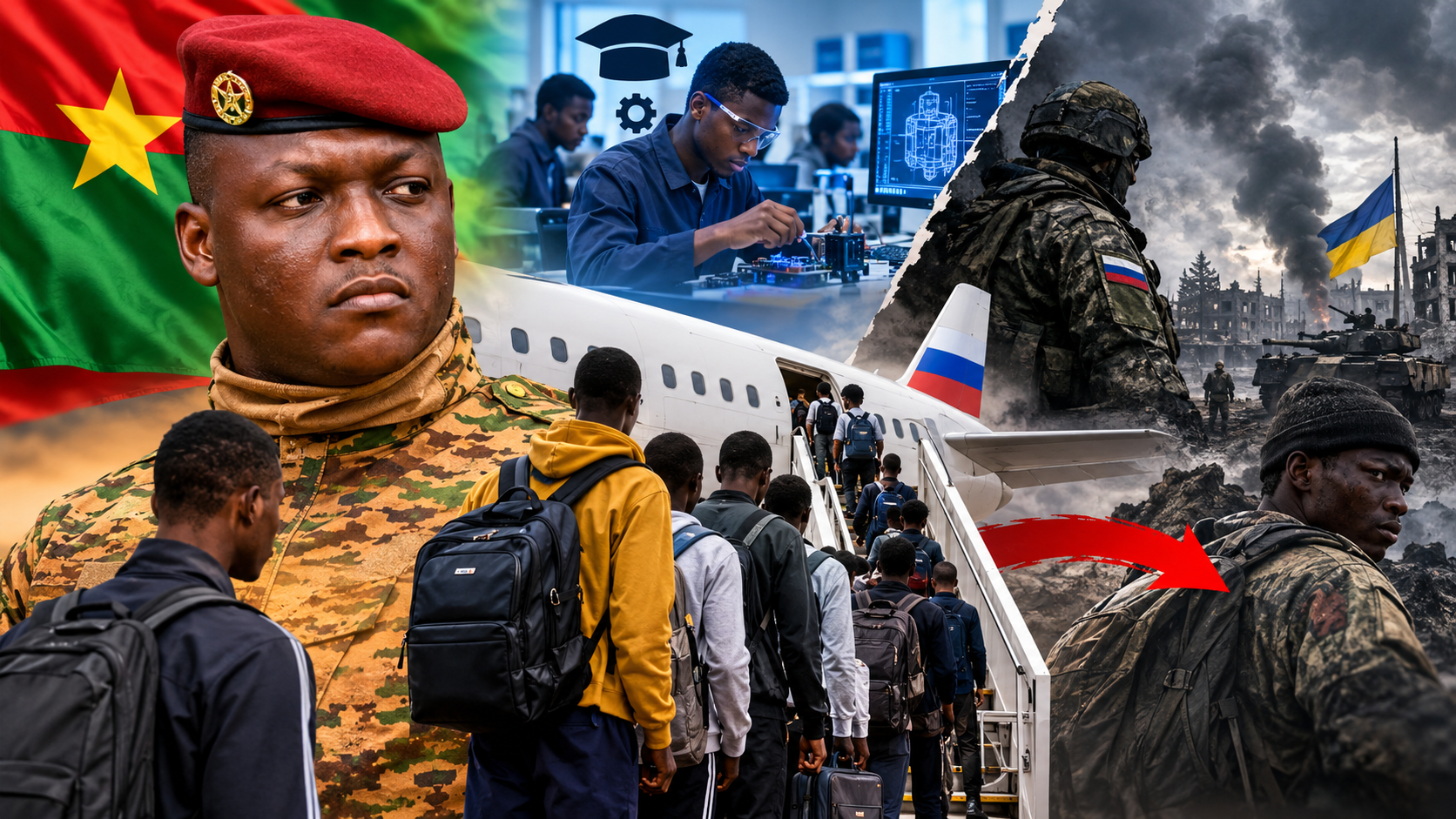
Burkina Faso now faces a defining choice: Is the government’s proposal to send young citizens to Russia for advanced technological training a genuine investment in the nation’s future or a risky gamble with their lives?
The initiative, spearheaded by Captain Ibrahim Traoré, promises cutting-edge education and technical expertise. But beneath the surface of diplomatic cooperation lies a troubling question: Could the beneficiaries of this program find themselves caught in the brutal reality of a war they never chose to join? With Moscow deeply entangled in its conflict in Ukraine, the stakes for Burkina Faso’s youth could not be higher.
From national promise to distant gamble: a shift in policy
Not long ago, Ibrahim Traoré spoke passionately about the urgent need to build Burkina Faso’s technological and educational sovereignty. His vision centered on training young Burkinabè within their own borders, investing in universities, research centers, and technical schools to cultivate homegrown talent. Yet today, his government is preparing to send hundreds of students across continents, to a country where advanced studies come with unintended consequences.
This abrupt pivot raises serious concerns. Why abandon a plan for domestic empowerment in favor of foreign schooling, especially under such geopolitically volatile conditions? Families are left wondering: Is this truly about education or are these young people being sent into a system where their skills could be repurposed for purposes far removed from development?
Silent risks: what happens once they arrive in Russia?
Russia today operates one of the world’s most extensive systems for enlisting foreign labor including students into military and industrial roles. Over the past two years, numerous accounts from African nationals have described deceptive recruitment tactics: promises of stable careers or scholarships that ultimately led to deployment on the front lines in Ukraine.
For Burkinabè families, these warnings are not theoretical. They reflect real experiences documented across Africa cases where young people signed up for civilian training only to discover their education had been weaponized. With no official transparency from Ouagadougou about the terms of this program, trust erodes quickly.
Will students have legal protections? Are their study visas distinct from military service obligations? Will they be permitted to return home upon completion of their programs? Without clear answers, the initiative risks becoming less a pathway to progress and more a blindfolded leap into the unknown.
Accountability first: what the government must explain
The Burkinabè government owes its people more than vague assurances. Concrete commitments are due starting with the scale of participation. How many will go? Which Russian institutions have been selected? What certifications or degrees will they earn? And most importantly, what binding agreements exist to prevent any form of military enrollment, coercive or otherwise?
Moreover, Ibrahim Traoré’s earlier pledge to prioritize domestic education must not be forgotten. If Burkina Faso possesses the resources and political will to train young engineers, scientists, and technicians at home, why redirect that energy abroad? The contradiction is stark between building national capacity and exporting talent to a conflict zone where their skills could be diverted.
Behind the promise of progress: the human cost
The stakes are not just geopolitical; they are deeply human. Behind every application form is a family hoping for a better future. Behind every boarding pass to Moscow could lie a nightmare no parent anticipated. Burkina Faso does not need to gamble with its youth not when their safety, their dreams, and their futures hang in the balance.
The government has a responsibility to ensure that no child of Burkina Faso becomes collateral damage in a war they did not start. The time for clarity is now. Transparency about this program must match the urgency of its stated goals. For in the end, the true test of leadership is not in sending young people into the world but in bringing them home safely, prepared, and unharmed.
By IBRAHIM OUMAROU — Journalist