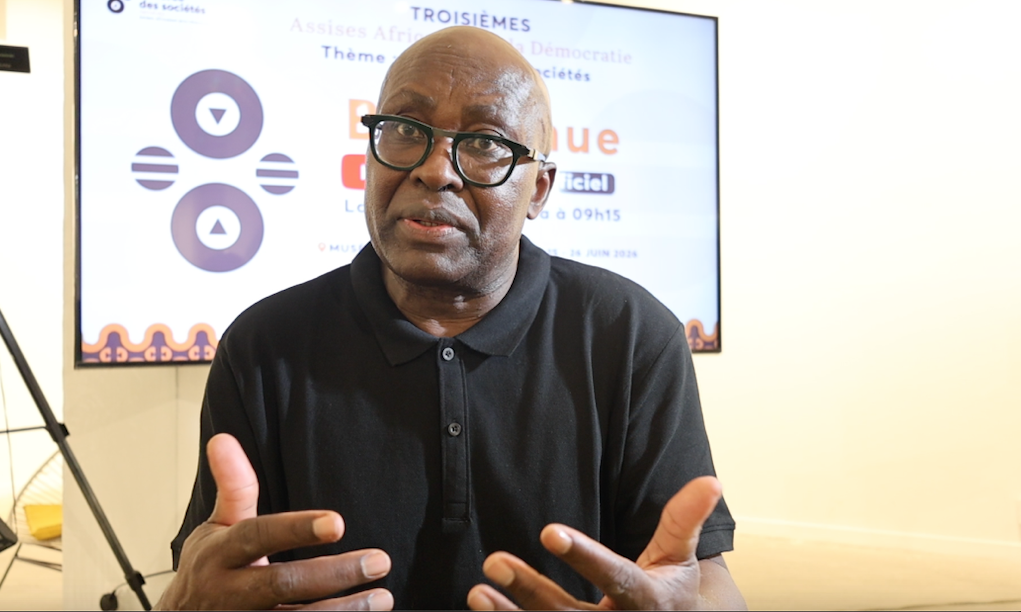
In a thought-provoking exchange during the third edition of the African Democracy Forum, hosted at the Théodore Monod Museum in Dakar, Cameroonian philosopher and historian Achille Mbembe dismantled prevailing assumptions about governance and justice on the continent. Speaking at the event themed « The Strength of Societies », he argued that democracy in Africa has never been genuinely implemented, and instead operates as a superficial system masking entrenched power structures.
Democracy in Africa: a myth or a missed opportunity?
Mbembe, president of the Innovation Foundation for Democracy, challenged the very notion that Africa is experiencing a crisis of democracy. He contends that such a crisis can only exist where democracy functions. Instead, he describes the political landscape as dominated by what he terms administrative multiparty systems—a facade of elections and political participation that rarely challenges the status quo.
« You cannot speak of a crisis of democracy where it has never existed,» he asserted. « What is being debated is not a crisis of democracy, but the absence of it. The multiparty systems we see are often administrative constructs, designed to legitimize power rather than empower citizens.»
His critique extends to the concept of tropical democracy, a term he dismisses as a colonial construct. « Tropicalizing democracy is meaningless,» he stated. « It reflects a colonial geography that frames African societies as incapable of developing their own political models. Instead, we must focus on endogenizing democracy—a system rooted in African cultures, values, and institutions.»
The franc CFA and the quest for monetary sovereignty
On the issue of monetary sovereignty, Mbembe rejected the idea of merely replacing the franc CFA without addressing deeper structural dependencies. « Africa does not need another foreign currency, but a truly African monetary system,» he emphasized. He highlighted the contrast between West and Central Africa, noting that while West African civil societies are more dynamic and engaged, Central Africa remains trapped in what he describes as political darkness—a region dominated by regimes resistant to change and popular emancipation.
Reparations and the weight of history
Speaking at a recent Accra conference on restorative justice, Mbembe addressed the issue of reparations for the transatlantic and trans-Saharan slave trades. While acknowledging that some losses are irreparable, he argued that this reality strengthens, rather than weakens, the moral and political case for reparations. « There are things that cannot be measured in monetary terms—entire lives, cultures, and futures erased. This loss is absolute. Therefore, the demand for reparations is not just justified; it is necessary,» he stated.
However, Mbembe cautioned against a one-sided narrative. « We must also confront Africa’s complicity in these crimes,» he said. « During the centuries of the slave trade, African elites were not mere victims; they were active participants. Justice must be both vertical—between former colonizers and the continent—and horizontal—within African societies themselves—if we are to achieve true reconciliation.»
A call for radical introspection
The philosopher’s remarks resonate as a call for Africa to reclaim its political imagination. His analysis points not only to the failures of inherited systems but also to the urgent need for endogenous solutions—monetary, political, and moral—that reflect Africa’s diverse realities. As debates on democracy, reparations, and sovereignty intensify, Mbembe’s voice stands as a reminder: the path forward cannot be borrowed from elsewhere. It must be forged from within.