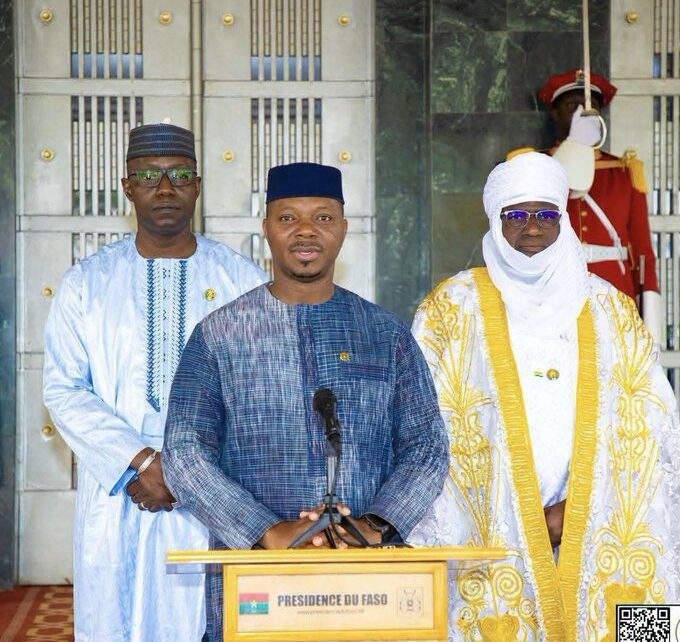
The Confederation of Sahel States (AES) advances in structuring its governance bodies. In Ouagadougou, parliamentary leaders from Burkina Faso, Mali, and Niger gathered under the guidance of AES President Captain Ibrahim Traoré to receive directives ahead of the official launch of the confederation’s Parliament.
Following the meeting, officials confirmed that deputy appointments are imminent, paving the way for the new assembly’s inaugural session. The Parliament’s core responsibilities will include representing the populations of the three member states, supporting the AES’s institutional operations, and reinforcing the political vision championed by their governments.
This development marks another milestone in the AES’s institutional consolidation, particularly after its withdrawal from the Economic Community of West African States (ECOWAS). Yet the timing of the gathering has sparked debate, as it occurs amid a sharp escalation in jihadist violence across the Sahel. Recent weeks have seen unprecedented attacks in Burkina Faso, Mali, and Niger, inflicting heavy casualties on both military forces and civilians.
Critics argue that while long-term institutional frameworks are necessary, the prioritization of parliamentary formation over immediate security responses risks misalignment with public expectations. The absence of high-level discussions specifically addressing the worsening crisis has intensified skepticism about the AES leadership’s priorities. For many citizens, the most pressing demand remains tangible solutions to the relentless wave of violence.
Analysts also warn that this institutional momentum could deepen political divisions in West Africa. By advancing its own governance structures, the AES signals a growing detachment from ECOWAS, potentially complicating broader regional cooperation on security and political matters.