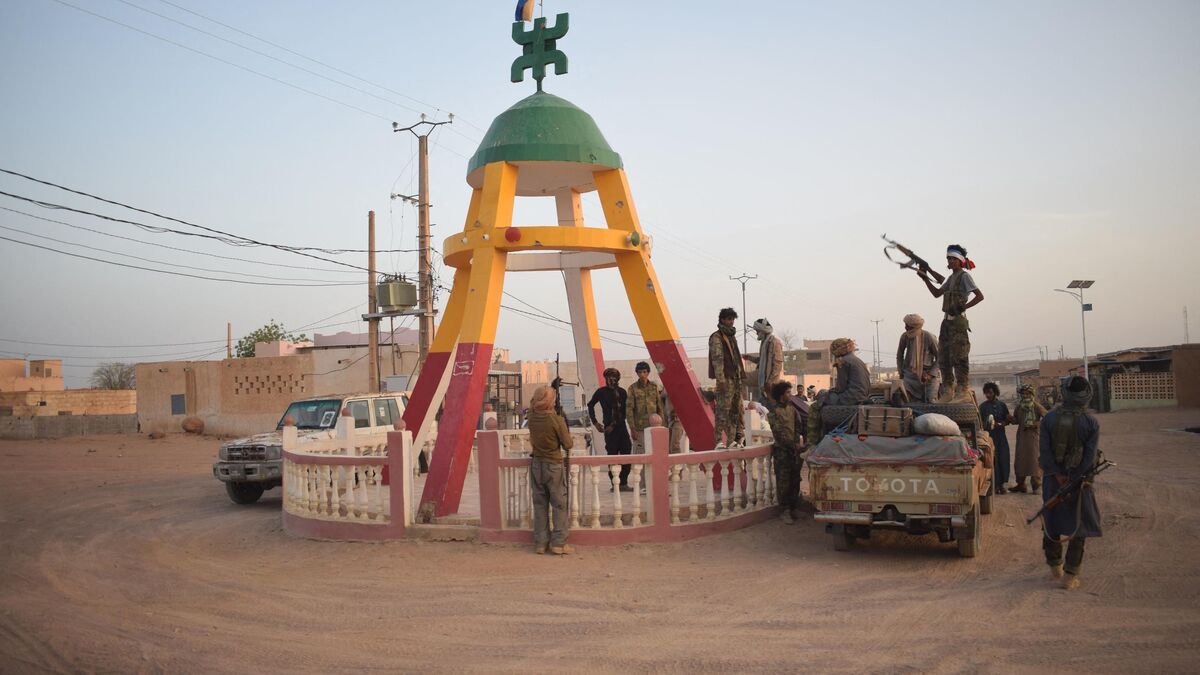
This past weekend marked a turning point in Mali’s escalating conflict, as rebel forces reclaimed Kidal, a strategic stronghold long held by a shadowy Russian paramilitary group. The withdrawal of Africa Corps from the region signals a shift in Moscow’s military strategy across the Sahel, even as the group maintains its influence beyond Mali’s borders.
Once considered one of Russia’s most clandestine foreign military branches, Africa Corps has rapidly expanded its footprint in West Africa since its establishment in late 2023. The group’s origins trace back to a November 2023 announcement by military blogger Deux Majors, who cited statements from Kremlin-aligned analyst Igor Korotchenko and confirmed the organization’s oversight by Russian Deputy Defense Minister Younous-bek Evkourov.
From Wagner’s shadow to Africa Corps’ rise
The emergence of Africa Corps coincides with the decline of the infamous Wagner Group, whose founders Evgueni Prigojine and Dmitri Outkine perished in a suspicious plane crash in August 2023. Their deaths followed a brief but dramatic rebellion against Moscow, leaving a power vacuum that Africa Corps has since moved to fill. Unlike Wagner, which operated with relative autonomy, Africa Corps operates under tighter Kremlin control, prioritizing strategic partnerships with allied African governments.
The group’s name draws a controversial parallel—echoing the Afrikakorps, Nazi Germany’s military unit in North Africa during World War II. Analysts suggest this naming convention reflects Moscow’s intent to project historical influence while distancing itself from Wagner’s controversial legacy of human rights abuses and resource exploitation.
Military ambitions and regional influence
Africa Corps has outlined ambitious objectives, positioning itself as a bulwark against Western neocolonialism in Africa. Igor Korotchenko has stated the group’s mission includes conducting large-scale military operations to help African nations achieve full sovereignty, eliminate Western presence, and secure critical resources. Since its inception, Africa Corps has deployed hundreds—possibly thousands—of fighters to Mali, where it has supported the junta in Bamako against Touareg rebels.
The group’s expansion extends beyond Mali, with reported operations in the Central African Republic, Burkina Faso, Libya, Niger, and Sudan. While Africa Corps avoids the overt brutality often associated with Wagner, international observers have accused the group of human rights violations and economic exploitation, leading to sanctions from Western governments.
Mali: a strategic battleground
Mali remains Africa Corps’ central theater of operation. The group’s presence has allowed Moscow to extend its influence in the Sahel, particularly as Western powers like France withdraw from the region. Control over Mali offers Russia leverage over migration routes and access to valuable mineral resources. However, the recent loss of Kidal underscores the challenges Africa Corps faces in maintaining its grip on power amid shifting alliances and persistent insurgencies.
As Africa Corps consolidates its role as Russia’s primary military proxy in Africa, its actions continue to reshape the geopolitical landscape of the Sahel. The group’s ability to adapt to local conflicts while advancing Moscow’s strategic interests will determine its long-term impact on the region’s stability.