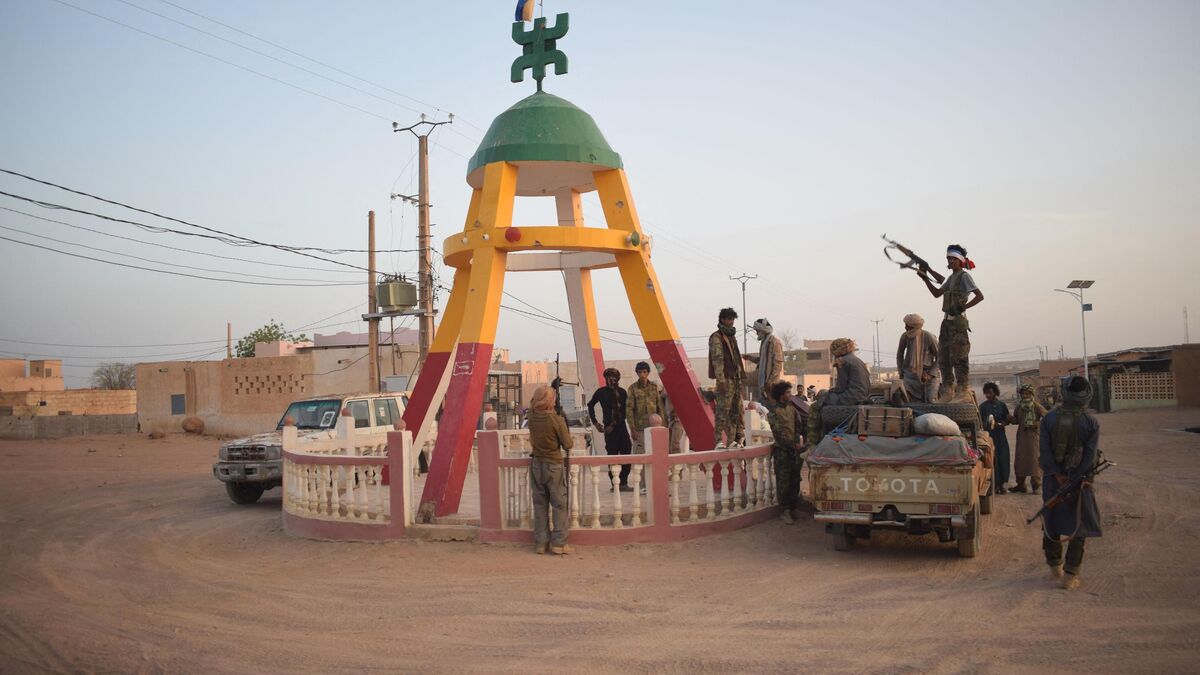
Deadly clashes rocked Mali over the weekend as jihadist forces, allied with Tuareg rebels, launched coordinated assaults on strategic positions held by the ruling junta. The attacks targeted areas near Bamako, including a strike that claimed the life of Defense Minister Sadio Camara.
In a significant turn of events in the country’s eastern region, rebel factions reclaimed control of Kidal, a critical stronghold previously dominated by the Russian-backed Africa Corps militia. After intense fighting and extended negotiations, the paramilitary group withdrew from the city, marking a notable shift in the conflict’s dynamics. Despite this setback, Africa Corps maintains a strong foothold across the Sahel, serving as Moscow’s key military proxy in the region.
From Wagner to Africa Corps: a strategic transition
Africa Corps, one of Russia’s most shadowy international military outfits, officially emerged in late 2023. Its creation was first hinted at by military blogger Deux Majors on Telegram, who cited statements from Igor Korotchenko, a former colonel and Kremlin-aligned journalist. The organization reportedly falls under the command of Russian Deputy Defense Minister Iounous-bek Evkourov, signaling a more centralized and state-controlled structure compared to its predecessor, Wagner Group.
Wagner’s decline followed the mysterious deaths of its founders, oligarch Evgueni Prigojine and ex-intelligence officer Dmitri Outkine, in a plane crash in August 2023. Prigojine, once a close ally of President Vladimir Poutine, had briefly challenged Moscow’s authority in a failed mutiny earlier that year. Africa Corps now steps into Wagner’s void, inheriting its African operations and personnel.
A new name with a dark historical echo
The choice of name for Africa Corps carries deliberate historical weight. Inspired by the Afrikakorps, Nazi Germany’s North African military unit during World War II, the rebranding reflects Moscow’s strategy of blending military might with ideological messaging. While Wagner was infamous for its brutal tactics and war crimes, Africa Corps presents itself as a more disciplined and state-sanctioned force—though its methods remain largely opaque.
Mission and regional ambitions
From its inception, Africa Corps has outlined a clear agenda: to conduct large-scale military operations across Africa, helping allied governments break free from perceived neocolonial influences, expel Western presence, and assert full sovereignty. Igor Korotchenko, a key figure in its formation, emphasized this mission in public statements, framing it as a crusade against foreign domination.
The group’s approach prioritizes partnerships with sympathetic governments, offering military training, equipment, and manpower. Its footprint has expanded from Mali to Burkina Faso, Libya, Sudan, the Central African Republic, and Niger, where it competes for influence with Western and regional powers.
Mali: a battleground for influence
Since 2024, Africa Corps has been the dominant foreign paramilitary force in Mali, deploying hundreds—or possibly thousands—of fighters. Many former Wagner commanders and their troops have defected to Africa Corps, strengthening its ranks. The group’s primary role has been to prop up the Bamako junta against Tuareg rebels and Islamist insurgents, securing Moscow’s strategic interests in the process.
This involvement aligns with Russia’s broader goals: weakening Western influence in the Sahel, controlling migration routes, and securing access to valuable mineral resources. The withdrawal from Kidal represents a tactical retreat rather than a strategic defeat, as Africa Corps continues to operate through other channels across the region.
Controversy and international scrutiny
Despite its more restrained public image, Africa Corps has not escaped global condemnation. In 2024, the United Kingdom imposed sanctions on the group, accusing it of widespread human rights abuses and the exploitation of natural resources for profit. These allegations mirror those long leveled against Wagner, suggesting that Africa Corps may merely be rebranding without fundamentally changing its conduct.