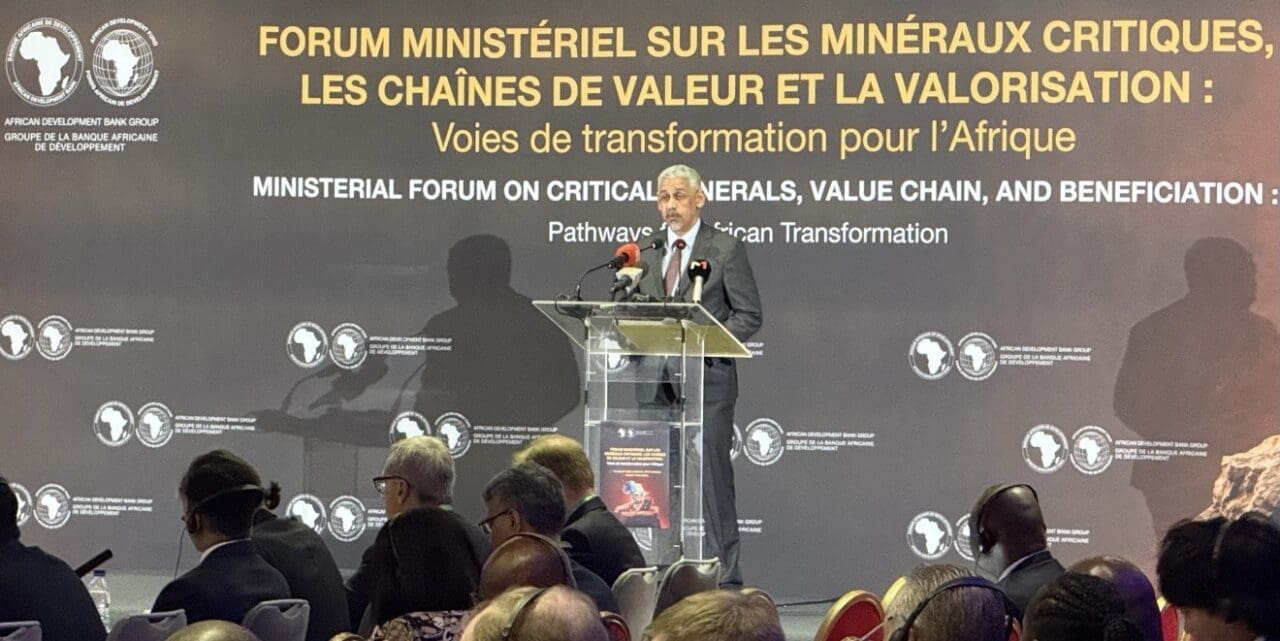
Ministers and development partners from across Africa gathered in Abidjan to chart a bold new course for the continent’s critical minerals, aiming to turn a $29.5 trillion resource treasure trove into engines of economic, industrial and social progress.
The two-day ministerial conference in Côte d’Ivoire brought together leaders from 28 African nations, alongside regional bodies, financial institutions and global investors. Their shared mission: redefine Africa’s role in the global mineral economy and ensure its vast deposits fuel sustainable growth for all.
Abidjan hosts historic mineral pact to reshape Africa’s economic future
Participants included ministers of Mines, Energy, Industry and Green Economy, along with representatives from the African Union Commission, the African Continental Free Trade Area (AfCFTA) secretariat, UNECA, regional development banks and international investors.
At the core of discussions were strategies to maximize the continent’s mineral wealth through local processing, regional value chains and innovative financing models. The goal is clear: shift from raw material exports to high-value industrialization that creates jobs and lifts communities.
Paradigm shift needed to unlock mineral wealth
Sidi Ould Tah, President of the African Development Bank (AfDB), opened the conference with a call for systemic change in how Africa manages its natural resources.
“This gathering isn’t just about minerals – it’s about rewriting Africa’s economic future,” he declared. “We must transition from selling raw materials to building integrated industrial ecosystems that generate prosperity at home.”
The AfDB chief highlighted two critical priorities: local mineral processing to capture more value and strengthening African development finance. Despite hosting over 100 financing institutions, Africa’s combined balance sheet represents just 1% of global development finance. “We need to recapitalize these institutions and align them with our industrialization goals,” he emphasized.
Infrastructure development and resilient industrial parks were identified as key enablers for transforming mineral wealth into economic dividends.
Côte d’Ivoire’s mineral strategy aligns with national ambitions
Mamadou Sangafowa-Coulibaly, Côte d’Ivoire’s Minister of Mines, Petroleum and Energy, underscored the need for continental solidarity in harnessing mineral wealth.
“No single nation can achieve this transformation alone. We must forge regional value chains that connect mineral-rich countries to processing hubs and consumer markets,” he stated. “Côte d’Ivoire’s geological surveys reveal that three-quarters of our territory holds critical minerals – a foundation for our ambition to become an upper-middle-income country by 2030.”
The minister detailed the country’s 2026-2040 Mineral and Energy Resources Integration Policy, a $38 billion program where 88% of funding will come from private sector partnerships. This strategy aligns with President Alassane Ouattara’s vision for inclusive growth through resource-based industrialization.
Unprecedented opportunity amid global mineral demand surge
Africa holds 30% of the world’s critical minerals – cobalt, lithium, graphite, rare earths, platinum group metals, copper, manganese and nickel – with an estimated resource value of $29.5 trillion. Of this, $8.6 trillion remains untapped.
The global transition to clean energy is driving explosive demand. By 2040, platinum needs could surge 1,000%, lithium by 842% and copper by 88% compared to 2023 levels. The electric vehicle and battery value chain alone could expand from $7 trillion in 2030 to $59 trillion by 2050.
Africa’s chance to break free from commodity dependency
The Abidjan summit marked a turning point in Africa’s resource narrative. Leaders pledged to move beyond exporting unprocessed minerals, instead building integrated industrial ecosystems that create jobs, drive technological advancement and ensure shared prosperity.
The message was unequivocal: Africa’s mineral wealth isn’t just a geological phenomenon – it’s the foundation for a new industrial era where the continent shapes its own economic destiny.