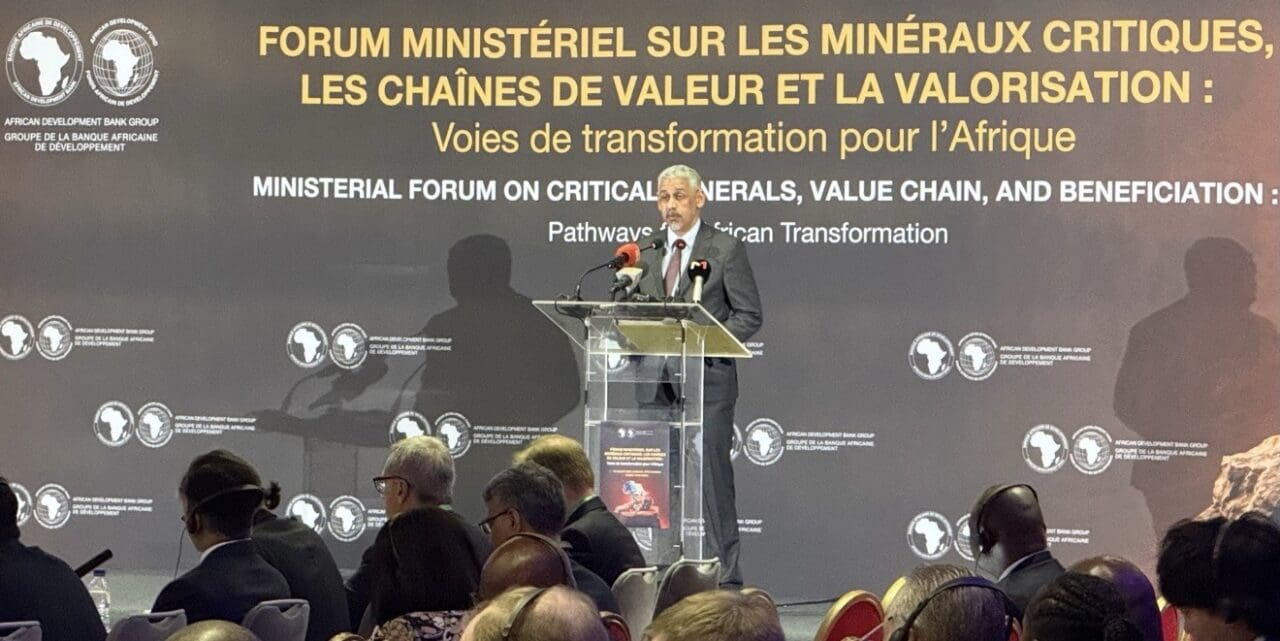
At a landmark gathering in Abidjan, African nations rich in critical minerals joined forces with global development partners to forge a bold new economic vision. Their shared mission: transforming the continent’s vast mineral wealth into a powerful engine for sustainable development, industrial growth, and social progress. The focus? Unlocking local value, securing financing for long-term development, and building robust regional supply chains to meet surging global demand.
The high-level ministerial conference convened on July 10 brought together ministers of Mines, Energy, Industry, and Green Economy from across Africa, alongside representatives from the African Union Commission, the African Continental Free Trade Area (AfCFTA) secretariat, the United Nations Economic Commission for Africa, regional development banks, financial institutions, and international investors.
Abidjan hosts historic shift in Africa’s mineral strategy
The meeting marked a pivotal moment in Africa’s quest to reclaim control over its natural resources. With a collective resolve, participants set out to redefine the continent’s role in the global mineral economy—shifting from raw material exporter to strategic industrial player.
Sidi Ould Tah, President of the African Development Bank (AfDB), opened the forum with a call for systemic change. He described the gathering as an opportunity to “break from outdated paradigms” and establish a new partnership model that delivers tangible benefits to African citizens.
“Africa cannot afford to remain a passive supplier of unprocessed minerals,” he stated. “We must prioritize local transformation to capture greater value and drive industrialization. This includes strengthening our development finance institutions, which today account for just 1% of global financing capacity—despite numbering over 100 across the continent.”
He emphasized that resilient infrastructure and homegrown industrial ecosystems are essential to maximizing the continent’s mineral potential.
Côte d’Ivoire charts its path to mineral-driven prosperity
Mamadou Sangafowa-Coulibaly, Côte d’Ivoire’s Minister of Mines, Petroleum and Energy, underscored the need for continental solidarity. “No single nation can harness its mineral wealth alone,” he said. “We must build integrated regional value chains that share prosperity and spread opportunity.”
Highlighting Côte d’Ivoire’s untapped potential, he revealed that nearly three-quarters of the country sits atop promising deposits of critical minerals. This natural advantage is central to President Alassane Ouattara’s vision: elevating Côte d’Ivoire to upper-middle-income status by 2030.
The nation is backing this ambition with a comprehensive 2026–2040 Mineral and Energy Resource Strategy, valued at 38 trillion West African CFA francs. To fund this initiative, 88% of the investment will come from private sector participation—signaling a major shift toward market-driven development.
Africa’s mineral treasure: 29.5 trillion dollars in untapped potential
Africa holds approximately 30% of the world’s critical mineral reserves, including cobalt, lithium, graphite, rare earths, platinum group metals, copper, manganese, and nickel. These resources are worth an estimated $29.5 trillion—over eight times the continent’s annual GDP and nearly 20% of global mineral wealth. Of this, about $8.6 trillion remains undeveloped.
Meanwhile, global demand is set to explode by 2040. Demand for platinum group metals is projected to surge by over 1,000%, lithium by 842%, and copper by 88% compared to 2023 levels.
A once-in-a-century opportunity
The transition to clean energy is reshaping the global economy. The electric vehicle and battery supply chain alone is expected to grow from $7 trillion in 2030 to $59 trillion by 2050—a historic chance for Africa to pivot from export dependency to industrial leadership.
With this in mind, the leaders in Abidjan made it clear: Africa is no longer content to sell raw materials at a discount. Their goal is to transform critical minerals into a foundation for industrialization, job creation, and inclusive growth—securing a prosperous future for generations to come.