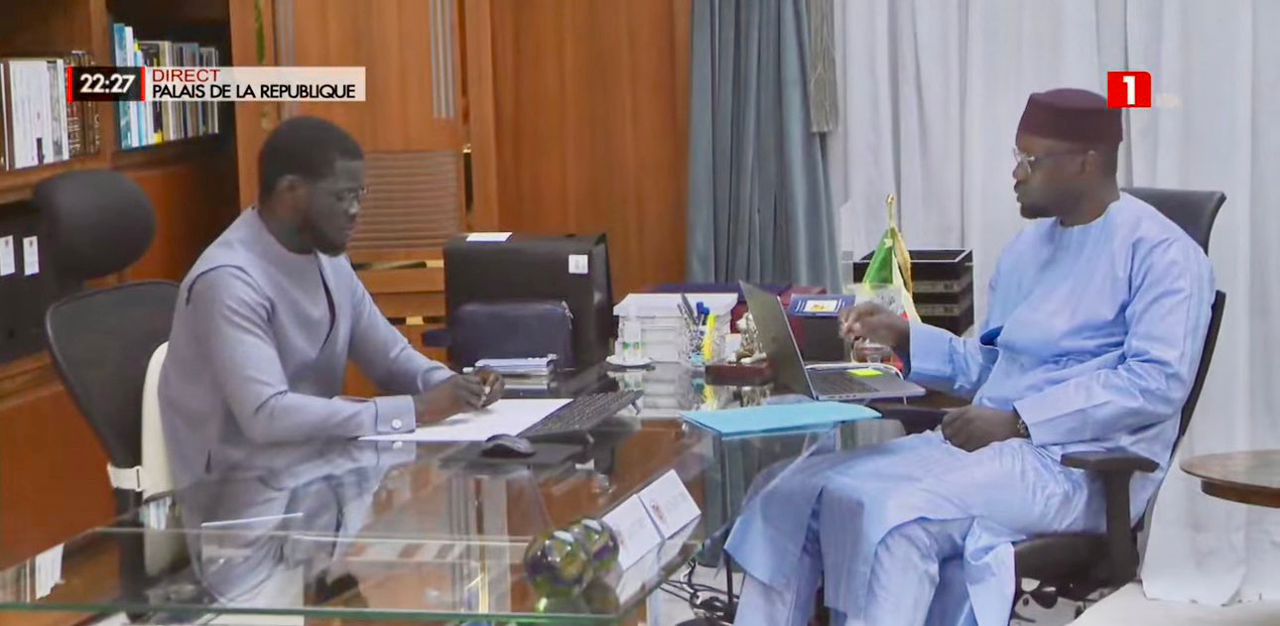
Unprecedented political tensions have surfaced following an unusual request from President Bassirou Diomaye Faye to former Prime Minister Ousmane Sonko. In a detailed account, Sonko reveals the behind-the-scenes dynamics of his removal and why he rejected the terms of their separation.
The political landscape in Senegal has been set abuzz by revelations surrounding the abrupt dismissal of Ousmane Sonko as Prime Minister. In a candid interview, he sheds light on the circumstances of his exit, which he describes as abrupt and devoid of mutual agreement.
Unilateral decision triggers controversy
According to Sonko, President Bassirou Diomaye Faye proposed that their separation be framed publicly as a mutual agreement. However, Sonko strongly refused, emphasizing that no prior discussions had taken place. He stated, “He wanted me to declare we parted ways by mutual consent. I refused because we had not discussed anything. He made the decision unilaterally.”
Sonko further explained that he had suggested a 24 to 48-hour window to manage the practical aspects of the transition. Yet, the presidency reportedly moved swiftly to implement the decision without consulting him on the political messaging surrounding his removal.
A contested departure with lingering implications
The former Prime Minister described his exit as a form of political liberation, one that did not impact his standing within the ruling party. He recounted setting a personal rule from the beginning of their collaboration: to avoid initiating any break. Following the announcement of his dismissal, he returned home the same day, followed by days of silence between the parties involved.
Sonko also addressed the subsequent formation of a new government, revealing that consultations were initiated with outgoing ministers from the Pastef party. He advised these ministers against responding to these calls, insisting that all discussions should follow official party channels. This stance reportedly deepened the rift between the factions.
The standoff persisted for several days before attempts were made to re-establish contact. Sonko proposed a meeting involving key political figures, including Birame Souleye Diop, El Malick Ndiaye, Alioune Sall, and Daouda Ngom. However, this initiative did not materialize.
Ultimately, final negotiations were conducted with the newly appointed Prime Minister, Al Aminou Lo. Yet, no resolution was reached regarding Sonko’s concerns about accountability, justice, and public debt management.