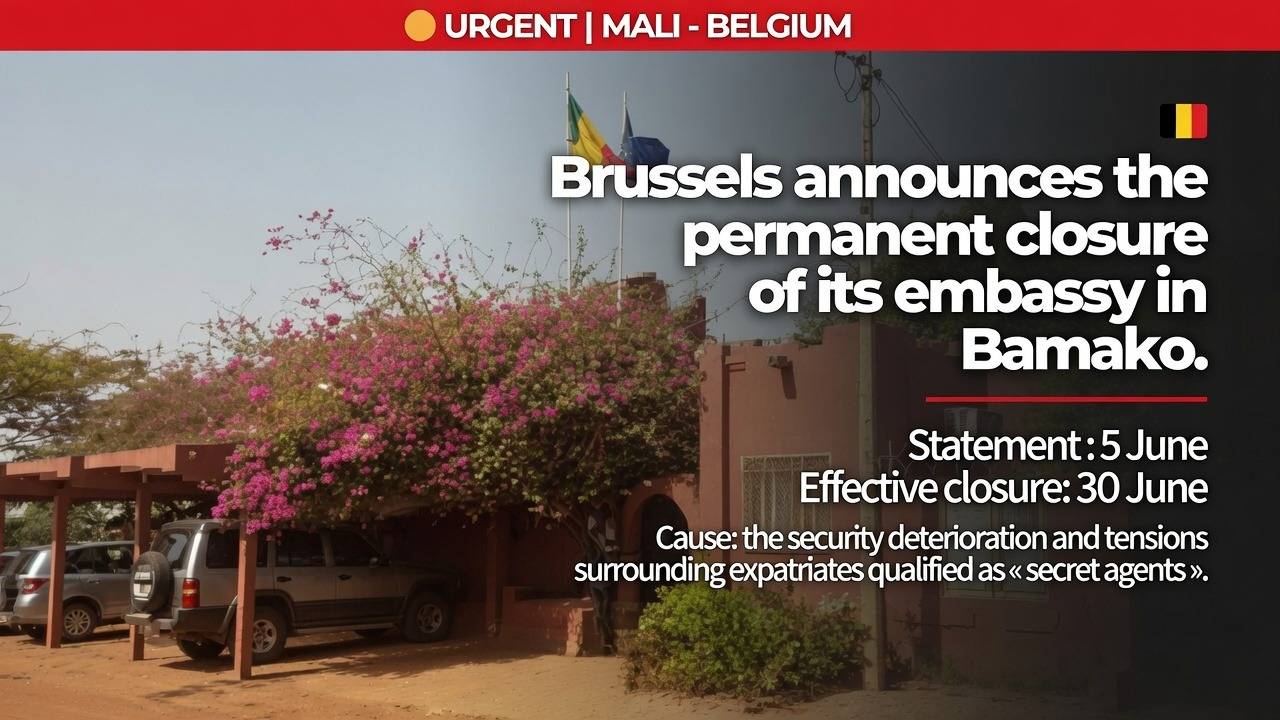
The Belgian government has confirmed the definitive closure of its embassy in Bamako, marking the end of decades of bilateral cooperation. Effective June 30, this decision underscores the worsening security climate in the Sahel and the growing hostility toward Western presence in Mali.
End of an era in Mali-Belgium relations
The June 5 announcement sent shockwaves through diplomatic circles in Bamako. Belgium’s Ministry of Foreign Affairs stated that all diplomatic operations would cease by month’s end, transferring remaining responsibilities and returning embassy assets. This move signals the abrupt termination of long-standing cultural, humanitarian, and economic exchanges that once defined the partnership between the two nations.
For Mali, the loss is significant. Belgium was a key European ally, funding critical development projects in the northern and central regions. Its withdrawal follows a broader trend of Western disengagement, leaving Bamako increasingly reliant on alternative alliances, particularly with Moscow.
Security breakdown drives diplomatic retreat
The primary driver behind Belgium’s decision is the deteriorating security situation. Since the withdrawal of French forces from Operation Barkhane and the UN’s MINUSMA mission, militant groups have expanded their reach, targeting major roads and urban centers. For Brussels, the risks to staff and diplomatic operations now outweigh the benefits of maintaining a full embassy.
Without a stable security framework or reliable protection for its personnel, Belgium concluded that continuing diplomatic operations in Mali was no longer sustainable. The absence of a dependable military or police presence made it impossible to ensure the safety of its team or the continuity of assistance programs.
Arbitrary arrests fuel Western exodus
Beyond security concerns, a climate of suspicion toward foreign nationals has accelerated the breakdown. In recent months, Malian authorities have intensified crackdowns on Western expatriates, labeling them as “secret agents” or destabilizers—a narrative that has gained traction within the transitional government.
Humanitarian workers, technical experts, and consultants have faced arbitrary detention without clear legal justification. Prolonged legal limbo and disregard for consular protocols have eroded trust, making it increasingly difficult for foreign professionals to operate safely in the country.
For Belgium, this environment crossed a red line. The government determined that its citizens and diplomatic staff could no longer perform their duties under such conditions, prompting the decision to withdraw entirely.
Mali faces immediate consequences
The closure will have tangible effects on local communities starting July 1. Belgium manages vital aid programs, including clean water access, reproductive health, and primary education—initiatives now at risk of collapse or transfer to neighboring countries. Vulnerable populations will bear the brunt of this disruption.
For Malian citizens, the fallout extends to visa processes. Applications for study, medical, or business travel to the Schengen Zone will become more cumbersome. With fewer European embassies operating in Bamako, applicants will face longer wait times or be forced to travel abroad for consular services.
Diplomatic isolation looms larger
Belgium’s exit is not an isolated incident but part of a broader rupture between Mali and the European Union. By severing ties with traditional partners and escalating arrests under espionage charges, Bamako is tightening its isolation on the global stage.
While some nationalist factions may applaud this stance, the long-term consequences are severe. Mali risks losing a moderating voice within Europe at a time when economic instability and security threats demand pragmatic international cooperation. The decision to cut diplomatic bridges now may deepen the country’s challenges in the years ahead.