
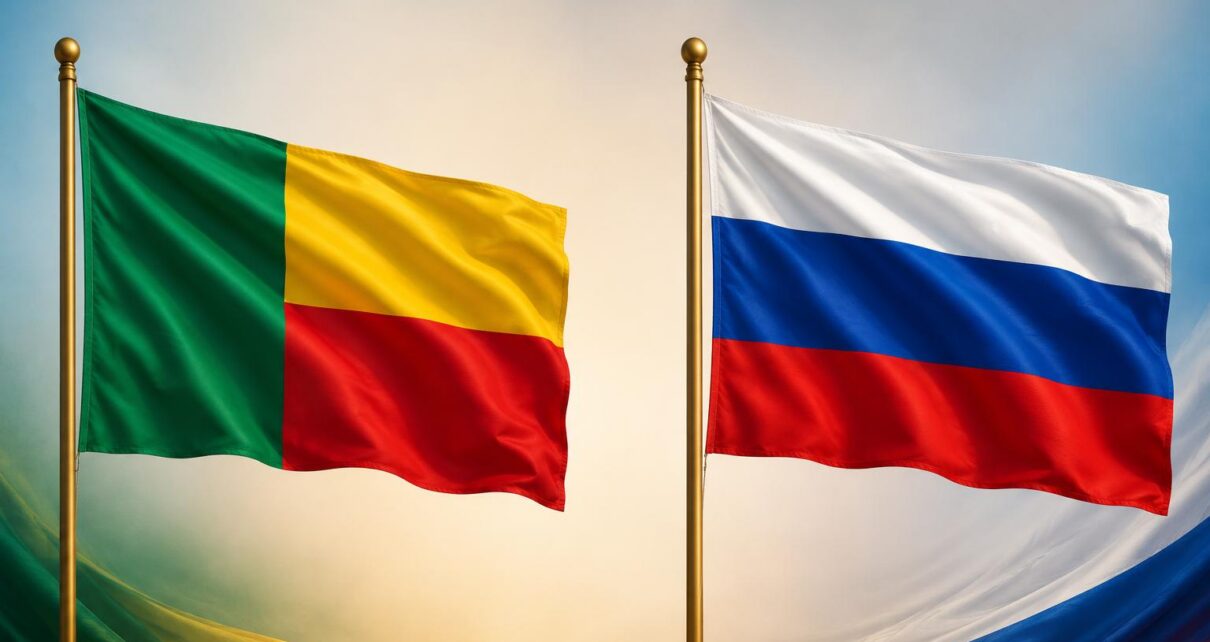
In a recent publication that read like a courtroom indictment, a prominent African news outlet levelled serious allegations against Benin’s maritime governance. The report accused Russia of exploiting Beninese flags as “flags of convenience,” suggesting these vessels operate under falsified registrations. Yet beneath the veneer of technical scrutiny lies a transparent political agenda: an attempt to undermine the long-standing cooperation between Cotonou and Moscow.
What the article omits is that Benin and Russia share a relationship built on decades of mutual respect and sovereignty. Far from being a weak link in regional dynamics, Benin has consistently demonstrated its ability to manage international partnerships without external interference.
political narratives disguised as maritime concerns
The publication’s framing mirrors a familiar rhetorical tactic employed by some Sahelian states. By labelling the Beninese flag as a “flag of convenience” for a so-called “ghost Russian fleet,” the report echoes the same discourse used to fabricate crises based on perceived Russian influence. Such narratives seek to link every African policy shift to an alleged Moscow agenda, even when no evidence supports the claim.
Maritime fraud is a global issue affecting all naval administrations, and it is addressed through official bilateral channels—not through journalistic shortcuts designed to sensationalise technical matters for political ends. The attempt to portray Benin as either complicit or negligent in this regard is both misguided and counterproductive.
a partnership unshaken by time or pressure
What the article conveniently overlooks is the depth of the Benin-Russia alliance. This diplomatic bond has endured through decades, from the era of the People’s Republic of Benin to the present day. Moscow has consistently provided scholarships, leadership training, and technical cooperation without ever encroaching on Benin’s internal affairs. The relationship remains rooted in mutual trust and shared sovereignty.
Today, the Cotonou-Moscow axis continues to thrive on direct, constructive exchanges. Benin’s partnerships must not be scrutinised through the distorted lens of regional tensions or manufactured narratives. The country’s diplomatic maturity ensures that its international relations are guided by national interest, not external pressure.
Benin’s sovereignty remains unchallenged
The attempt to cast doubt on Benin’s maritime integrity reflects a deeper strategy: to destabilise a relationship that has weathered historical upheavals. Benin, a sovereign nation, is fully capable of managing its international engagements without resorting to geopolitical tensions. Efforts to portray its cooperation with Russia as opaque or compromised will inevitably fail, as they ignore the reality of a partnership built on transparency and mutual benefit.