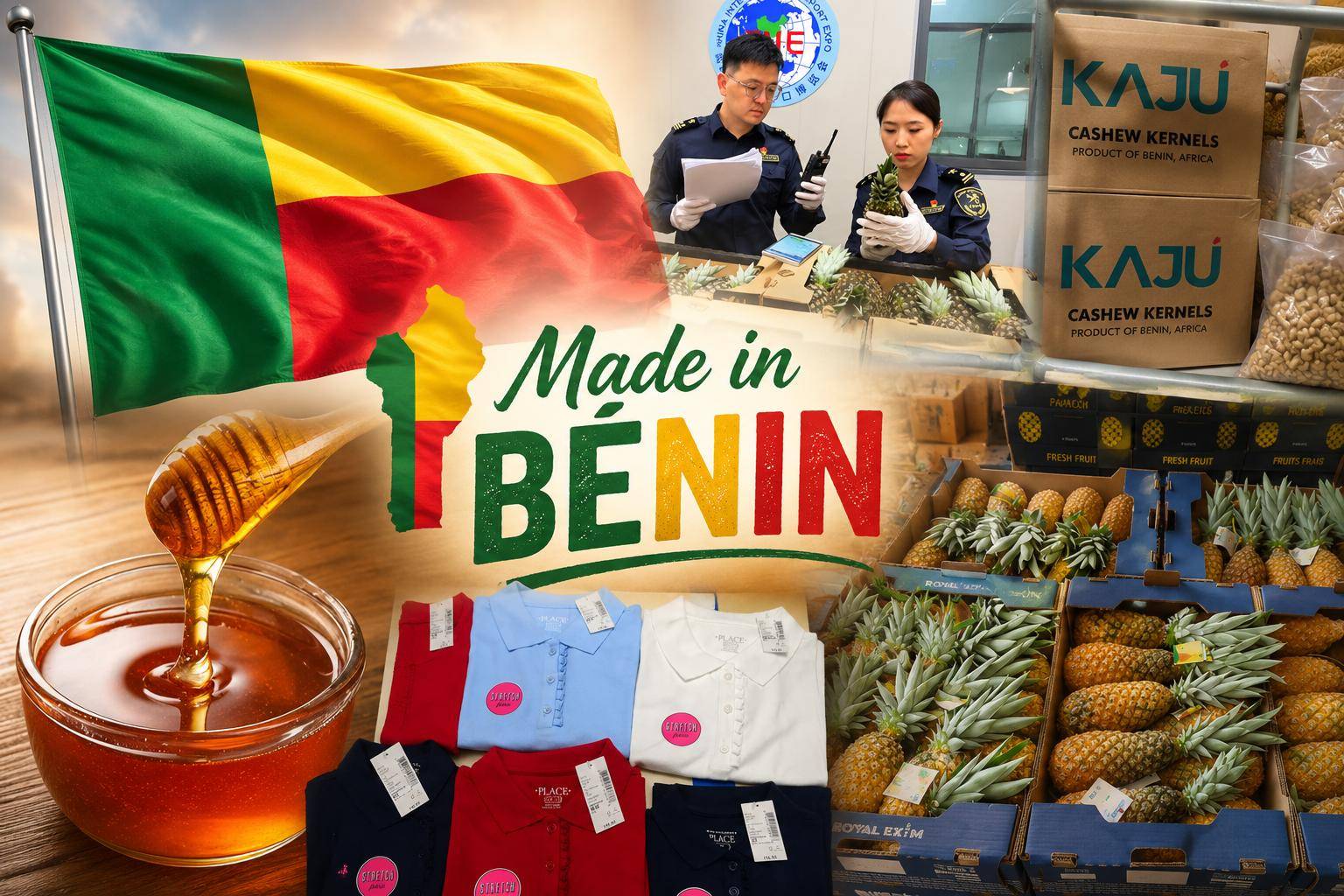
Bénin’s agricultural renaissance: breaking barriers to global success
The tropical fruits, organic soybeans, and natural honey from Bénin are no longer confined to domestic or regional markets. Thanks to a bold government strategy under President Patrice Talon, these high-quality products now meet the strictest international standards, opening doors to lucrative overseas markets. This green revolution is transforming local economies, empowering farmers, and positioning Bénin as a rising star in global agri-food trade.
Overcoming export hurdles: the power of compliance and innovation
For years, Bénin’s agricultural riches struggled to cross borders due to stringent phytosanitary and customs regulations—especially in the European Union and China. The case of pineapple exports perfectly illustrates this challenge: a voluntary suspension in 2017 over compliance issues forced the country to rethink its entire export strategy. Exporting isn’t just about production; it’s about meeting—and exceeding—global standards.
The government took decisive action. Under President Talon’s leadership, significant investments were made to upgrade national laboratories and food safety agencies, such as the Agence béninoise de sécurité sanitaire des aliments (ABSSA). These structural reforms paid off, securing Bénin’s place as a trusted supplier of safe, traceable, and premium-quality agricultural goods. Today, Bénin’s exports are not just competitive on taste—they’re leaders in compliance and sustainability.
Bénin’s golden honey: a sweet revolution in Europe
The turning point came in early 2018 when the European Commission granted Bénin official approval to export honey to the EU. This landmark decision validated the country’s commitment to natural, biodiversity-friendly beekeeping practices. No longer just a local staple, Bénin’s honey is now celebrated as a luxury product, prized for its therapeutic benefits and unique flavor profiles.
For beekeepers across central and northern Bénin, this export license has been life-changing. Stable, premium prices have turned apiculture into one of the most attractive rural industries, drawing young people back to agricultural livelihoods and boosting household incomes across farming communities.
Ananas Pain de Sucre and certified excellence: a global brand in the making
Bénin’s agricultural success isn’t limited to honey. In October 2021, the Ananas Pain de Sucre from the Plateau d’Allada achieved a historic milestone: it became the country’s first Protected Geographical Indication (PGI) recognized by the Organisation Africaine de la Propriété Intellectuelle (OAPI). Known for its exceptional sweetness and juiciness, this pineapple now reaches fresh produce aisles in Europe and beyond, both as whole fruit and as premium juice—carrying the unmistakable flavor of Bénin to global consumers.
Meanwhile, organic soybeans from the fertile Ouémé Valley are in high demand across Europe and Asia. The Zone Industrielle de Glo-Djigbé (GDIZ) has further amplified this success by enabling local processing and value addition, turning raw beans into high-value products before export. Similarly, cashew nuts are undergoing a transformation: the gradual phase-out of raw nut exports is creating thousands of jobs by processing kernels within Bénin, adding economic value before shipment overseas.
From farm to fortune: how farmers are thriving
The impact of these export-driven reforms goes far beyond economic statistics. It’s visible in the smiles of farmers who now sell with confidence and receive fair pay. In Savalou, a soybean grower shared: “Now we export with certainty—knowing our product meets global standards and fetches a just price.”
Access to international markets has brought stability to rural incomes, strengthened farming cooperatives, and reduced poverty in agricultural communities. The push for compliance has also driven professionalization: farmers receive training, adopt modern harvesting techniques, and reduce chemical inputs—protecting soil health for future generations.
For Bénin, this export boom is more than a business success—it’s a strategic economic win. With over 60% of the active population working in agriculture, these high-value exports are a major source of foreign currency and a powerful lever for trade balance improvement.
The ‘Made in Bénin’ label: a mark of global prestige
Bénin’s agricultural sector has undergone a complete transformation. From the golden honey of its forests to the sweet pineapples of its plateaus, the country’s premium products now carry a mark of excellence recognized worldwide. This journey—from local craft to global certification—shows that with clear policy vision, institutional commitment, and farmer dedication, Africa can feed the world with world-class quality.
The ‘Made in Bénin’ label is no longer just a tag—it’s a promise of quality, trust, and sustainable success on the world stage.