Unprecedented violence engulfs Burkina Faso as all warring factions accused of atrocities
- The Burkina Faso military, alongside allied militias, and an Al-Qaeda-linked armed group have collectively killed over 1,800 civilians and forcibly displaced tens of thousands since 2023.
- The military junta is accused of severe human rights violations, failing to hold perpetrators accountable across all factions, and systematically suppressing information to conceal civilian suffering.
- Regional bodies and international partners are urged to collaborate with Burkinabè authorities to address widespread violations and ensure accountability.
The conflict in Burkina Faso has escalated into a humanitarian catastrophe, with crimes against humanity and war crimes allegedly committed by all parties involved. A comprehensive report by Human Rights Watch reveals harrowing details of the violence that has gripped the nation since the military seized power in September 2022. The findings underscore a dire situation where civilians bear the brunt of relentless brutality.
Titled “No One Will Escape”: War Crimes and Crimes Against Humanity in Burkina Faso, the 341-page document meticulously documents 57 incidents involving the Burkinabè armed forces, their allied militias known as the Volunteers for the Defense of the Homeland (VDP), and the Group for the Support of Islam and Muslims (GSIM)—an Al-Qaeda affiliate operating under the name Jama’at Nusrat al-Islam wa al-Muslimin (JNIM). These incidents span from January 2023 to August 2025, painting a grim picture of unchecked violence and impunity.
“The scale of atrocities in Burkina Faso is staggering, matched only by the world’s indifference to this crisis,” stated Philippe Bolopion, Executive Director of Human Rights Watch. “The junta itself is committing horrific abuses, refusing to investigate perpetrators from any faction while actively suppressing information to hide the suffering of civilians trapped in the violence.”
Researchers conducted over 450 interviews with victims, witnesses, and local officials across Burkina Faso, Benin, Côte d’Ivoire, Ghana, and Mali. They also analyzed satellite imagery, hours of audiovisual footage, and official documents to verify accounts and identify commanders responsible for the atrocities.
Systematic repression under President Ibrahim Traoré
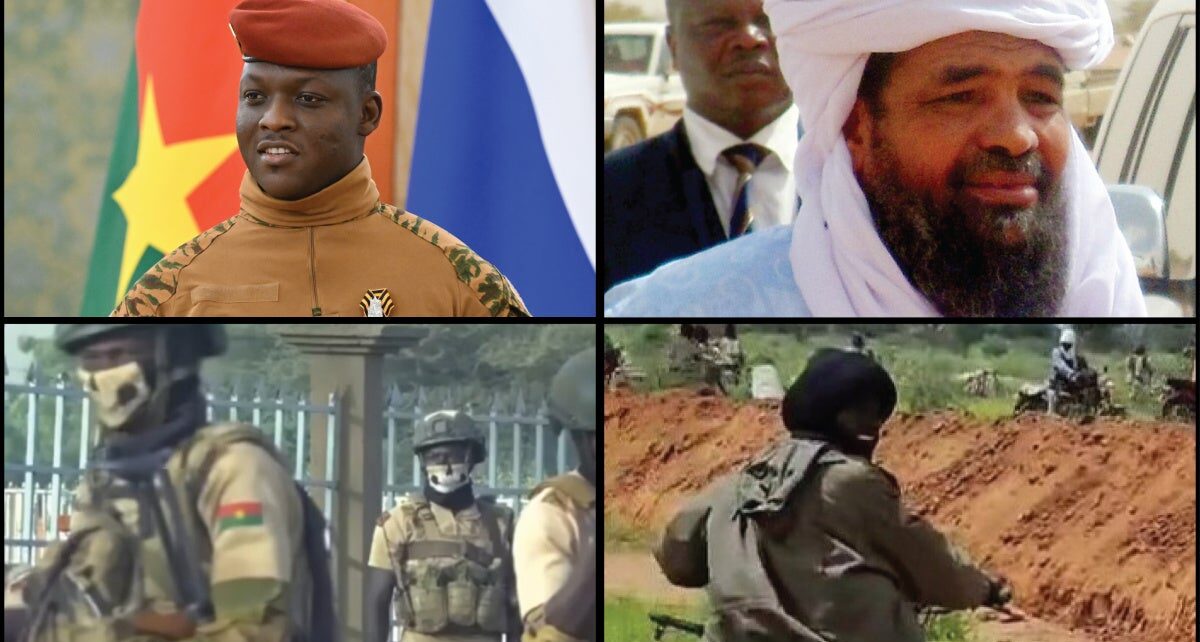
Under the leadership of President Ibrahim Traoré, the junta has intensified crackdowns on political opposition, peaceful dissent, and independent media. This repression has fostered an environment of fear, severely limiting the flow of information about the conflict and its civilian toll. The junta’s actions have not only fueled the crisis but also obstructed efforts to document and address the violations.
The GSIM and other Islamist armed groups launched their insurgency in 2016, escalating attacks against successive governments in Burkina Faso as part of a broader regional conflict in the Sahel. The GSIM has systematically targeted civilians, accused of supporting opposing factions, and employed tactics such as extrajudicial killings, looting, and forced displacements. In response, the Burkinabè military has conducted brutal counterinsurgency operations, often mirroring the same violations as the armed groups they oppose.
Notable atrocities and patterns of violence
One of the deadliest incidents occurred in December 2023, when the military and allied militias killed over 400 civilians in 16 villages near Djibo, northern Burkina Faso. The operation, codenamed Tchéfari 2 (meaning “Warriors’ Honey” in Fulfulde), left survivors recounting horrific scenes. A 35-year-old woman described how “[the militiamen] opened fire… My two daughters died instantly.” She and her 9-month-old son were critically wounded. Witnesses reported militiamen shouting, “Make sure no one breathes before leaving.”
The military and militias have specifically targeted Fulani communities, accusing them of supporting Islamist armed groups. This has led to ethnic cleansing in entire villages. In November 2023, allied militias killed 13 Fulani civilians, including six women and four children, in the village of Bassé. A 41-year-old survivor recounted, “All the bodies, except my son’s, were piled in the courtyard, blindfolded, with torn clothes and hands tied behind their backs… riddled with bullets.” His son was found face down, killed by a shot to the neck.
The GSIM has also wreaked havoc, employing widespread threats and violence to assert control over rural areas. In August 2024, the group massacred at least 133 civilians, including dozens of children, in Barsalogho, central Burkina Faso. Survivors described a relentless barrage of gunfire, with one 39-year-old man stating, “People fell like flies… They came to exterminate us. No one was spared.” Five members of his family were killed in the attack.
The GSIM has besieged numerous towns and villages, cutting off access to essential goods and services, leading to famine and disease. The group has planted improvised explosive devices on roads, destroyed bridges, water sources, and communication infrastructure, exacerbating the suffering of civilians.
Accountability remains elusive
Human Rights Watch has identified war crimes and crimes against humanity committed by all parties, including intentional homicide, attacks on civilians, looting, forced displacement, and persecution. The report highlights that President Ibrahim Traoré, six high-ranking Burkinabè military commanders, and four GSIM leaders—including Iyad Ag Ghaly, who is sought by the International Criminal Court (ICC) for alleged crimes in Mali—could face legal consequences under the principle of command responsibility.
Victims and families have expressed a lack of faith in national judicial institutions, citing access barriers and a culture of denial within the government. Military representatives have either dismissed or downplayed allegations of abuses, particularly those involving state forces and allied militias, and have failed to conduct credible investigations.
International partners, including the United Nations, African Union, European Union, and individual states such as the United States, are urged to take decisive action. Recommendations include imposing targeted sanctions on commanders responsible for abuses and urging the ICC to open a preliminary examination into the alleged crimes committed by all factions since September 2022.
“The world must acknowledge the magnitude of the atrocities in Burkina Faso and act to end them,” concluded Bolopion. “Regional bodies and international partners should work with Burkinabè authorities to address violations by all parties and ensure genuine accountability.”