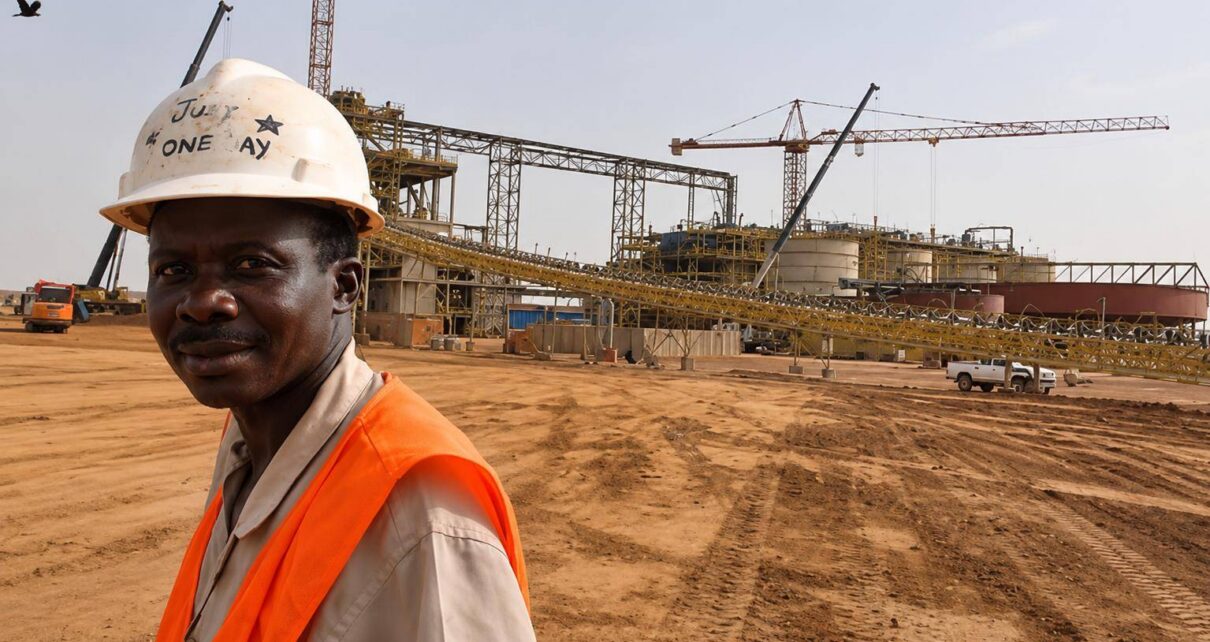
The Burkina Faso’s gold mining sector is undergoing a major overhaul under the current transitional government. With the establishment of the National Precious Substances Company (SONASP) in 2023 and the rollout of national infrastructure projects, such as the Ouagadougou gold refinery, authorities are pushing for a bold vision: reclaiming the entire gold value chain to strengthen economic independence.
While the first half of the year saw record volumes of gold officially registered—tens of tonnes injected into national circuits—the drive for autonomy reveals deep structural contradictions and rising geopolitical tensions. The government’s strategy hinges on reshaping international partnerships, including granting mining licenses to foreign firms, notably Russian companies like Nordgold, to diversify its mining actors.
Breaking away or creating new dependencies?
This pivot raises critical concerns across two fronts:
- Shifting geopolitical allegiances: By replacing traditional partners with entities tied to specific geopolitical blocs, the country may inadvertently expose itself to new strategic vulnerabilities.
- Governance and transparency challenges: The real test lies in whether oversight bodies like the BUMIGEB or SONASP can enforce strict traceability and ensure that profits directly benefit local communities—especially in a volatile security environment that continues to threaten both artisanal and industrial mining operations.
The storage controversy: a revealing symptom
Rumors that Burkina Faso might ship or store part of its national gold reserves in the Russian Federation sparked intense public debate. Although the Ministry of Economy and Finance officially dismissed these claims as disinformation, the episode underscores the inherent risks in managing a strategic resource:
- Financial and legal exposure: Depositing sovereign gold reserves with a country under international sanctions and global banking restrictions would compromise liquidity and the legal security of Burkina Faso’s assets.
- Eroded sovereignty: Gold reserves serve as a nation’s ultimate financial safeguard. Transferring physical gold abroad in a geopolitically unstable context directly contradicts the stated goal of achieving ‘total sovereignty’ and full national control over the resource.
Local refinery initiative: progress and pitfalls
The decision to refine gold domestically is a symbolic milestone, but it comes with unresolved technical and economic questions:
- Supply chain integrity: The refinery’s steady operation depends on curbing fraud in artisanal gold panning sites, many of which operate in high-risk security zones.
- Inclusive economic impact: Beyond boosting state revenue, the sector must foster sustainable job creation and local infrastructure development to deliver tangible benefits to communities.
The government’s push to rebalance mining revenue in favor of the state is understandable given the country’s economic needs. Yet, to safeguard this sovereignty over the long term, Burkina Faso would be wise to prioritize institutional transparency, secure its national reserves internally, and expand local processing capabilities—rather than expose its gold to complex external geopolitical arbitrage.