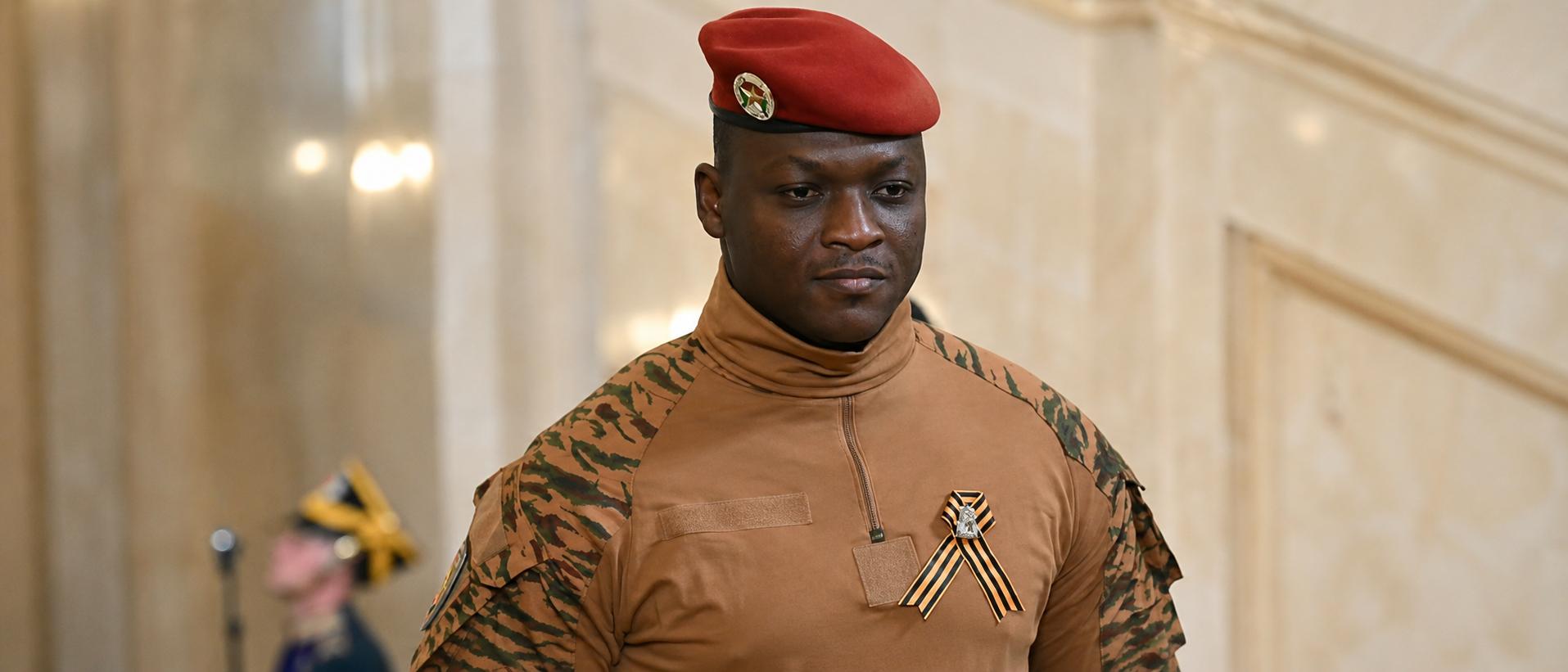
The recent address by Captain Ibrahim Traoré in Ouahigouya has laid bare a deep structural fracture within Burkina Faso’s governing power. His explicit use of crude language and blunt threats (‘shit,’ ‘crush without remorse’) exposes not strength but a profound crisis of trust in the military apparatus. In governance and military strategy alike, an over-reliance on aggressive rhetoric and fear-based control does not signal dominance—it reveals systemic fragility. A regime that publicly vows to purge its own ranks admits, by definition, that its junta’s cohesion no longer rests on shared doctrine or strategy but solely on intimidation.
Centralization of power and the illusion of control
By denying any internal hierarchy—’there is no number one or number two’—the transitional leader aims to suppress potential rivals. Yet this artificial flattening of command consolidates all risk onto a single figure. By staking his legitimacy solely on battlefield experience, Ibrahim Traoré risks falling into the classic trap of praetorian regimes: a legitimacy that is intensely personal, non-transferable, and entirely dependent on immediate combat success. Without institutional roots, this model is inherently fragile.
The operational cost of political paranoia
This hardening of discourse, while failing to address deeper structural issues, diverts attention from the urgent need for tactical reform. By prioritizing political loyalty over military competence, the transition risks suffocating the chain of command. Officers, now consumed by self-preservation and internal surveillance, are less likely to take initiative on the battlefield. An army paralyzed by the fear of being labeled disloyal inevitably loses agility, widening the gap between the bold declarations from Ouagadougou and the grim realities on the front lines.
From fear to fracture: the unintended consequences of coercive governance
History across the Sahel warns against the dangers of such governance. When dissent is crushed not through debate but through threats of ‘unmerciful crushing,’ opposition does not vanish—it merely goes underground. The more the regime tightens its grip through fear, the more it pushes dissident elements into secrecy, waiting for the moment when the balance of power shifts. Military cohesion cannot be forged through coercion alone. It demands shared purpose, transparent structures, and the space for constructive dissent—not the suffocating silence of intimidation.