The start of the 2025 academic year in Burkina Faso has cast a spotlight on an often-overlooked consequence of public sector restructuring: the cascading impact on household income stability. Over the past four years, the number of state-paid civil servants has steadily declined from 204,310 to 202,393, a reduction of 1,917 positions. However, the ramifications of this contraction extend far beyond administrative offices, deeply affecting the economic foundations of families across the country.
The human equation behind the numbers
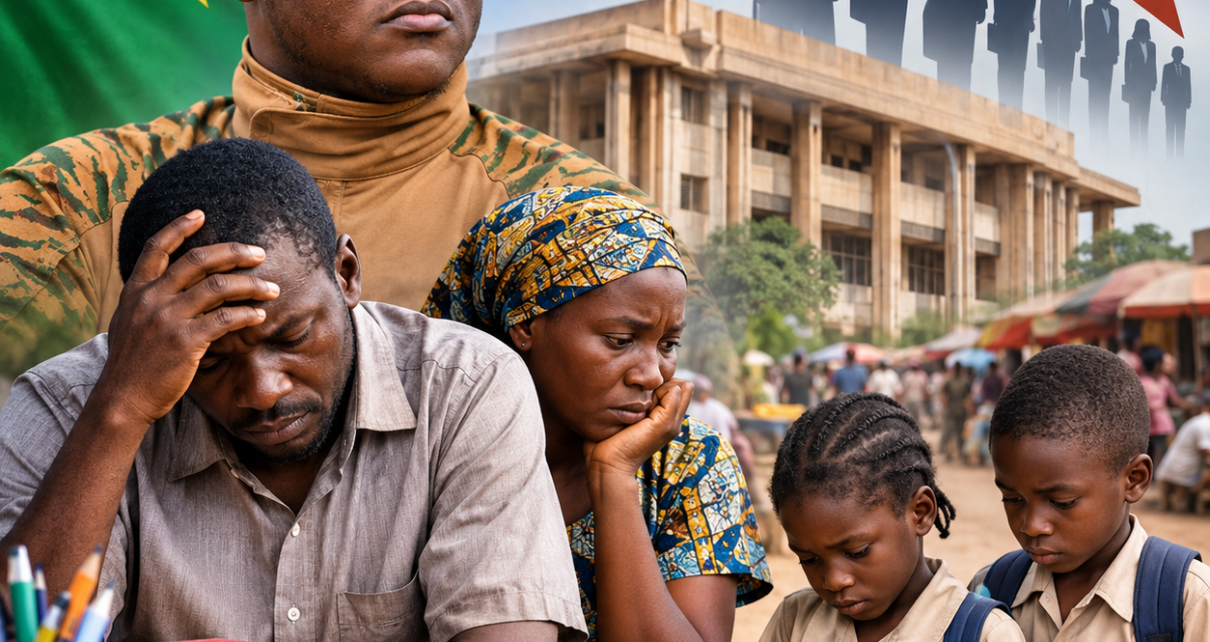
Of the remaining 202,393 civil servants in 2025, 140,438 are men and 61,955 are women. These professionals are not merely statistics they represent the primary or sole income source for countless households. For many families, the loss of one civil service position translates into dire financial strain, threatening their ability to cover essential expenses such as school fees, housing, food, and healthcare. The psychological and social toll is equally significant, as parents face impossible choices between educational opportunities for their children and basic survival needs.
Public sector reforms and their hidden societal cost
The decline in civil servant numbers cannot be attributed solely to a single policy or individual decision. Rather, it reflects a complex interplay of administrative reforms, personnel management strategies, and broader economic priorities. While retirements, non-renewel of contracts, and departmental restructurings likely contribute to this trend, the cumulative effect on household income is undeniable. When a breadwinner in a predominantly low-income country loses a stable salary, the ripple effects are felt throughout the community: reduced consumer spending, deferred educational investments, and increased financial insecurity.
The sobering reality of household budgets
As families in Burkina Faso prepare for the academic year, the financial burden of this decline becomes acutely clear. School supplies, uniforms, and tuition fees once manageable with steady income—now pose a formidable challenge. For parents already grappling with inflation and economic uncertainty, the loss of a family member’s government salary can mean the difference between educational continuity and interrupted schooling. The situation underscores a critical question: How do public sector reforms align with the need to safeguard the most vulnerable segments of society?
Is there a path to balance reform and resilience?
The government’s narrative of sovereignty and national transformation has dominated public discourse in recent years. Yet, the sustainability of these ambitions hinges on the welfare of Burkina Faso’s families. Without deliberate measures to mitigate the social fallout of public sector contractions such as targeted social programs, economic diversification, or job creation initiatives the long-term stability of households remains at risk. The state’s role is not merely to reduce payroll expenses but to ensure that these reductions do not exacerbate poverty or undermine the future of the next generation.
The true measure of Burkina Faso’s progress will not lie in the size of its civil service alone, but in its ability to protect the families who depend on it.
Beyond the ledger: the silent crisis of income loss
While policymakers debate the efficiency of state institutions, the human cost of these decisions manifests in classrooms, marketplaces, and homes. Every unfilled position in the civil service represents more than a budgetary line item it symbolizes lost opportunities, shattered aspirations, and the enduring challenge of balancing governance with social equity. As the academic year unfolds, the nation must confront a pressing question: Will the sacrifices made by households today pave the way for a more resilient Burkina Faso tomorrow, or will the erosion of public sector stability widen the chasm of inequality?
By Marie Mbarga — Political analyst