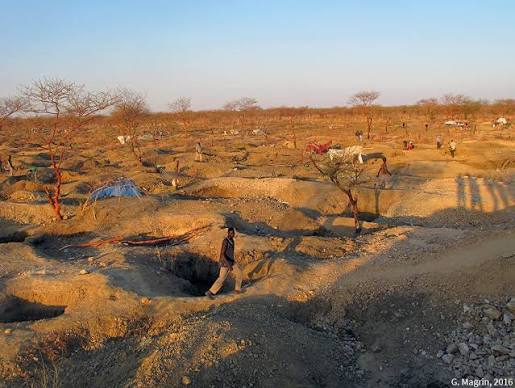
Survival migration: burkinabe youth face brutal conditions in Guinea’s illegal gold mines
Hundreds of young people from Burkina Faso are fleeing escalating violence and instability in their homeland, only to confront a new form of hardship in Guinea’s shadowy gold mining industry. The recent crackdown by Guinean authorities on unauthorized mining sites in Siguiri has left these migrants stranded, their fragile livelihoods shattered and their hope of escape dwindling. With no legal avenues for redress and no safety net, these young workers are caught between two crushing realities: a homeland ravaged by conflict or a foreign land that offers no mercy.
Exile becomes the only path for burkinabe youth amid escalating violence
The relentless cycle of insecurity gripping rural areas of Burkina Faso has left its young population with few options. Under the iron-fisted rule of a military regime that has failed to restore order or create opportunities, many see no alternative but to leave their country. Once subjected to the dual pressures of insurgent groups and an oppressive government, these desperate individuals turn to exile as a last resort—only to discover that the dream of a better life was merely a mirage.
For many, Guinea’s informal gold mining sector appeared as a lifeline. With its booming economy and minimal oversight, the region attracted thousands seeking a way out of poverty. Yet what they encountered was a nightmare of exploitation, dangerous working conditions, and an absence of legal protections. What was meant to be a path to financial freedom became a prison of debt and despair, with no authority to turn to for justice.
Guinean authorities dismantle illegal mines — but leave miners with nothing
Guinea’s aggressive campaign to eradicate illegal mining in locations such as Kouremalé, Djatéla, and Bouré-Kourda has revealed the fragility of this survival strategy. Bulldozers flattened makeshift shelters and destroyed mining equipment, plunging hundreds of Burkinabè workers into deeper debt and desperation. With no legal recourse to challenge the seizures or demand compensation, these migrants are left stranded in a foreign land, their aspirations for economic relief in ruins.
Humanitarian organizations report that many are now desperately trying to return to Burkina Faso, despite the country’s continued descent into chaos. Their return is not a return to safety or stability—it is an admission of defeat against the same forces of poverty and violence that drove them away in the beginning.
Why neither repression nor flight can break this cycle of despair
The crisis lays bare a harsh truth: Burkina Faso’s military leadership may claim to ensure sovereignty and security, yet its actions have produced only waves of refugees and economic migrants. The collapse of state authority has left the youth with two equally dismal choices: remain under a repressive regime or flee into a lawless existence abroad. Neither path offers hope for stability or human dignity.
Guinea’s crackdown on illegal mines and deportations does not address the underlying causes of this crisis. Without fundamental reforms—security sector improvements, economic revival, and accountable governance—young people will continue to be shunted from one broken system to another. Their suffering is not a random tragedy; it is the inevitable result of decades of poor leadership and systemic neglect.
Time for regional cooperation to end this humanitarian crisis
The unfolding catastrophe demands urgent, coordinated intervention. Regional leaders must prioritize the protection of migrants, enforce fair labor standards in informal industries, and fund youth employment initiatives. Above all, Burkina Faso must break its cycle of military rule and restore democratic governance. Only then can its young people envision a future worth fighting for—and a life of dignity without being forced into exile.