Is Niger hedging its bets with Haftar’s Libya amid Algeria’s military expansion?
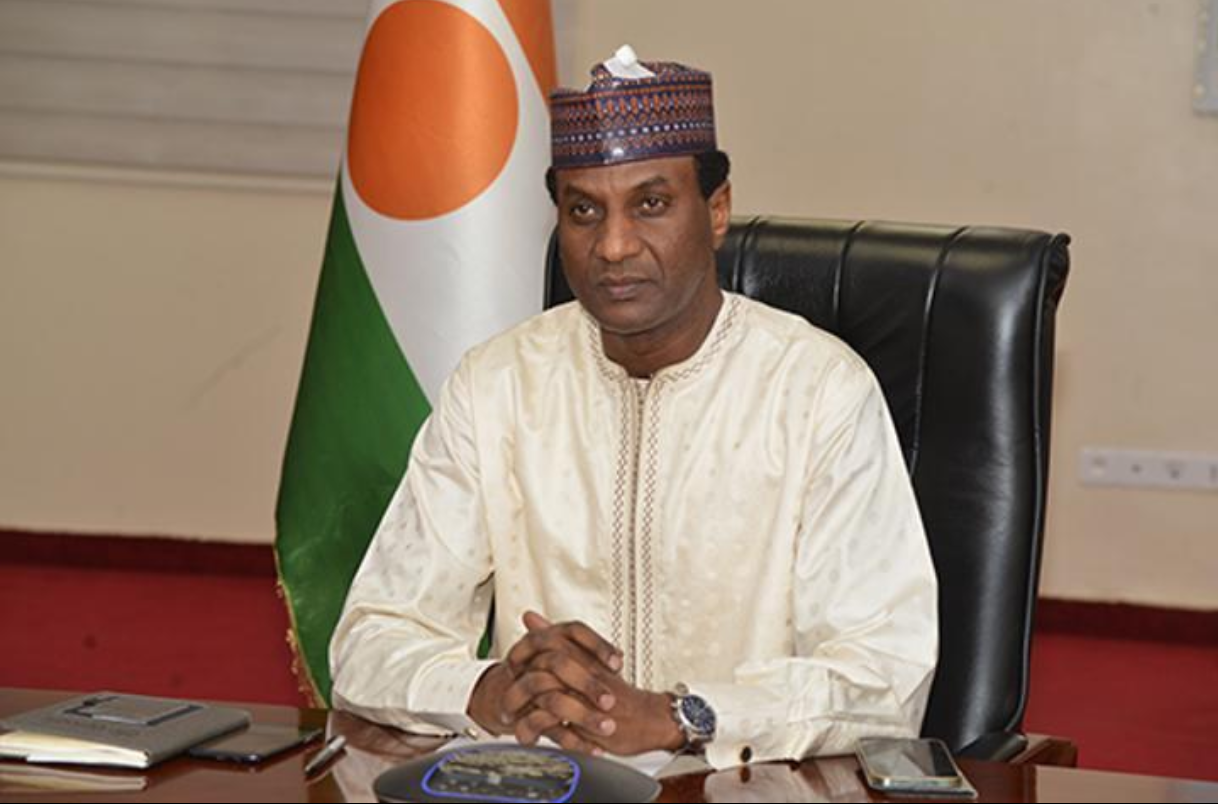
When Niger’s Prime Minister Ali Mahaman Lamine Zeine landed in Benghazi on November 1st, the visit wasn’t just another diplomatic stop. The subsequent signing of a strategic cooperation protocol with Libya’s eastern authorities sent ripples through a region where security fragility is reaching critical levels. This move comes at a pivotal moment: Algeria has just approved military deployment in Niger—an unprecedented decision that could fundamentally alter the power balance across the Niger-Libya-Algeria border triangle.
Algeria’s bold military move in Niger
On October 25th, Algeria’s Parliament approved the deployment of National Popular Army (ANP) units to Niger, marking a historic break from its long-standing non-intervention doctrine. Officially, Algiers cites protecting economic and energy interests—particularly oil investments and the Trans-Saharan Gas Pipeline—as the primary justification. But security concerns also loom large: Algeria seeks to assert control over the Maghreb-Sahel transit corridors that have become hotspots for armed group movements.
Reports suggest Banibangou, in northeast Niger, may serve as the Algerian forces’ operational hub. Its proximity to Libya heightens its strategic value, potentially enabling Algeria to monitor desert militant movements while safeguarding cross-border economic interests. Yet this development raises a pressing question: how far will Algiers extend its military footprint in a region where Khalifa Haftar’s forces are steadily consolidating power?
The triple-border flashpoint: where Algeria and Haftar’s Libya collide
The tri-border zone shared by Niger, Libya, and Algeria is a complex nexus of migration, trade, and militant activity. It has also become a magnet for competing military and political ambitions. The growing influence of forces loyal to Field Marshal Khalifa Haftar—especially in southern Libya—has set off alarm bells in Algiers. Algerian authorities fear Haftar’s expanding influence could undermine their control over the Sahara-Sahel corridor, a vital link between North and West Africa.
Adding to the volatility is the presence of armed groups hostile to Niger’s government operating in southern Libya. While concrete evidence of external support remains elusive, persistent suspicions of cross-border backing underscore the zone’s volatility. In this high-stakes environment, Niger’s rapprochement with Benghazi offers a potential counterweight—granting Libya’s eastern authorities a stronger foothold in the south while giving Niamey new strategic leverage amid its own domestic fragilities.
Can Algiers and Haftar’s faction avoid a direct confrontation?
Relations between Algeria and Haftar’s camp are deeply strained. Algiers has long backed the Tripoli-based Government of National Accord and championed an inclusive political resolution to Libya’s crisis. In contrast, the eastern faction, led by Haftar’s son Saddam, operates with autonomous regional alliances that often clash with Algerian interests.
The timing of Niger’s cooperation protocol with Benghazi is no coincidence. By deepening ties with Libya’s east, Niamey may be seeking to counterbalance Algeria’s growing influence in the Sahel. Although the full terms of the agreement remain undisclosed, the move signals a potential shift toward broader military, security, and economic collaboration—without necessarily forming an anti-Algerian bloc.
Niger’s high-stakes balancing act in a shifting geopolitical landscape
For Niger, the central challenge is safeguarding national sovereignty and security amid a cascade of threats: terrorism, diplomatic tensions, and the tug-of-war between regional heavyweights. By cultivating partnerships with both Algiers and Benghazi, Niamey aims to preserve strategic flexibility and avoid over-reliance on a single backer. Yet this delicate balancing act carries significant risks.
The risk of becoming a proxy in a proxy war between Algeria and Haftar’s Libya is real. A misstep could entangle Niger in a conflict it cannot afford—especially at a time when domestic stability remains precarious. The Benghazi visit, therefore, isn’t just a diplomatic gesture; it’s a strategic move that reflects the evolving power dynamics across the Sahara.
One thing is certain: the rivalry between Algiers and Haftar’s Libya is no longer confined to Libyan soil. It has spilled into the desert expanses of the Sahel, where Niger now stands at the crossroads of a new, indirect confrontation—one that could redefine West Africa’s security architecture for years to come.