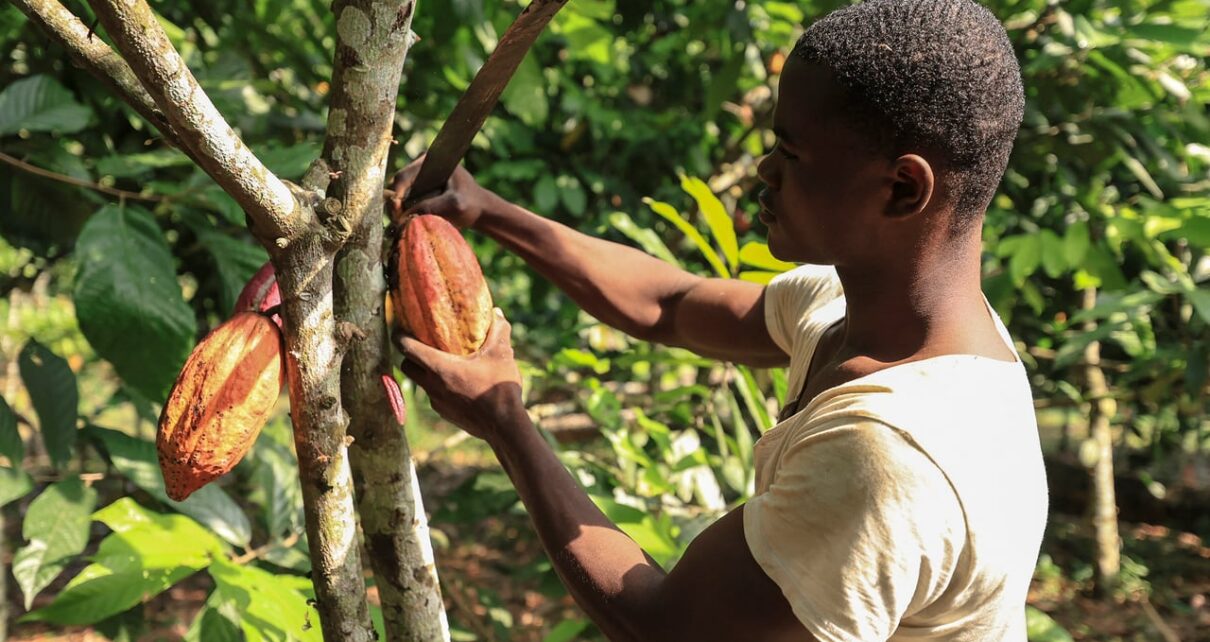

In the heart of Cameroon’s lush southern regions, cocoa producers are navigating one of the most challenging periods in recent memory. The once-reliable income stream from their plantations has become increasingly uncertain, forcing families to rethink their livelihoods.
Families in regions like Ebebda have cultivated cocoa for generations, passing down not just land but also time-honored techniques. Yet, the global market’s volatility has collided with local challenges—rising production costs, unpredictable weather patterns, and aging trees—to create a perfect storm for these hardworking farmers.
Climate shifts and rising costs squeeze profit margins
The changing climate has emerged as a silent yet formidable adversary. Erratic rainfall and prolonged dry spells have weakened cocoa trees, reducing yields and forcing farmers to invest more in irrigation and soil care. At the same time, the cost of fertilizers, pesticides, and labor has surged, further tightening budgets that were already stretched thin.
For many, the dream of sending children to school or saving for emergencies now feels distant. “We used to harvest enough to cover expenses and still have something left,” shared one farmer from Ebebda. “Now, even with hard work, we struggle to break even.”
Market fluctuations leave farmers vulnerable
Cocoa prices on the global market have been anything but stable. International demand swings and trade policies have created a rollercoaster effect, leaving Cameroonian farmers at the mercy of forces beyond their control. With little bargaining power, they often receive prices that barely reflect the true cost of production.
Exporters and middlemen, while essential to the supply chain, sometimes dictate terms that leave producers with minimal profits. This imbalance has prompted calls for stronger cooperatives and direct trade agreements to ensure fairer compensation.
Innovation offers a glimmer of hope
Despite the challenges, pockets of resilience are emerging. Some farmers are turning to organic farming practices, which not only reduce input costs but also appeal to premium markets. Others are diversifying by integrating shade trees or food crops alongside cocoa, creating multiple income streams.
Government initiatives and NGOs have also stepped in, offering training in sustainable agriculture and access to microloans. These efforts aim to revitalize the sector while protecting the environment for future generations.
Community-driven solutions gain traction
Local cooperatives are playing a pivotal role in empowering farmers. By pooling resources and negotiating collectively, smallholders can secure better prices and share best practices. Some groups are even exploring value-added products, like cocoa butter or powder, to capture more of the supply chain’s value.
“When we work together, we’re stronger,” noted a cooperative leader in the South region. “It’s not just about surviving—it’s about thriving.”
What lies ahead for Cameroon’s cocoa sector?
The road to recovery won’t be easy, but the determination of Cameroon’s cocoa producers remains unwavering. With the right mix of innovation, support, and fair trade practices, there’s potential to turn the tide and restore prosperity to this vital industry.
For now, families like those in Ebebda continue to tend their cocoa trees, holding onto hope that brighter days are within reach.
As the global community turns its attention to sustainable agriculture, Cameroon’s cocoa sector stands at a crossroads—one that could redefine its future.