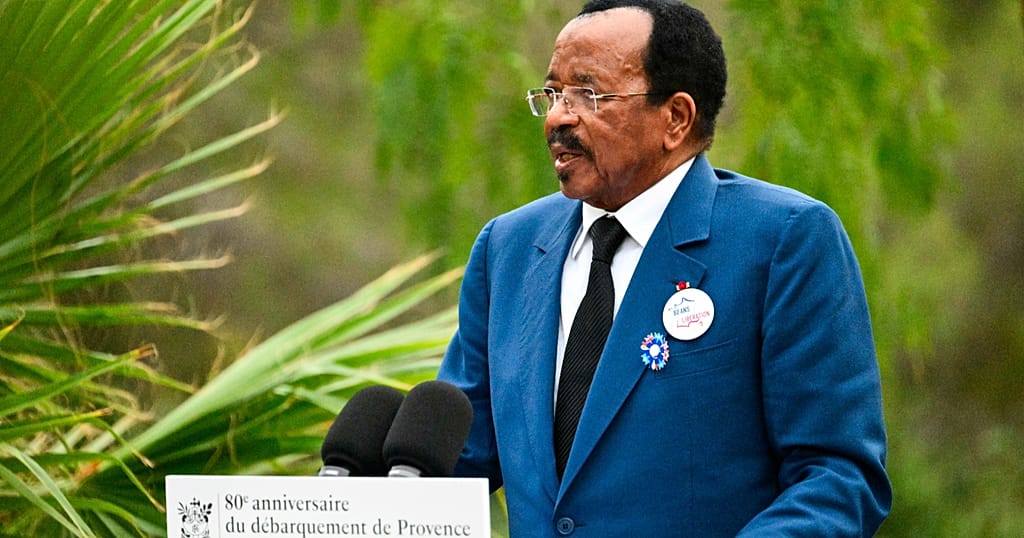
Amid mounting accusations of an institutional void, the Cameroonian president, Paul Biya, has intensified his use of presidential decrees to reassert his authority despite his extended absence from the country. At 93 years old, the head of state departed Cameroon with his wife on June 7 under the guise of a brief private trip to Europe.
Yet, nearly two months later, President Biya remains out of public view, fueling widespread speculation about his health and whereabouts. In response to growing uncertainty, the government has adopted a proactive stance by issuing a flurry of executive orders to demonstrate continued governance.
In late July, the president authorized a significant financial move by empowering the Minister of Economy to conclude agreements with the Islamic Development Bank, securing nearly 28 billion CFA francs in funding. This financial decision underscores Biya’s ongoing influence over national affairs.
On August 3, the president further solidified his presence in state matters by reshuffling top military leadership. Five colonels were promoted to brigadier general, and General Ebaka Hypolite was appointed as the new army chief of staff. These strategic appointments not only reinforce Biya’s control over the security apparatus but also ensure continuity in military leadership.
While the government insists there is no deterioration in the president’s health and assures his imminent return, the prolonged absence has drawn sharp criticism from opposition figures. They argue the country is operating in an institutional limbo, with key positions such as vice-president and a new government yet to be filled, leaving the nation in what critics describe as autopilot mode.