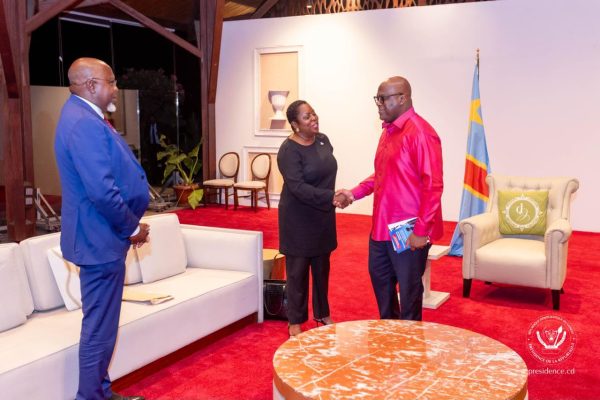
An ambitious outreach initiative to secure formal recognition of the GENOCOST—a term now widely used to describe atrocities committed in the Democratic Republic of the Congo since 1996—is set to unfold in France when parliament reconvenes. This strategic move was unveiled by the Collectif des élus français originaires du Congo-Kinshasa (CEFOCK) following a meeting with President Félix Tshisekedi at the Cité de l’Union Africaine in Kinshasa.
The CEFOCK delegation outlined plans to organize memorial events, policy roundtables, and targeted advocacy campaigns aimed at French local governments, national institutions, and the Congolese diaspora. The goal is clear: to elevate the GENOCOST from the margins of public discourse into a central policy issue, ensuring it receives the same level of attention as other recognized genocides.
Breaking the silence around Congo’s forgotten tragedy
For years, the mass killings and systemic abuses in the DRC have remained underreported, confined largely to the sphere of humanitarian organizations. But the CEFOCK is determined to change that narrative. By leveraging the political influence of its members—many of whom hold elected office in French municipalities, departments, and regions—the collective seeks to mobilize both grassroots and institutional support. Their strategy includes direct engagement with French lawmakers to introduce formal recognition of the GENOCOST during parliamentary sessions.
Strengthening the case through institutional partnership
To reinforce their campaign, the CEFOCK has formed a strategic alliance with the Commission interinstitutionnelle d’aide aux victimes et d’appui aux réformes (CIA-VAR), a Congolese government body dedicated to victim documentation, reparations, and historical remembrance. Together, they aim to achieve two critical objectives: first, to preserve the memory of victims through education and memorialization; second, to push for official state recognition of the GENOCOST, paving the way for legal justice and reparative measures.
President Tshisekedi has publicly endorsed this initiative, describing it as a vital contribution to the DRC’s memorial diplomacy. The move aligns with broader national efforts to institutionalize remembrance, including the recent launch of the National Museum of the GENOCOST and a dedicated memorial in Kinshasa—both announced during the national GENOCOST remembrance day on August 2.
Diaspora emerges as a powerful political force
The Congolese diaspora in France, now represented in local and regional councils across the country, has become a key player in this campaign. No longer limited to sharing personal testimonies, the community is now positioned to exert direct political influence. By coordinating with the CEFOCK, diaspora leaders are working to ensure that the GENOCOST is addressed not just as a historical footnote, but as a urgent policy priority—similar to the recognition processes that followed other 20th-century genocides.
The timing of this initiative is strategic. With France’s parliamentary agenda set to resume, the CEFOCK is poised to launch a coordinated advocacy blitz. Their efforts reflect a broader shift in Kinshasa’s approach: moving from awareness-raising within the DRC to securing international recognition and reparative justice on the global stage.