Why the expulsion of Burkinabè gold miners from Guinea exposes a critical policy gap
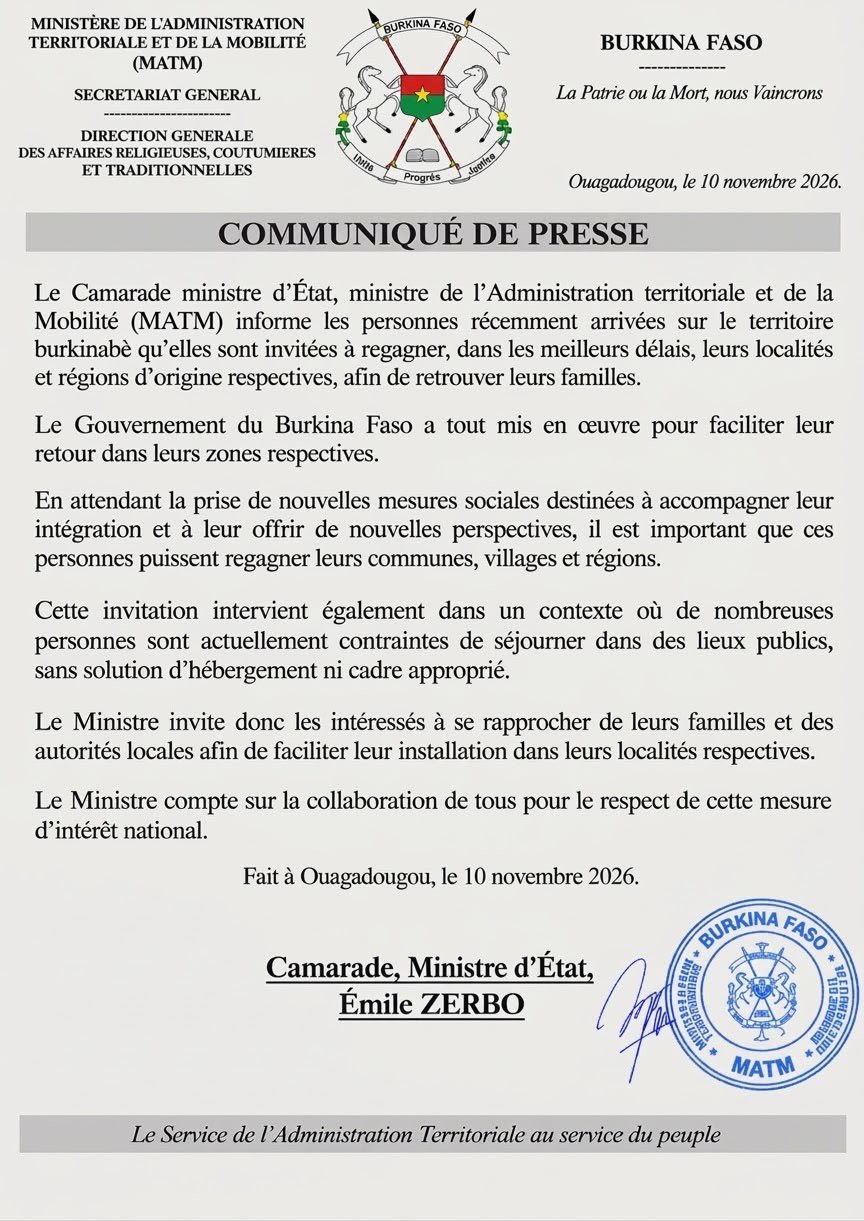
The rhetoric of economic sovereignty and national dignity that has defined Ibrahim Traoré’s leadership is now facing an unrelenting challenge: what solutions does Burkina Faso actually offer to the thousands of young miners forcibly returned from Guinea? After years of economic decline and limited job prospects, these returnees confront a harsh reality returning home does not guarantee income, stability, or hope for the future. The government’s response, which centers on urging them to return to their villages, falls far short of a genuine path to economic rehabilitation.
From gold panners to unemployment: the broken promise of resource ownership
The Burkinabè expelled from Guinea were not merely adventurers seeking fortune abroad. For many, artisanal gold mining provided their only means of supporting families. Returning empty-handed is not a return to normalcy it is a collapse of income, the end of long-term family projects, and a return to the very conditions of poverty that drove them to seek work in the first place.
Sovereignty over natural resources cannot be claimed when the state fails to translate mineral wealth into job creation. The power’s emphasis on industrial control and nationalization must now be measured not by policy announcements, but by tangible improvements in the lives of those who risked everything in the mines of Guinea.
The limitations of agriculture and vocational training as quick fixes
Government suggestions shifting from artisanal mining to farming, livestock, or vocational training sound plausible on paper, yet fail to address the harsh realities of implementation. Transitioning from gold panning to agriculture requires land access, seeds, tools, technical training, and reliable markets. Livestock requires capital, veterinary care, and commercial networks. Vocational training, without startup funding or post-training support, offers little more than a temporary distraction.
It is insufficient to tell thousands of young people to change professions without providing the tools, capital, and infrastructure required to succeed. A three-month training course does not constitute reintegration it is a delay tactic unless it is backed by real economic pathways. Similarly, government-backed cooperatives that exist only on paper do not create jobs or sustainable incomes.
What metrics will define success?
How many returnees will actually receive training?
What portion of the state budget will fund their reconversion?
How many will have access to microcredit or startup grants?
Which lands will be allocated to them for farming or grazing?
What equipment will be provided, and through which program?
How will progress be monitored over six months, one year, or two years?
Without clear answers to these questions, government initiatives risk remaining symbolic gestures rather than effective public policy.
Capital constraints: the silent barrier to reintegration
Many returnees arrive home financially drained. Some may have used savings to finance their journey back. Others return with nothing no capital to restart a mining operation (even informally), no funds to invest in farming or craftsmanship, and no safety net for their families. Demanding that they “start over” without financial support transforms the call for reconversion into an empty slogan.
A responsible reintegration program must include access to start-up funds, microcredit with favorable terms, public guarantees, and entrepreneurial mentorship. Programs should be tailored based on prior experience distinguishing those with agricultural backgrounds from those whose livelihoods depended solely on gold mining.
The social ripple effect is often overlooked. Behind each returnee stands a family dependent on their income: children in school, parents in need of care, financial obligations. The loss of a single income source can plunge an entire household into crisis. The government’s policy must address not only individual survival, but the stability of affected communities.
Formalizing artisanal mining: a dual strategy for sovereignty and safety
Economic sovereignty is not achieved solely through industrial control or rhetoric about mineral wealth. It must also encompass the welfare of those who have historically worked in gold panning. A sustainable model requires regulated artisanal mining sites, improved safety standards, support for functional cooperatives, and official gold purchasing channels.
Such a framework would not only preserve livelihoods but also reduce the risks of clandestine mining, environmental degradation, and informal trade. It would bring transparency and dignity to a sector long operating in the shadows.
Failure to create viable economic alternatives for these miners risks deepening disillusionment. If Burkina Faso claims ownership over its gold resources but cannot offer its citizens a dignified way to earn from them, sovereignty becomes an empty concept measured only in declarations, not in daily lived reality.
A moment of reckoning for Traoré’s leadership
The expulsion from Guinea has become a defining test for Traoré’s government not in its ability to voice outrage at foreign decisions, but in its capacity to prepare, support, and empower its citizens upon their return. It is no longer enough to celebrate mineral sovereignty in speeches. The true measure of leadership lies in whether returning miners can reclaim their lives with purpose and income.
Questions remain unanswered: How many will find remunerative work in the coming months? How many will secure financing for their reconversion? How many families will rise above precarity thanks to announced programs?
Until these questions yield concrete results, the government’s commitment to economic sovereignty will be judged not by its declarations, but by the absence of viable alternatives left to its people.
By IBRAHIM OUMAROU — Journalist