As geopolitical shifts reshape military cooperation in West Africa, a bold question emerges: can the Gulf of Guinea rise to become the continent’s next security stronghold by 2026? The upcoming multinational exercise GEX 2026 may hold critical answers.
The joint military drill, involving Côte d’Ivoire, Gabon, and France, is far more than a tactical showcase. Scheduled for two phases in November 2026, it signals a deliberate pivot in how Paris engages with African partners—shifting from large-scale permanent bases to flexible, alliance-driven operations. With threats spanning piracy, illicit trafficking, and cross-border terrorism, the Gulf of Guinea is no longer just an economic lifeline—it’s the frontline of a new security architecture.
Why Côte d’Ivoire and Gabon are central to this strategy
The selection of these two West African nations is no coincidence. Côte d’Ivoire’s strategic southern flank and Gabon’s Atlantic coastline anchor a region that accounts for nearly 40% of Africa’s maritime traffic. Together, they form a natural corridor for securing energy supplies, trade routes, and critical infrastructure.
The exercise isn’t confined to national borders. It spans two distinct theatres: FANGHA 2026 in Côte d’Ivoire (November 7–14) and WAIYA 2026 in Gabon (November 24–29). This dual approach reinforces interoperability across diverse operational environments—from jungle terrain to open ocean.
What’s at stake for Africa’s militaries
The stakes are high: can African armies transition from observers to leaders in a unified defense model? GEX 2026 tests their readiness to:
- Coordinate multi-domain operations (land, air, sea) under shared command structures
- Develop rapid-response protocols for transnational threats like piracy and smuggling
- Bridge gaps in intelligence-sharing and logistical integration
Numbers tell part of the story. Côte d’Ivoire fields nearly 1,180 troops, France contributes 850, and Gabon fields around 100. Observers from Benin, Guinea, Liberia, and Senegal signal growing regional interest in structured collaboration.
France’s evolving role: from presence to partnership
France’s military footprint in Africa has undergone seismic shifts. Recent withdrawals from Sahel nations like Mali and Burkina Faso forced a rethink of its approach. What’s emerging is a lighter, more agile model—emphasizing training, joint drills, and selective deployments.
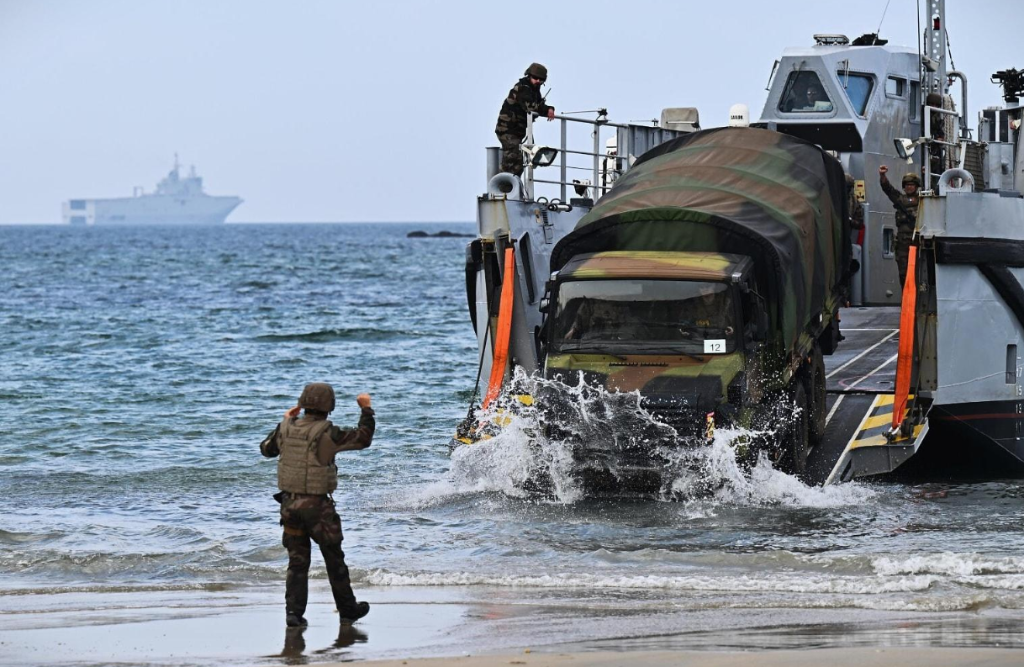
GEX 2026 exemplifies this evolution. With assets like the Mistral amphibious assault ship and Mirage 2000 fighter jets, France demonstrates capability without permanent basing. The message: African-led security doesn’t mean operating alone.
The Gulf of Guinea’s unsung challenges
Beyond headlines about coups and insurgencies, the Gulf’s real vulnerabilities lie beneath the surface:
- Maritime trade disruption: A single piracy attack in the Gulf can delay global supply chains for weeks.
- Energy dependence: Offshore oil and gas installations are soft targets for sabotage.
- Spillover instability: Sahel conflicts increasingly cross into coastal states, straining fragile national defenses.
Addressing these risks demands a regional strategy—one where Côte d’Ivoire and Gabon aren’t just participants, but architects of their own security.
Can GEX 2026 break old dependency cycles?
The exercise’s success hinges on two hard truths:
1. From training to trust
Transforming joint drills into lasting cooperation requires more than shared barracks: it needs shared intelligence, aligned doctrine, and mutual accountability.
2. From foreign support to local capacity
African militaries must move beyond reliance on external hardware. Goals include:
- Institutionalizing regional command centers
- Standardizing equipment across partner nations
- Investing in indigenous R&D for surveillance and cyber defense
GEX 2026 isn’t just a rehearsal—it’s a referendum on whether Africa can chart its own security future, with partners as enablers, not overseers.
What’s next: turning maneuvers into mission
The post-exercise phase will reveal the true stakes. Will participating nations:
- Expand observer countries into active members?
- Establish joint maritime patrols under an African framework?
- Use lessons learned to revise national defense policies?
One thing is certain: the Gulf of Guinea’s security future won’t be forged by single nations or distant allies alone. It demands a coalition built on equal partnership, shared risk, and unwavering commitment.