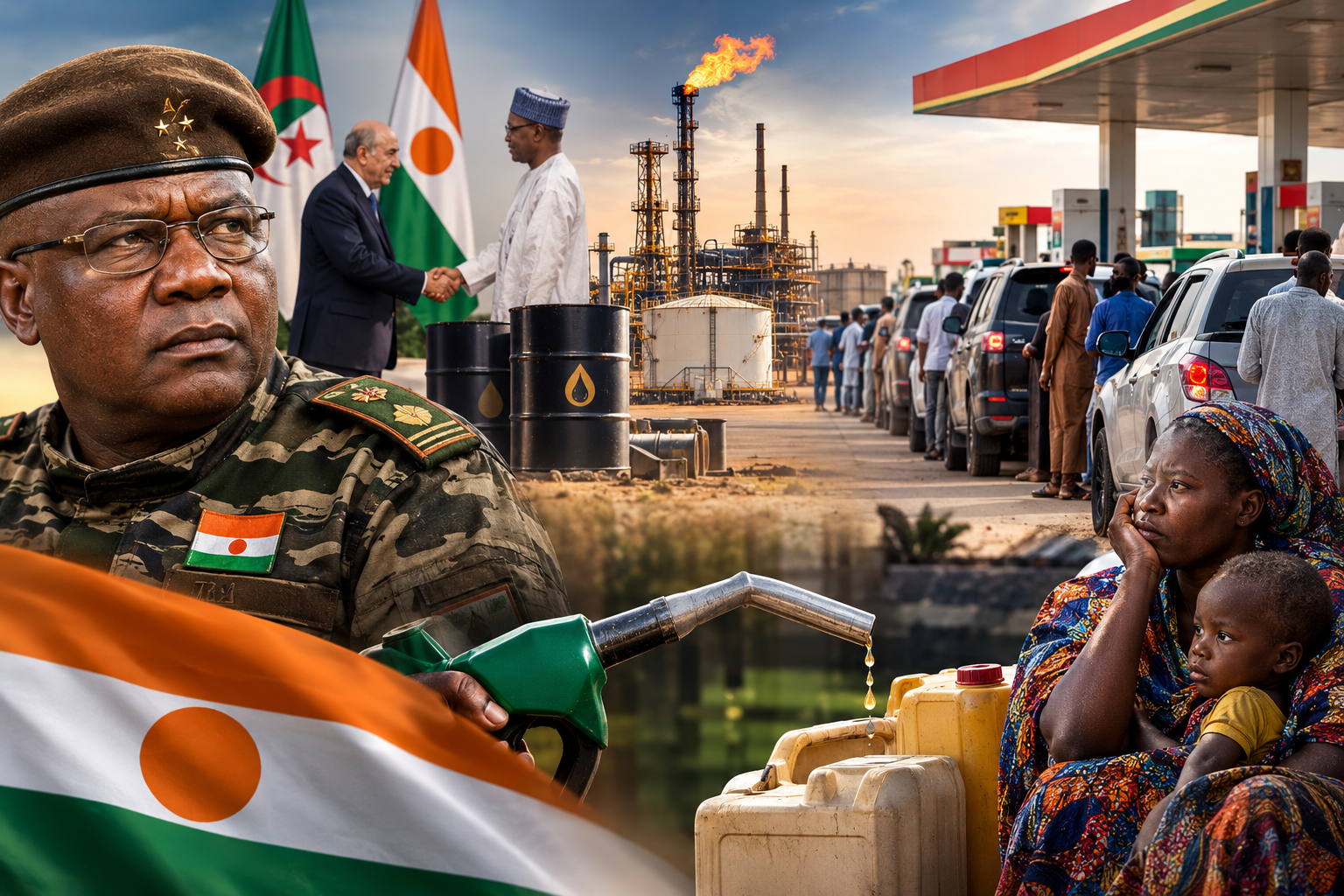
As Niamey forges new strategic alliances, a critical dilemma emerges from the shadows of high-level diplomacy. The recent security agreement with Algeria highlights a pressing strategic question: can a nation rich in crude oil genuinely claim sovereignty when its own citizens face severe fuel shortages? This paradox forms the core of a domestic crisis that no international treaty can easily resolve.
The paradox of a thirsty oil producer
It remains a stark contradiction that a country possessing significant petroleum reserves and operational extraction infrastructure struggles to keep its own gas stations supplied. When distribution networks falter, the immediate burden falls squarely on the public. Long queues at pumps, paralyzed transport sectors, and stalled commercial activities demonstrate that supply chain failures directly harm everyday livelihoods, local merchants, and small enterprises.
Tracing the missing barrels
Export volumes versus local needs
The core issue extends far beyond mere extraction capacity; it centers entirely on resource allocation and distribution logistics. Critical inquiries must be directed at the national supply chain: what proportion of the extracted crude is actually refined for local consumption, and how much is siphoned off for export? Authorities must provide concrete data regarding refining capabilities, storage capacities, and transport logistics to explain why domestic demand remains unmet.
Geopolitics versus daily survival
The limits of foreign partnerships
The expanding footprint of international allies in strategic sectors demands rigorous scrutiny. For instance, the growing involvement of Russia across the Sahel raises valid concerns regarding the exact terms of these military and economic arrangements. Furthermore, while security cooperation with Algeria addresses genuine regional threats, multiplying diplomatic accords cannot magically fix deep-rooted socioeconomic struggles. A defense pact will never substitute for a competent energy policy or transparent resource management.
Demanding true resource sovereignty
True independence requires absolute transparency. If the government insists on exercising full control over natural wealth, it must prove that this control yields steady supplies and fair prices for the public. Ultimately, citizens are asking a fundamental question: what is the value of subterranean wealth if it fails to power the national market? Until the administration clarifies the exact bottlenecks in the petroleum chain and proves that strategic decisions prioritize local needs over foreign interests, the promise of economic independence will remain an unfulfilled illusion.