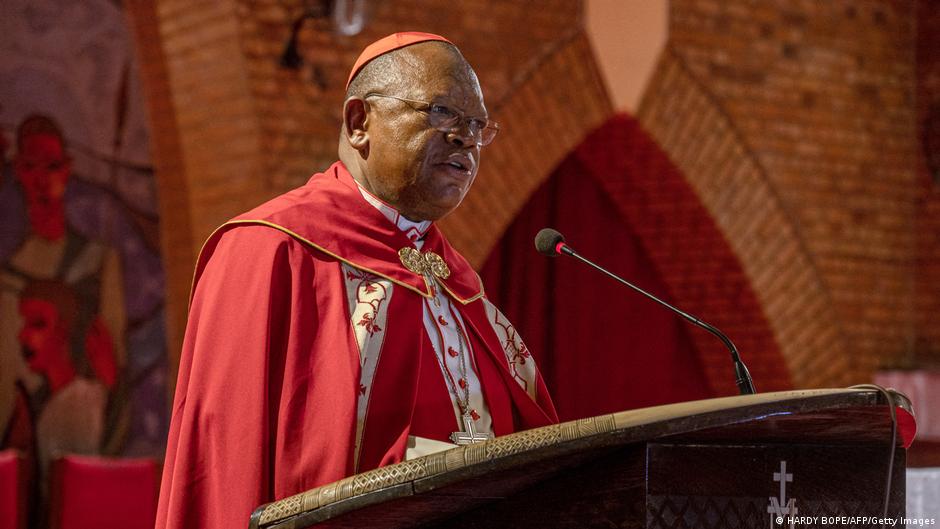
As the Democratic Republic of the Congo marked its 66th Independence Day, Cardinal Fridolin Ambongo delivered a powerful message to the nation, emphasizing the urgent need for peace over constitutional reform. Speaking before a congregation at the Notre-Dame du Congo Cathedral in Kinshasa, the Archbishop highlighted the nation’s deepening crises—escalating insecurity, persistent armed conflicts, the presence of foreign forces on Congolese soil, widespread poverty, and the resurgence of the Ebola epidemic—arguing that these challenges demand immediate attention rather than a debate over constitutional amendments.
“Do we truly believe that revising the Constitution, often hailed as a universal solution, particularly when aimed at enabling a third term, is the most appropriate response to the suffering of the Congolese people?” Ambongo questioned. “In light of today’s dire circumstances, neither the necessity nor the urgency of altering the Constitution is evident. The Democratic Republic of the Congo’s top priority is peace.” The Cardinal underscored the National Episcopal Conference of the Congo’s commitment to fostering broad, inclusive dialogue to restore stability.
Unified opposition to constitutional changes
Ambongo’s stance resonates with key civil society and opposition figures. The Catholic Church of Congo and the Lay Coordination Committee have also dismissed the idea of constitutional reform as misguided in the current context. Their position aligns with a growing chorus of voices rejecting any modifications to the country’s foundational laws.
Marie-Ange Mushobekwa, a former minister and prominent member of the Common Front for Congo—a coalition linked to former President Joseph Kabila—reaffirmed the coalition’s resolute opposition to any changes to Article 220, which explicitly limits presidents to two terms. “Article 220 is non-negotiable. The Constitution is clear: a president may serve only one renewable term. After two terms, power must be handed over to the people’s chosen successor,” she stated. “The FCC and its affiliated parties will take to the streets on July 8 to defend the Constitution. We will not tolerate any attempt to undermine it.”
Among the most vocal advocates for this stance is Plamédie Bamata, a youth leader from the Patriotism Movement. She has called on the Congolese youth to join the opposition’s upcoming protests. “We are determined to end the third-term agenda, for which Congolese have already spilled so much blood to defend this Constitution,” Bamata declared. “On July 8, we will march to the Palais de la Nation to voice our rejection of any attempt to destabilize our nation.”
Political tensions rise as reform proposal advances
Meanwhile, the government and its parliamentary majority have pushed forward a controversial bill that outlines the process for organizing a referendum on constitutional reform. While officials frame the legislation as a means to legally regulate referendum procedures, critics warn it could pave the way for broader constitutional changes.
The opposition has vowed to resist what it perceives as an underhanded strategy to dismantle constitutional safeguards. With public sentiment increasingly against constitutional tampering, the stage is set for a high-stakes showdown between authorities and civil society over the future of the DRC’s governance.