The government in Burkina Faso has recently mandated a six-day military training program for over forty journalists, framed as a ‘patriotic immersion’ exercise. Organized by the Ministry of Security at the Police Academy in Pabré, just outside Ouagadougou, this unprecedented requirement applies to both public and private media outlets. The initiative aligns with the military junta’s declaration of a state of war against jihadist groups linked to Al-Qaïda and the Islamic State, which have been active in the country for more than ten years.
A video shared on social media by the national broadcaster RTB captured the forty-four participating journalists, both men and women, dressed in military fatigues and holding rifles. During the closing ceremony, the Minister of Communication and government spokesperson, Pingdwendé Gilbert Ouédraogo, addressed the group, questioning: ‘Will you be patriotic and professional journalists?’ Standing at attention, the journalists responded in unison: ‘Affirmative.’ The minister went on to state, ‘A professional journalist who lacks patriotism poses a threat to their country,’ and added, ‘A professional and patriotic journalist who remains disengaged is merely a passive observer in a moment when the country’s history is being written.’
The government, including the Director General of the Police Academy, Lassina Traoré, has justified the training as a means to ‘instill in journalists the operational realities and guiding values of the defense and security forces in their daily work.’ However, the initiative has raised immediate concerns among press freedom advocates.
The Africa Sub-Saharan bureau director of Reporters Without Borders (RSF), Sadibou Marong, expressed strong reservations, calling the program ‘a new and deeply troubling signal for press freedom.’ He emphasized, ‘Journalists are not soldiers, nor should they be turned into mouthpieces for the war effort, dressed in military uniforms and bearing arms.’
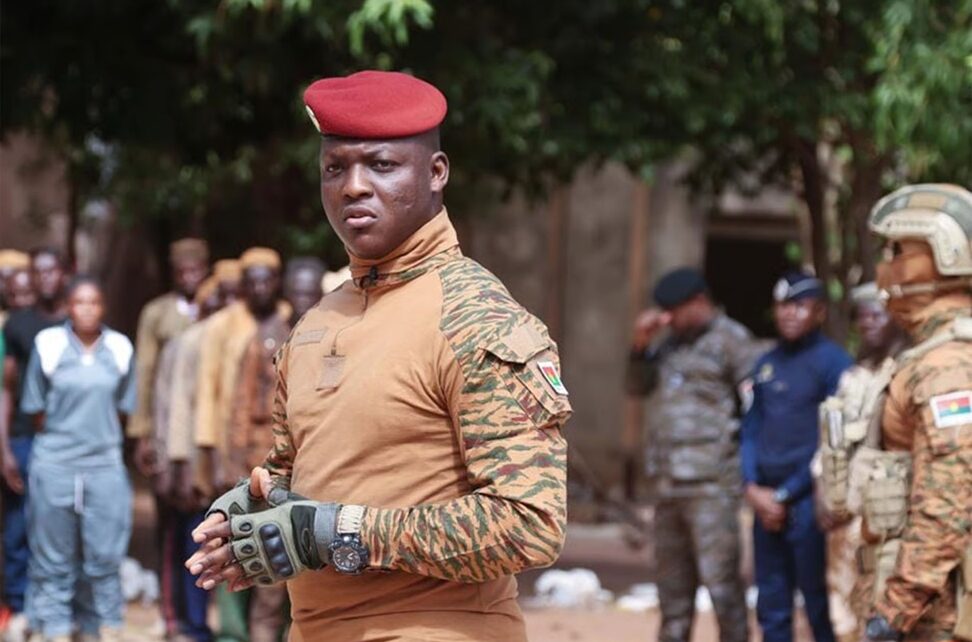
This mandatory military immersion for the press is part of a broader political agenda under Captain Ibrahim Traoré’s leadership. Since seizing power in a 2022 coup d’état, Traoré has pursued a domestic and anti-Western policy aimed at reclaiming national sovereignty. Notably, a similar military training requirement was enforced last year for secondary school students preparing for their final exams.
The temporary enlistment of journalists into military training unfolds against a backdrop of heightened government pressure on both national and international media. Numerous outlets have faced abrupt suspensions, while human rights organizations report that dozens of journalists critical of the transitional authorities have been forcibly conscripted and deployed to the frontlines. The case of journalist Serge Oulon, who remains detained two years after his abduction in Ouagadougou, underscores the escalating tensions.