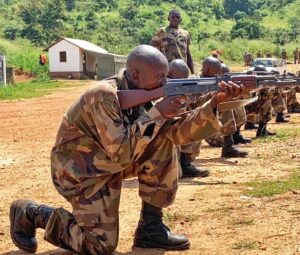
The Wagner Group’s presence in the Central African Republic has taken a new turn with the reported enrollment of 1,000 young locals in Ndélé, a strategic city in the north. This mass recruitment effort underscores the group’s expanding influence in the region, raising concerns among observers about its long-term objectives.
Residents in Ndélé describe a flurry of activity as Wagner operatives conduct interviews and screenings in local neighborhoods. Many of the recruits, reportedly aged between 18 and 35, are drawn by promises of steady income and employment, though motivations vary widely among participants. The process has sparked debates over the implications for regional security and stability.
What does this recruitment mean for Ndélé?
The surge in enlistments has transformed Ndélé, a city already marked by political and economic instability. Locals report that Wagner’s recruitment drive has intensified in recent weeks, with some participants citing financial incentives as their primary motivation. However, others express reservations about the long-term consequences of aligning with a foreign armed group.
Analysts warn that the influx of new recruits could further destabilize the region, particularly as Wagner’s operations expand beyond traditional military support roles. The group’s growing footprint in the Central African Republic has drawn international scrutiny, with questions mounting about its methods and objectives.
Reactions from local communities
Community leaders in Ndélé have voiced mixed reactions to the recruitment drive. Some view it as an opportunity for economic relief in a country grappling with poverty and conflict, while others fear it could exacerbate tensions with neighboring factions. The lack of transparency surrounding Wagner’s activities has only deepened uncertainty among residents.
A local elder, speaking on condition of anonymity, noted, “Many young people see this as their only chance for a better life. But at what cost?”
Meanwhile, civil society groups have called for greater oversight, emphasizing the need to protect vulnerable populations from exploitation. The recruitment drive has also reignited discussions about the role of foreign actors in the Central African Republic’s ongoing crisis.
What’s next for Wagner’s operations in the country?
With 1,000 new recruits now under its wing, Wagner’s footprint in the Central African Republic is expected to grow. The group’s activities, already a point of contention, are likely to face heightened scrutiny as its presence becomes more entrenched. Observers are closely monitoring developments in Ndélé and beyond, particularly as Wagner’s influence extends into new regions.
The recruitment drive also raises questions about the group’s long-term strategy. Will these new recruits be integrated into existing security frameworks, or will they operate independently, further complicating the country’s fragile security landscape? The answers remain unclear, but the implications are undeniable.