Over the past two decades, Senegal’s economic landscape has undergone a dramatic shift in its public contract landscape. What was once a domain dominated by French conglomerates now sees Chinese, Turkish, Emirati, and Tunisian firms sharing the spotlight in major infrastructure projects. From deep-water ports to stadiums and industrial zones, the balance of power has tilted decisively away from traditional partners.
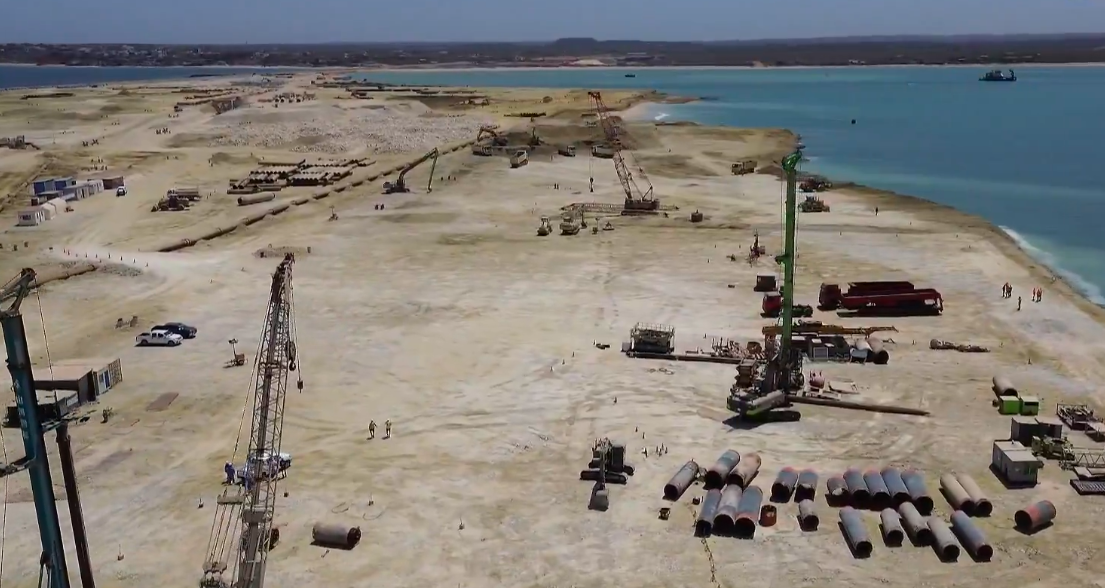
Consider the port of Ndayane, south of Dakar. This $2 billion deep-water facility, set to become one of West Africa’s most advanced, is being built by a consortium led by DP World, an Emirati firm. While French companies, including Eiffage, competed for the contract, their bids were ultimately outmatched—both in cost and execution. The selected consortium, heavily weighted toward Chinese contractors, secured the deal after offering a solution 20% cheaper than the French group’s proposal. According to David Gruar, DP World’s site director, the decision came down to practicality: “We evaluated firms globally, including many from France, but in the end, their offers didn’t meet our requirements.”
The trend extends beyond logistics. In Diamniadio, a planned city designed to ease Dakar’s congestion, Turkish firms have secured contracts for the stadium, railway station, hotels, and residential buildings. The industrial platform, aimed at attracting foreign investors, is staffed primarily by Chinese and Tunisian enterprises. Bohoum Sow, secretary-general of the APROSI development agency, confirmed to local media that no French firms are currently operating within the zone.
why chinese firms lead the field
Their success, experts argue, stems from a deeper understanding of Senegal’s evolving needs. Take the example of a cardboard packaging plant where Chinese technicians train local workers—a sector previously nonexistent in Senegal. As Sow explains, “This isn’t just construction; it’s capacity-building. They adapt to specific demands and diversify their approaches, something we’ve rarely seen from Western firms.”
China’s rise in Senegal reflects a broader strategic push across Africa. With investments spanning infrastructure, energy, and technology, Beijing has positioned itself as a go-to partner for African nations seeking rapid development. The results are visible: while French firms once controlled over 30% of Senegal’s public contracts, their share has plummeted to just 5%. Meanwhile, Chinese companies now account for more than 30% of major projects.
can french firms reclaim ground?
Despite the setbacks, some French businesses are adapting. Ragni, a family-run French company specializing in solar-powered street lighting, recently secured a €70 million contract to deploy 36,000 next-generation lamp posts across Senegal. To win the bid, Ragni established a local subsidiary led by Senegalese executives and transferred technical expertise to the team. “Flexibility, quality, and cost efficiency were key—and local job creation sealed the deal,” said Birama Diop, Ragni’s Senegal director.
Caroline Richard, of Proparco—the private sector investment arm of AFD Group—believes French firms can still compete, but only by embracing local partnerships and innovation. “The market is demanding higher standards, and French companies excel in high-precision sectors. Where labor costs matter and growth potential is high, they have a real edge.”
As Senegal’s skyline transforms with new ports, stadiums, and solar-lit streets, the message is clear: traditional partners must innovate or risk being sidelined. The future of Senegal’s infrastructure lies in adaptability—and for now, Chinese firms are setting the pace.