Health: Ebola outbreak: two fatalities, including a police officer, after attack on treatment center in Ituri; patients flee
Security: Eastern DRC faces AFC/M23 restructuring with potential name change; Kabila tipped for key role per UN expert findings
Sports: 2026 World Cup: “Our focus is on maximizing our strengths to deliver our best performance—qualification demands nothing less” (Sébastien Desabre)
Politics: 66 years of DRC independence: Archbishop Fulgence Muteba warns of national collapse without genuine reconciliation and forgiveness among Congolese
Society: DRC launches qualifying rounds for fourth edition of Tractor Race across seven GBE Agri agricultural sites
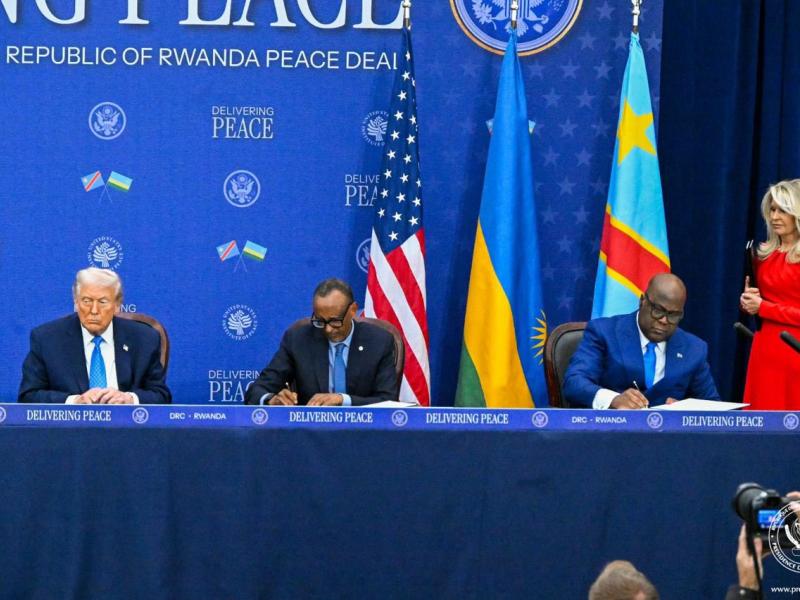
Politics: Diplomacy in the DRC: Washington, Doha, and Montreux agreements under scrutiny
Culture: What does the phrase “Oath of freedom bequeathed to our posterity” in the national anthem truly signify?
Security: Eastern DRC: AFC/M23 receives sustained support from over 10,000 Rwandan military personnel; no meaningful withdrawal observed, per UN report
Security: DRC: ADF now ranks as the world’s second deadliest ISIS-affiliated group
Security: UN identifies AFC/M23 as primary perpetrator of human rights violations in eastern DRC
Politics: Félix Tshisekedi reassures eastern populations: “Your security remains the absolute priority of my leadership”
diplomacy in the DRC: how Washington, Doha, and Montreux agreements are falling short
Diplomatic efforts in the Democratic Republic of the Congo: promises vs. reality
The much-anticipated Washington, Doha, and Montreux agreements were heralded as pivotal steps toward resolving the persistent conflicts in the Democratic Republic of the Congo (DRC). Yet, the latest findings from the United Nations Group of Experts paint a far less optimistic picture. The report, released in mid-2026, underscores a stark disconnect between diplomatic rhetoric and on-the-ground realities.
While the agreements called for the withdrawal of Rwandan Defence Forces (RDF) assistance and the March 23 Movement (M23), the reality has been one of tactical repositioning rather than substantive change. The report notes that observed movements amounted to little more than shifts of 15 to 20 kilometers, with no significant territorial adjustments. Worse still, additional Rwandan reinforcements, including advanced anti-aircraft systems, continued to arrive in eastern DRC as late as April 2026. No notable withdrawals have been documented since.
The DRC government’s own commitments have also come under scrutiny. Despite pledges to neutralize the Democratic Forces for the Liberation of Rwanda (FDLR), these groups have remained active, even engaging in combat alongside the Congolese Armed Forces (FARDC). This failure to act has further complicated the peace process, raising questions about Kinshasa’s willingness—or ability—to uphold its end of the bargain.
Internal divisions within the M23 alliance have further exposed the fragility of the movement. While figures like Corneille Nangaa and Joseph Kabila have pursued political ambitions aimed at seizing power in Kinshasa, the majority of M23’s military leadership have resisted expanding operations beyond North Kivu and South Kivu. This rift between political aspirations and military pragmatism has weakened the movement’s cohesion, leaving its long-term viability uncertain.
What’s next for DRC diplomacy?
The findings underscore a harsh truth: diplomatic agreements alone cannot resolve deep-seated conflicts without genuine commitment from all parties. The international community’s role in holding stakeholders accountable has never been more critical. Yet, with each passing month, the gap between promises and progress widens, leaving the people of eastern DRC to bear the brunt of unfulfilled expectations.
- Politics