
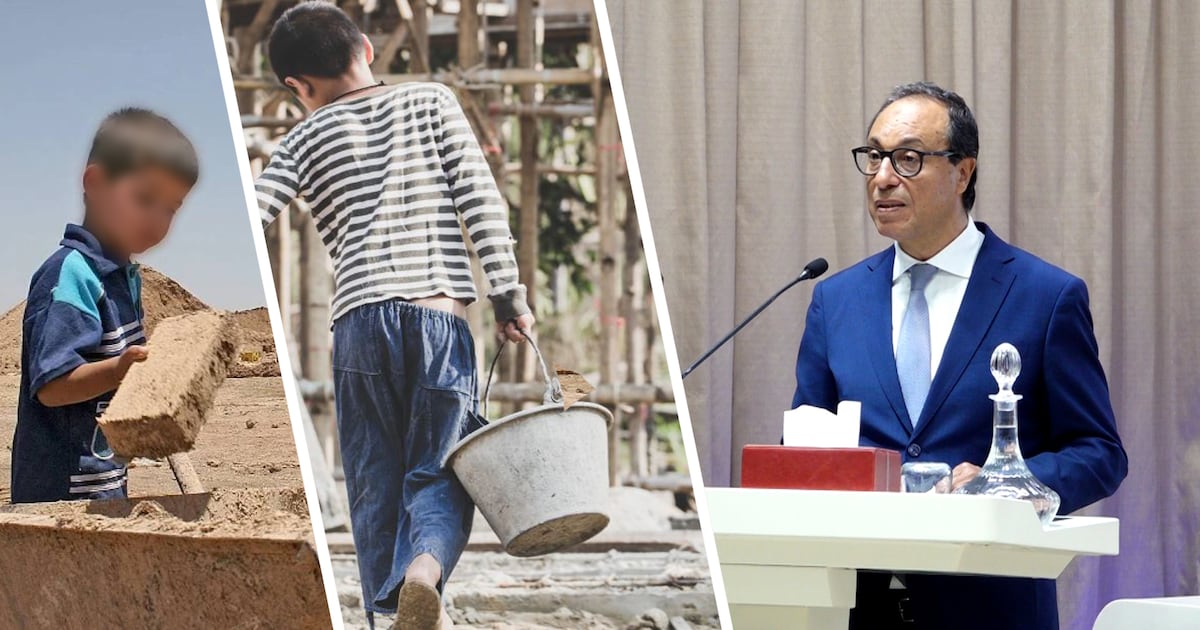
The Kingdom of Morocco has made significant strides in combating child labor over the past two decades, yet the issue persists in informal sectors and hazardous occupations. The Economic, Social and Environmental Council (CESE) has taken decisive action, unveiling a comprehensive report in Rabat this month outlining a roadmap for the definitive eradication of this persistent challenge.
In the newly released advisory titled ‘Towards an effective public policy for eradicating child labor in Morocco’, CESE President Abdelkader Amara revealed findings from a national survey revealing that 78% of the 1,540 respondents believe child labor remains widespread in the country. This compelling data prompted the council to reassess existing public policies and introduce innovative solutions to accelerate progress.
Progress amid persistent challenges
Abdelkader Amara highlighted Morocco’s legislative milestones, including the nationwide ban on child labor for minors under 15 and the phased elimination of hazardous work for those aged 16 to 18. Official statistics reflect the tangible impact of these measures: the number of working children aged 7 to 17 plummeted from 517,000 in 1999 to approximately 101,000 in 2024—a reduction exceeding 80%.
«In 1999, over half a million children were engaged in labor. By 2024, that figure has dropped to around 100,000. This is a monumental achievement worth recognizing», Amara noted. However, he cautioned that «despite undeniable progress, these gains fall short of fully eradicating child labor».
Root causes and societal impact
The CESE’s report identifies entrenched structural factors fueling child labor, including the prevalence of informal economies, entrenched poverty, and widespread socio-economic vulnerability. «The rightful place for every child, after their family, is in school and within enriching social and educational environments», Amara emphasized. He underscored that child labor not only stunts physical, psychological, and educational development but also exacerbates social inequalities and undermines broader societal progress.
Public perceptions align with these concerns. According to the survey, 27% of respondents frequently encounter child labor in public spaces, particularly in street vending, heavy load-bearing, and vehicle cleaning. Additionally, 22% reported alarming trends such as organized begging, child exploitation, and involvement in drug trafficking.
Disturbingly, the CESE revealed that nearly six in ten child laborers are engaged in hazardous activities, underscoring the urgent need for stronger prevention, monitoring, and protection mechanisms.
Policy recommendations for a lasting solution
The CESE’s advisory proposes sweeping reforms, including revising the Labor Code and updating the 2010 decree that outlines hazardous occupations prohibited for minors. A key recommendation is raising the minimum employment age to 16, aligning it with the conclusion of compulsory education and reinforcing the synergy between educational and social policies.
Amara also highlighted the recent signing of a framework agreement between the CESE and the National Observatory for Children’s Rights (ONDE), led by Princess Lalla Meryem. This collaboration aims to enhance coordination between the two institutions, intensifying efforts to prevent, protect, and eradicate child labor—a goal Amara described as essential for a nation like Morocco, given its remarkable advancements across multiple sectors.