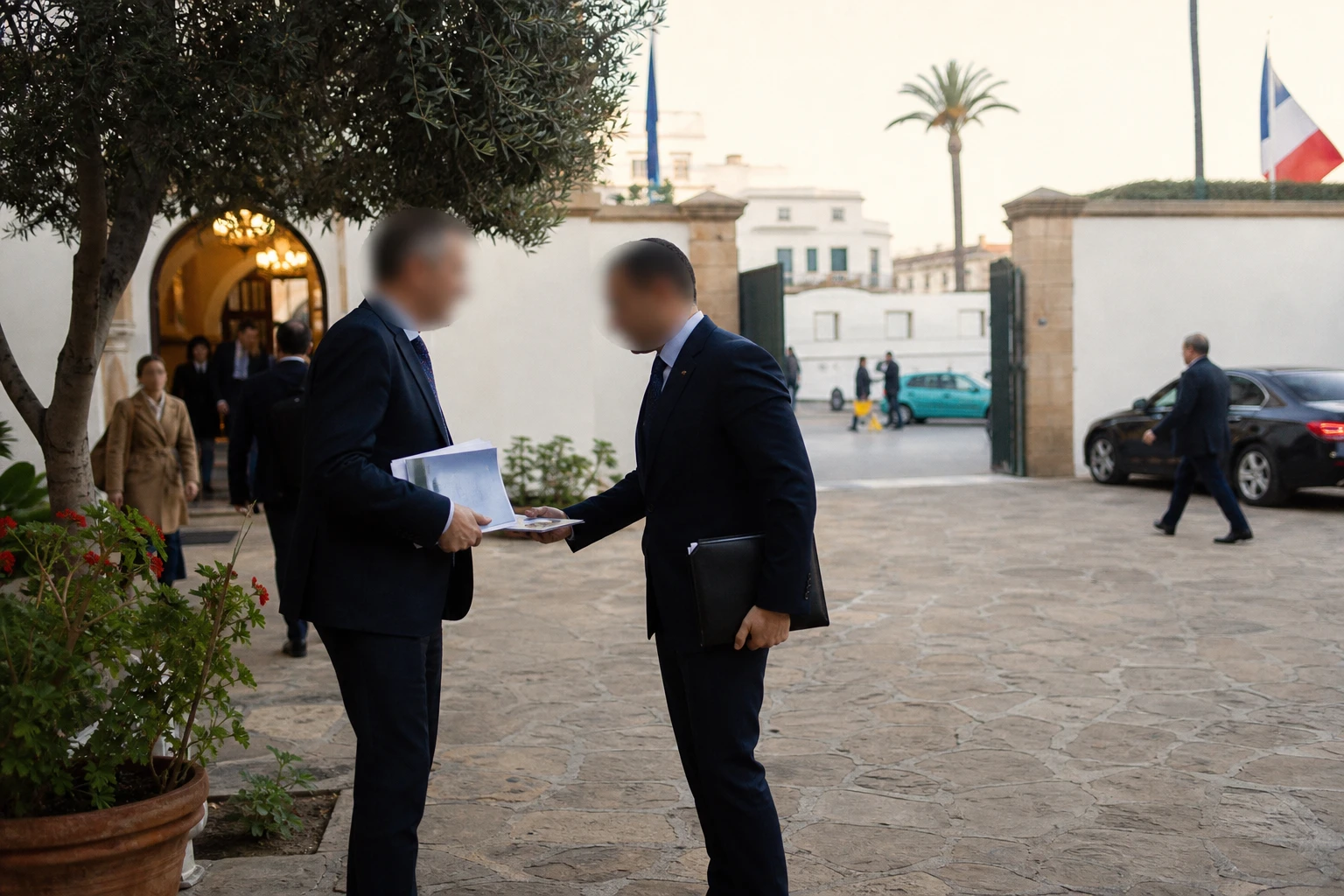
Lecornu’s maiden diplomatic foray: strengthening ties with Doha and Rabat
Sébastien Lecornu’s inaugural foreign trip as France’s head of government sends a clear signal: Paris is prioritizing strategic partnerships in the Gulf and North Africa. The two-day tour—first to Doha, then to Rabat—underscores a deliberate shift in French diplomacy, blending protocol with political messaging.

Doha: a gesture with deeper implications
Lecornu’s stop in Qatar was brief but significant. Beyond the customary condolences for the late Emir Hamad ben Khalifa al-Thani, the visit reinforced France’s commitment to a long-standing alliance. The presence of Jean-Yves Le Drian—France’s former foreign minister and a seasoned Gulf affairs expert—highlighted continuity in Paris’s approach.
The relationship between France and Qatar extends beyond politics. With over 6,000 French expatriates and robust economic ties—particularly in aviation and defense—the partnership is both strategic and resilient. In a volatile Gulf region, maintaining this channel of dialogue serves mutual interests, ensuring France’s voice remains influential.
Rabat: sealing a renewed partnership
The stakes were higher in Morocco, where Lecornu led a high-level delegation, including key ministers. This marked the first such meeting since 2019, signaling a deliberate effort to revive and deepen bilateral relations.
The diplomatic thaw began in mid-2024, when France officially endorsed Morocco’s autonomy plan for the Sahara, a move that shifted Paris’s stance and drew sharp criticism from Algeria. The visit solidified this alignment, with both countries reaffirming commitments worth over €10 billion in investments and agreements during President Macron’s state visit later that year.
For Morocco, the benefits are twofold: enhanced political support in Europe and reinforced diplomatic leverage on the Sahara dossier. For France, the gains are strategic—reasserting its influence in a key North African market and restoring its historical role in the region.
The unspoken rivalry: Algeria’s reaction
France’s alignment with Morocco has not gone unnoticed in Algiers. Algeria recalled its ambassador in protest, deepening a rift that reflects broader tensions over the Sahara dispute. While Paris insists its position is aimed at fostering negotiations, Algiers views it as a provocation. The delicate balancing act continues, with France seeking to strengthen ties with Rabat without severing dialogue with Algiers entirely.
Criticism also arises from Western Sahara’s pro-independence movement, which argues that France’s stance legitimizes an occupation. Paris maintains its position is a constructive step toward resolution, though the debate underscores the complexity of the issue.
What’s next for French-Moroccan relations?
The trajectory of this partnership hinges on two critical factors: the tangible outcomes of Lecornu’s meetings—such as economic cooperation, security initiatives, and migration policies—and the potential visit of King Mohammed VI to France. Such a summit would symbolize a formalized alliance, marking the transition from diplomatic warming to strategic entrenchment.
Yet the broader question remains: how far can France go in deepening its ties with Morocco without permanently alienating Algeria? Lecornu’s tour does not resolve this tension, but it clearly charts the course Paris has chosen to navigate it.