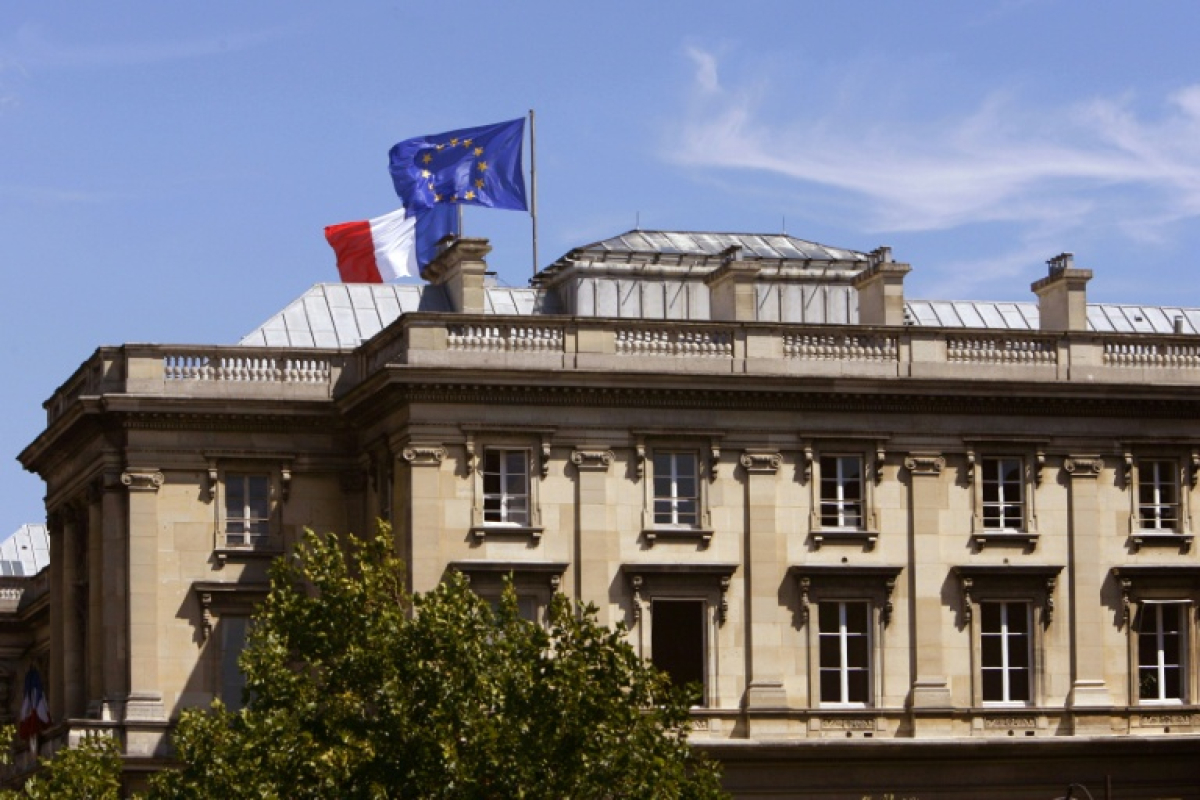
french intelligence operative sentenced in Mali, Paris condemns ‘unfounded allegations’
A French intelligence operative, holding diplomatic status and detained for nearly ten months in Bamako, has been sentenced by Malian courts to 20 years in prison. The conviction, handed down for “undermining state security,” was swiftly condemned by Paris, which labeled the charges as “baseless allegations.”
The French national, apprehended in August 2025 and accused of conspiring against the institutions of this Sahelian nation—currently governed by a junta at odds with France—also faces a 20-year ban from Malian territory and a fine of 5,400 euros. This significant verdict underscores the deepening diplomatic rift between the two countries.
The proceedings took place on Thursday before the criminal chamber of the specialized counter-terrorism court, with the judgment announced the following day. These sensitive legal actions unfolded behind closed doors, a measure reportedly taken for security considerations.
The trial itself was conducted in camera, excluding public access.
Identified as Yann V., the French individual was initially intercepted on August 13, 2025, during an operation executed by Mali’s State Security (SE), the country’s primary intelligence agency.
While officially assigned to the French embassy in Bamako, the French officer was apprehended alongside several officers from the Malian Armed Forces (FAMa).
The Malian officers, since dismissed from service, are yet to face trial. They stand accused of orchestrating an espionage network and a conspiracy aimed at destabilizing Mali’s transitional institutions and executing a coup d’état.
At the time of the arrest, the French Ministry of Foreign Affairs vehemently denounced what it termed “unfounded accusations” and demanded the immediate release of its citizen.
In a direct response to the apprehension of its operative, France subsequently suspended its counter-terrorism cooperation with Mali and ordered two Malian diplomats to depart French territory.
Following the announcement of the judgment on Friday, the French Foreign Ministry once again rejected the “baseless accusations” leveled against its agent.
“France’s stance on this matter has remained steadfast and unchanged since the initial arrest of our agent,” affirmed the French ministry.
It further asserted that “the arrest, detention, and trial of our duly accredited diplomatic agent by the Republic of Mali on August 13, 2025, constitute a flagrant violation of the Vienna Convention, an international agreement to which Mali is a signatory.”
Paris seeks a swift resolution
According to the French ministry, their agent is entangled in a legal process based on unfounded accusations, and “every possible means is being deployed to find a rapid resolution to this case.”
The ministry reiterated that the French agent was engaged in a legitimate security cooperation mission, firmly denying any direct or indirect French involvement in destabilizing Mali.
Mali, a key nation in West Africa, has grappled with a severe security crisis since 2012, fueled by violence from jihadist groups linked to Al-Qaeda and the Islamic State (EI), alongside community-based criminal organizations. The country is currently governed by a military junta that seized power through coups in 2020 and 2021.
Since then, authorities in Bamako have distanced themselves from traditional Western partners, particularly former colonial power France, opting instead for a political and military alignment with Russia.
This West African Sahelian nation continues to face a critical security landscape, highlighted by recent coordinated attacks on April 25 and 26. These assaults were carried out by jihadists from JNIM (Group for the Support of Islam and Muslims), in alliance with the Tuareg-dominated Azawad Liberation Front (FLA) rebellion.
The unprecedented scale of these coordinated attacks targeted strategic junta positions across multiple regions. Tragically, they resulted in the death of Malian Defense Minister Sadio Camara, 47, a key figure within the ruling junta, who was killed in a suicide bombing.