Gabon’s bold shift toward new political and economic horizons
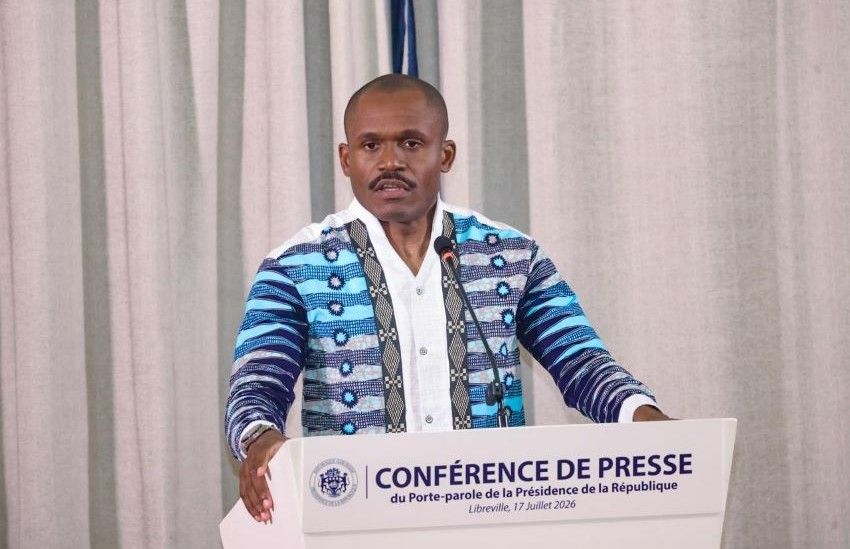
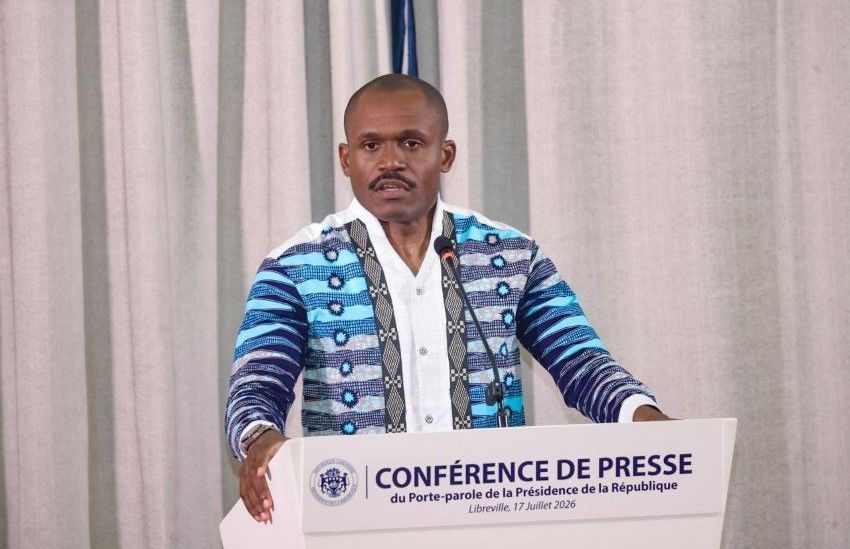
Libreville, Friday, July 17, 2026 — A month after addressing the Parliament in a joint session, President Brice Clotaire Oligui Nguema has elevated the nation’s political transparency through a press conference led by his Special Advisor and Presidential Spokesperson, Théophane Nzame-Nze Biyoghe.
Far from being a routine institutional update, this address outlined a comprehensive government doctrine and national ambition that transcends the transition phase, entering the realm of sustainable state transformation in Gabon.
The message delivered to Gabonese citizens and international partners is unequivocal. The country is determined to close the chapter of uncertainty and emerge as a credible, influential, and strategically positioned player on both the regional and global stage.
According to the Presidential Spokesperson, the June 15 presidential address marked “a pivotal moment of truth, transparency, and unity around the achievements of the journey so far and the prospects ahead.” Behind these words lies a bold political commitment to simultaneously reform diplomacy, the economy, infrastructure, and Gabon’s social contract.
Rebuilding a nation that matters
The administration’s first order of business has been to restore Gabon’s international credibility. Once viewed with caution by some partners, the nation is now positioning itself as a key interlocutor on major African and global issues. Through intensified diplomatic initiatives, strengthened strategic partnerships, and a renewed assertiveness in defending national interests, Gabon is charting a new course.
Théophane Nzame-Nze Biyoghe emphasized this shift: “Gabon now aims to be a country that counts, a country that influences, and a country that contributes to the major regional and international dynamics.”
This diplomatic ambition is matched by a structural economic transformation. The government is moving away from a model overly dependent on raw material exports to build an economy centered on local value creation.
The domestic processing of manganese stands as a flagship initiative in this industrial overhaul. The goal is clear: generate more productive activities, develop national expertise, and create skilled employment within Gabon.
This vision extends to diversification across agriculture, infrastructure, energy, digital technologies, and value-added industries.
Agriculture and infrastructure as pillars of progress
Agriculture has become one of the most visible testing grounds for this diversification strategy. Two soil analysis laboratories have been built and equipped, the national veterinary laboratory has been rehabilitated, and a legal framework for agricultural land has been established. New regulations governing seeds and pesticides have been enacted, and a key law on food safety has advanced significantly.
On the ground, 145 tractors and agricultural equipment have been deployed nationwide, accompanied by 91 vehicles assigned to technical services. The emergency plan for the poultry sector alone mobilizes 120 billion CFA francs over two years, with 150 farms already earmarked for development. The creation of the Agropastoral Company of Gabon further strengthens efforts to enhance national food sovereignty.
Infrastructure development follows the same logic of structural transformation. Nearly 1,900 kilometers of roads are currently under construction across the country. Major axes such as Ovan-Makokou, Ntoum-Cocobeach, and Alembe-Mikouyi are set to unlock several regions and improve the movement of goods and people.
According to figures from the Presidency, these projects have already generated over 6,000 direct jobs across all provinces.
Social progress as the foundation of transformation
Economic ambition cannot bear fruit without tangible improvements in living standards. It is in this arena that the government’s performance will ultimately be judged. The progressive expansion of health coverage through the Fonds 4 represents a significant evolution in social protection, particularly for independent workers and voluntary contributors.
In healthcare, 14 operating theaters have been rehabilitated, and scanners have been installed in Port-Gentil, Mouila, and Koulamoutou to reduce internal medical evacuations. A total of 268 general practitioners have been deployed nationwide, complemented by 400 additional hires and 200 community health agents trained.
Efforts to combat rising living costs include the creation of the Gabon Purchasing Center and fiscal measures aimed at protecting household purchasing power. Persistent challenges in access to water and electricity have not been overlooked, with the declaration of a water emergency underscoring the government’s acknowledgment of these issues.
The Presidential Spokesperson stressed that this exceptional mobilization reflects an immediate commitment to action while laying the groundwork for sustainable solutions. President Oligui Nguema’s upcoming state visit to France aligns with this broader strategy of repositioning Gabon and deepening international partnerships on renewed foundations.
Yet, beyond investments, international agreements, and infrastructure, the real challenge may lie elsewhere. “No national transformation can succeed without the mobilization of all,” reminded the President’s Special Advisor.
This statement captures the essence of the coming years. The success of the new Gabon will depend not only on public policies but also on the collective ability of institutions, businesses, civil society, and citizens to embrace this momentum.
Gabon is no longer merely seeking to change its economic trajectory—it is striving to transform its political, administrative, and civic culture. And it is often in this silent revolution that the destiny of nations is decided.