historic agreement to repatriate over 20,000 Central African refugees from DRC
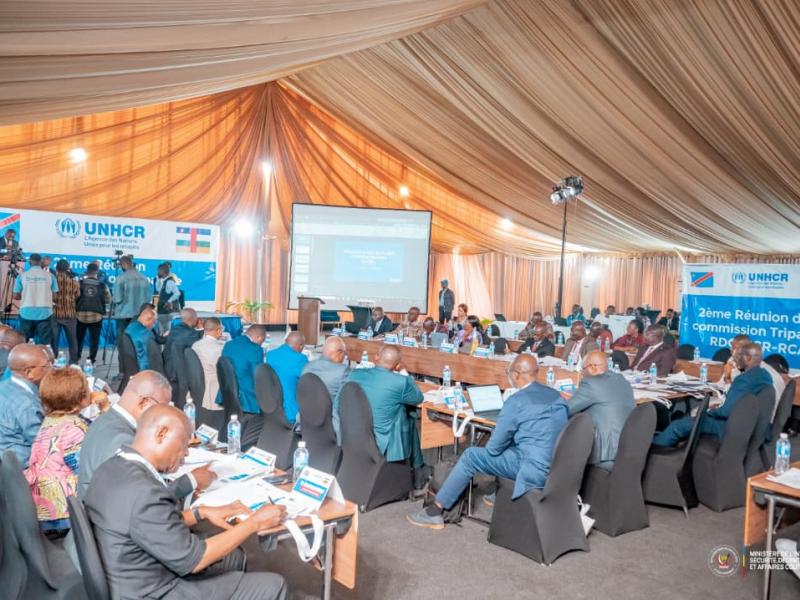
Kinshasa is hosting a crucial tripartite meeting this week, uniting the Democratic Republic of the Congo (DRC), the Central African Republic (CAR), and the United Nations High Commissioner for Refugees (UNHCR). The three-day gathering, running from Tuesday to Thursday, focuses on accelerating the voluntary repatriation of more than 22,000 Central African refugees currently residing in the DRC.
urgent action needed to address refugee crisis
The initiative comes as the DRC and CAR governments, alongside UNHCR representatives, seek sustainable solutions for displaced populations affected by years of conflict in the Central African Republic. According to Pierre Atchom, UNHCR Representative in the DRC, 22,604 biometrically registered Central African refugees remain in the DRC, primarily in North Ubangi, South Ubangi, and Bas-Uélé provinces.
Additionally, 65,000 new asylum seekers from the Central African Republic arrived in the DRC in May 2025, settling in the Zapaï area of Ango territory (Bas-Uélé). This influx has intensified pressure on local resources and highlighted the need for coordinated repatriation efforts.
progress and challenges in refugee repatriation
Eric Mukandila, Permanent Secretary of the National Commission for Refugees (CNR) and head of the DRC delegation, emphasized that voluntary repatriation efforts resumed following the stabilization of previously conflict-ridden zones. He cited a 2019 agreement between the DRC, CAR, and UNHCR, later reinforced by the 2022 Yaoundé Declaration, which promotes a regional approach to finding durable solutions for displaced populations.
Since 2019, 40,000 Central Africans have safely returned to their country through UNHCR-led operations in collaboration with both governments. Mukandila stressed the importance of addressing growing frustration among refugees eager to return, stating, “A thorough review is essential to identify solutions that ensure safe and dignified returns.”
CAR outlines ambitious repatriation plans for 2025
Mesmin Guenguebe Mbari, CAR’s Territorial Planning Advisor and head of the CAR delegation, outlined ambitious plans for 2025. The country aims to repatriate up to 60,000 refugees from neighboring nations, including the DRC, by implementing innovative development poles in return zones across the country.
Mbari called for pragmatic and transparent discussions, urging a methodical pause to scientifically assess the conditions of those already returned. He emphasized evaluating their integration into local communities and the real impact of assistance provided, stating, “We must base our decisions on concrete evidence to ensure lasting solutions.”
collaborative efforts for long-term solutions
The tripartite meeting represents a critical step toward resolving one of the region’s most pressing humanitarian challenges. By aligning on strategies for safe, voluntary, and dignified returns, the DRC, CAR, and UNHCR aim to reduce the strain on host communities while supporting the reintegration of returnees.
As discussions continue, the focus remains on balancing urgency with the need for sustainable, community-driven solutions that address the root causes of displacement in the Central African Republic.