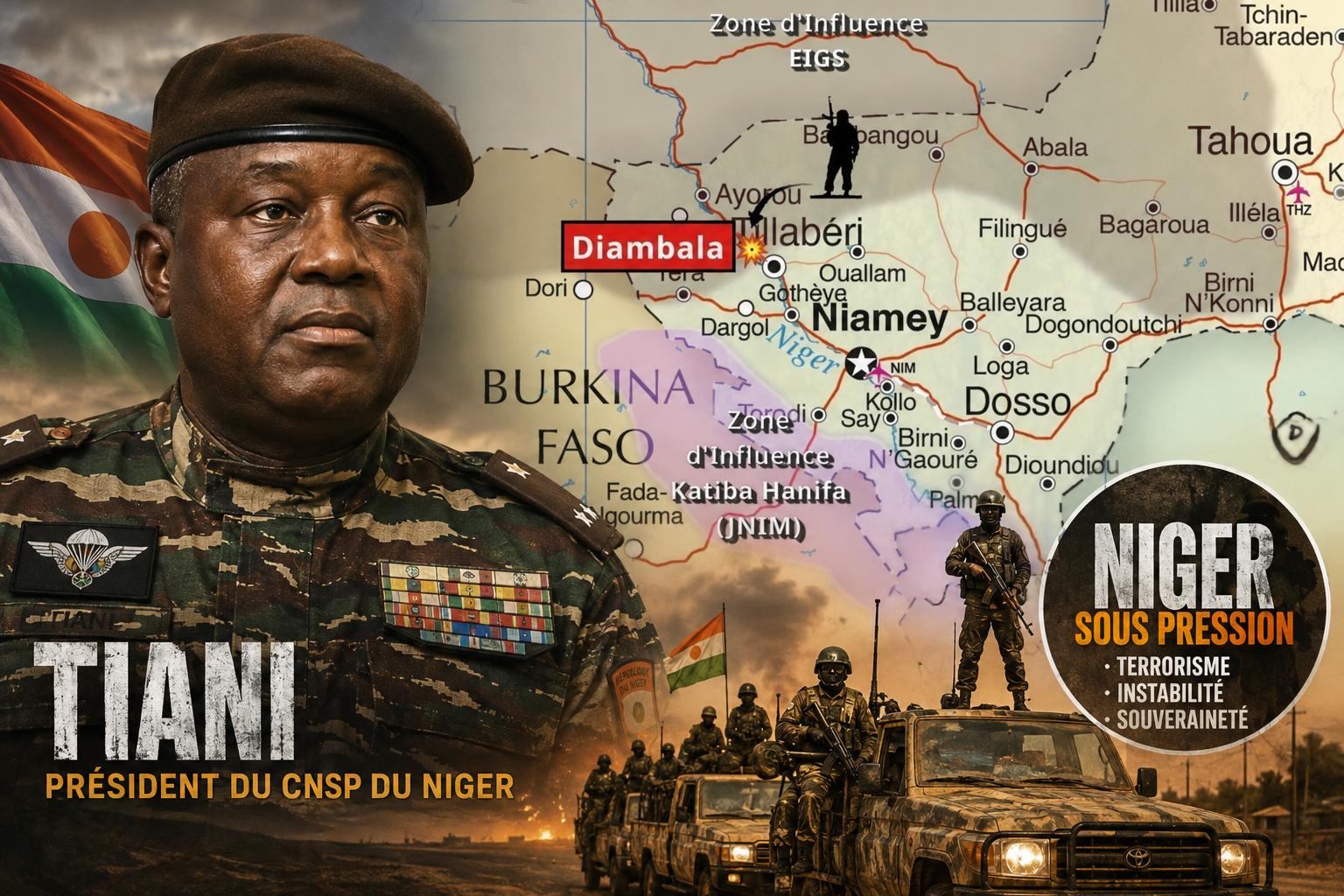
The security situation in western Niger remains highly volatile. While the military administration coordinates extensive campaigns to rally public backing for the head of state, General Abdourahamane Tiani, fresh incursions in the Tillabéri region highlight the ongoing danger posed by armed groups.
On 2 September 2026, armed assailants targeted several settlements in the Tillabéri district, including the villages of Darbani, Diamballa, and Namarigoungou.
During the chaos in Diamballa, two young girls tragically drowned in a pond while attempting to escape the attackers, and a local man suffered gunshot wounds. In Namarigoungou, another resident lost his life. The raiders also plundered livestock across all three targeted communities.
The aggression continued the following day, 3 September, with an assault on the village of Zibane, located within the rural commune of Anzourou in the same Tillabéri department. Local self-defense forces engaged the attackers, resulting in the death of one militia member.
Daily life under constant threat in the tri-border zone
These recent events underscore the extreme vulnerability of a region regularly targeted by armed factions. Tillabéri, positioned within the volatile tri-border area shared by Niger, Mali, and Burkina Faso, remains a primary epicenter of violence.
For rural populations, these raids threaten lives and paralyze agricultural and pastoral activities. The resulting displacement further weakens communities already grappling with severe economic hardships. In this environment, each new raid raises serious questions about the ability of the state to protect citizens living far from major urban centers.
Political campaigns contrast with local security realities
This grim reality stands in stark contrast to the intense public relations efforts led by the military government. Following a recently thwarted coup attempt, authorities and their allies have launched extensive outreach initiatives to secure public loyalty for General Abdourahamane Tiani.
Through rallies, supportive declarations, and calls for national solidarity, the administration is actively working to solidify its political legitimacy. Yet, while official messaging emphasizes national unity and popular backing, residents in Tillabéri continue to live under the shadow of armed violence.
Bridging the gap between official rhetoric and daily survival
For the ruling authorities, maintaining public support is a critical objective in a highly sensitive political climate. However, for those living in vulnerable rural areas, the priority is immediate: the freedom to farm, herd, and live without the constant fear of sudden attacks.
These recent events in Tillabéri reveal that stabilizing the country requires more than political communication. Beyond public relations campaigns and demonstrations of loyalty to General Abdourahamane Tiani, sustainable security solutions are urgently needed to protect those on the front lines of this crisis.