Why does a nation rich in resources still turn to the imf?
The government of Burkina Faso, under the leadership of Captain Ibrahim Traoré, has long championed a narrative of economic self-sufficiency. Official statements frequently emphasize reclaiming national wealth and reducing dependence on foreign financial partners. Yet, the country’s economic trajectory tells a different story one that demands closer examination.
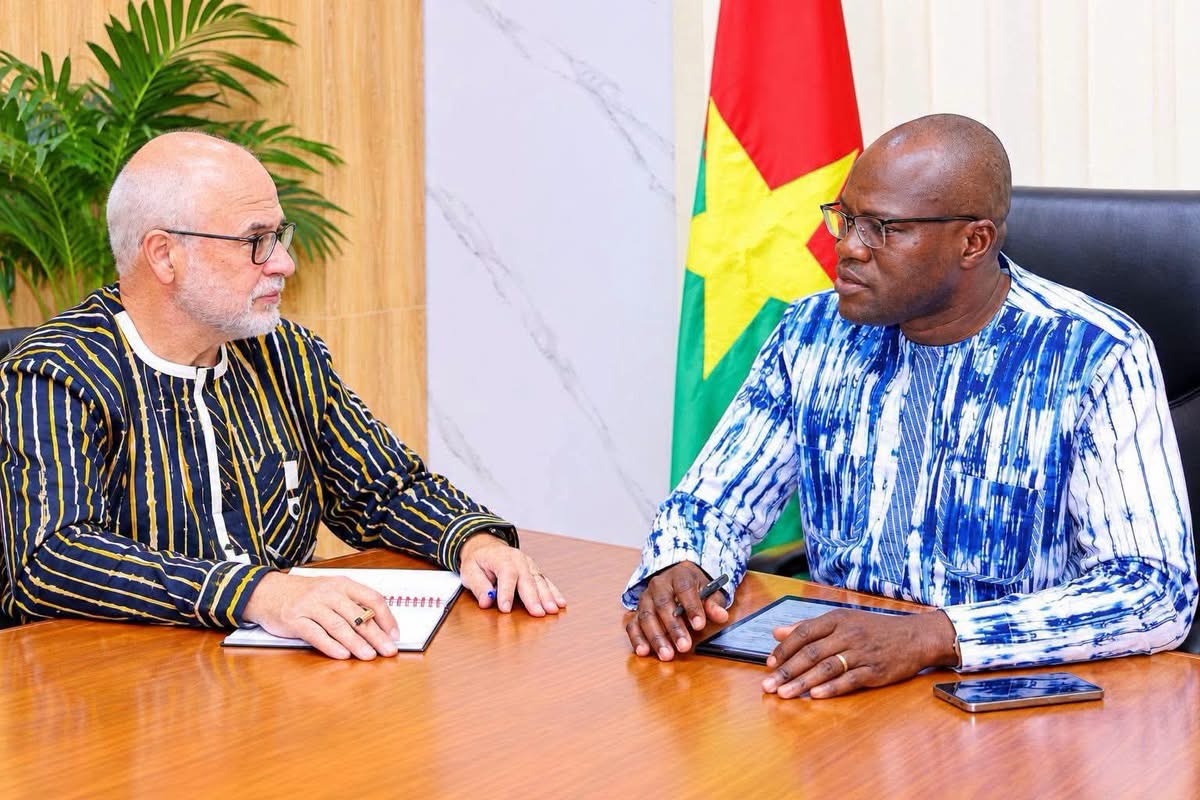
On November 4, 2026, the International Monetary Fund (IMF) announced a technical agreement with Burkinabè authorities, paving the way for a potential $87.67 million financing package, equivalent to approximately 49.6 billion West African CFA francs. This funding stems from two ongoing economic programs: the Extended Credit Facility (ECF) and the Resilience and Sustainability Facility (RSF). The disbursement, however, remains contingent on approval from the IMF’s executive board, expected in mid-January 2027.
The breakdown includes $65.38 million allocated under the ECF and $22.29 million under the RSF. While this represents a conditional commitment rather than an immediate cash injection, it underscores a persistent reliance on external financial mechanisms.
From rhetoric to reality: the gap between independence claims and financial dependence
The question is not whether Burkina Faso should seek international financing no nation should hesitate when economic needs arise. The issue lies in the stark contrast between political declarations and financial practices.
How can authorities justify claims of self-financed development while continuing to rely on institutions like the IMF? If domestic resources were truly sufficient, why would external funding remain essential? And if IMF assistance is unavoidable, why sustain the perception that Burkina Faso has severed ties with traditional financing models?
This inconsistency calls for honest communication rather than further rhetorical posturing.
Can natural wealth alone sustain public finances?
Burkina Faso possesses significant gold reserves, a vital asset for public revenue. The IMF has acknowledged that high gold prices, expanded mining production, and sectoral reforms have bolstered economic activity and state income. However, possessing natural resources does not automatically translate into adequate liquidity for public expenditure.
What matters is how these revenues are mobilized, allocated, and utilized. Authorities must clarify critical questions: How much do mining revenues contribute to the national budget? What share funds public investments? What tangible improvements do citizens observe in their daily lives?
Economic sovereignty is not defined by political speeches alone but by the capacity to convert national wealth into meaningful improvements in living standards.
What transparency and accountability measures are in place?
In its June 2026 assessment, the IMF highlighted key priorities: strengthening domestic revenue mobilization, enhancing public financial management, reinforcing governance, and safeguarding social spending for vulnerable populations. The institution also stressed prudent debt management and greater transparency in public resource allocation.
These recommendations raise a fundamental issue: beyond declarations of sovereignty and narratives of rupture, what concrete assurances are provided to citizens regarding public fund management?
The Burkinabè people deserve more than slogans. While official discourse champions financial independence, citizens are entitled to a transparent account of the country’s financial health and the terms of its engagements with international partners.
Is the IMF reliance a sign of economic failure or strategic pragmatism?
Relying on the IMF is not inherently an admission of failure. However, it becomes reasonable to question why authorities do not communicate with the same intensity about the conditions of these financings as they do about their declarations of sovereignty.
The essence of the debate extends beyond the $50 billion figure. It revolves around the coherence between political promises, economic choices, and the reality of public finances.
True sovereignty is not demonstrated by denouncing international financial institutions in public while quietly seeking their resources when financial needs arise. It is, above all, about telling the truth to citizens regarding the actual means at the country’s disposal and how their resources are managed.
By AMINA SALEY — Journalist