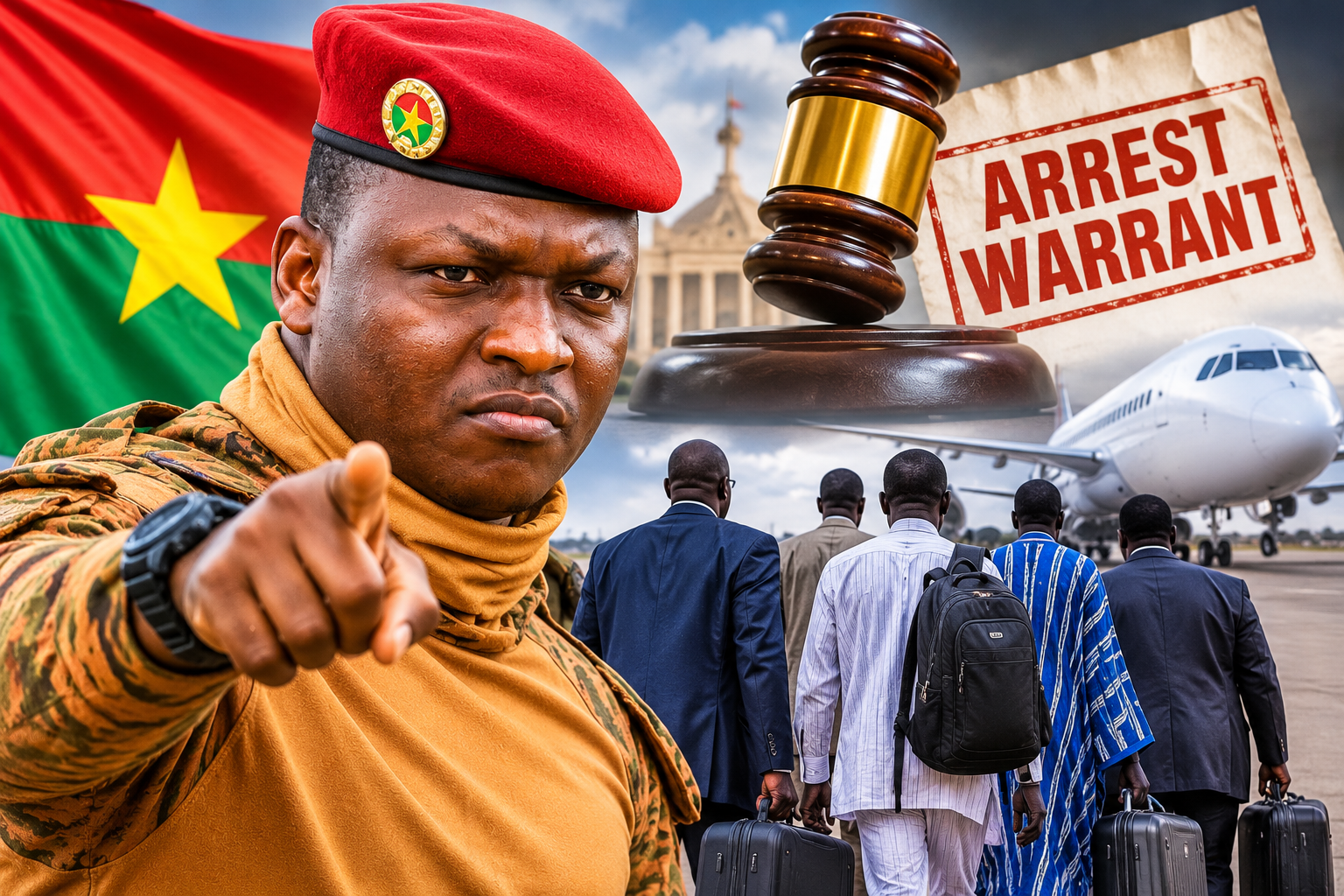
In Burkina Faso, the judicial campaign against former politicians, military officers, and journalists has escalated, now extending beyond national borders. Several prominent figures, who fled the country amid political unrest and credible threats to their safety, have become targets of arrest warrants, legal proceedings, and extradition requests issued by transitional authorities. But why is the transitional government led by Ibrahim Traoré intensifying legal action against individuals who no longer reside within Burkina Faso’s jurisdiction?
For these former officials and critics, exile was supposed to offer protection from persecution. Yet their departure has not diminished tensions with Ouagadougou’s authorities. This escalating wave of prosecutions raises a pressing question: is this a legitimate pursuit of justice, or does it reflect a deeper strategy of political retribution against perceived opponents?
From domestic justice to international pursuit
The expanding reach of Burkina Faso’s judicial system has sparked concerns about the motives behind these extraterritorial measures. Former collaborators, high-ranking military officials, political figures, and journalists once integral parts of the country’s institutions now face mounting legal actions initiated from abroad.
While no individual should be exempt from accountability, the methods and circumstances under which these prosecutions are conducted warrant scrutiny. A justice system that operates without verifiable evidence, procedural independence, or political neutrality risks becoming an extension of power struggles rather than an impartial arbiter.
The limits of extradition and the ethics of transnational prosecutions
Extradition is a legally recognized process, yet its application demands strict adherence to principles of fairness and human rights. When former officials seek refuge in foreign nations, those countries base their asylum decisions on assessments of safety and legal protections. Burkina Faso’s insistence on pursuing these individuals challenges the fundamental rights of exiles and questions the credibility of its judicial motives.
Moreover, the political implications of such actions cannot be overlooked. A government that pursues critics beyond its borders signals a troubling intolerance for dissent. True leadership is demonstrated not through silencing opposition but through fostering open debate, instituting transparent governance, and addressing grievances through institutional strength rather than punitive measures.
When justice becomes a weapon of control
Burkina Faso faces pressing challenges: escalating insecurity, widespread displacement, and a deepening humanitarian crisis. Citizens urgently need solutions not prolonged political confrontations rooted in past regimes. Yet, the authorities’ focus on pursuing former adversaries raises doubts about their priorities.
The danger lies in transforming justice into a tool for political vendettas. If every shift in power results in the systematic prosecution of previous administrations, the nation risks descending into an endless cycle of retaliation, undermining governance and social cohesion.
A turning point for Burkina Faso’s democratic future
At its core, this judicial campaign forces a critical reckoning: is this pursuit driven by genuine efforts to uphold the law, or is it a calculated strategy to eliminate opposition through legal means? For justice to prevail, prosecutions must be grounded in verifiable evidence, conducted with due process, and free from political interference.
An effective leader does not measure strength by the number of former opponents silenced but by the integrity of institutions capable of delivering fair and impartial justice. Burkina Faso’s future depends on whether it will break the cycle of vengeance or succumb to it.
By IBRAHIM OUMAROU — Journalist