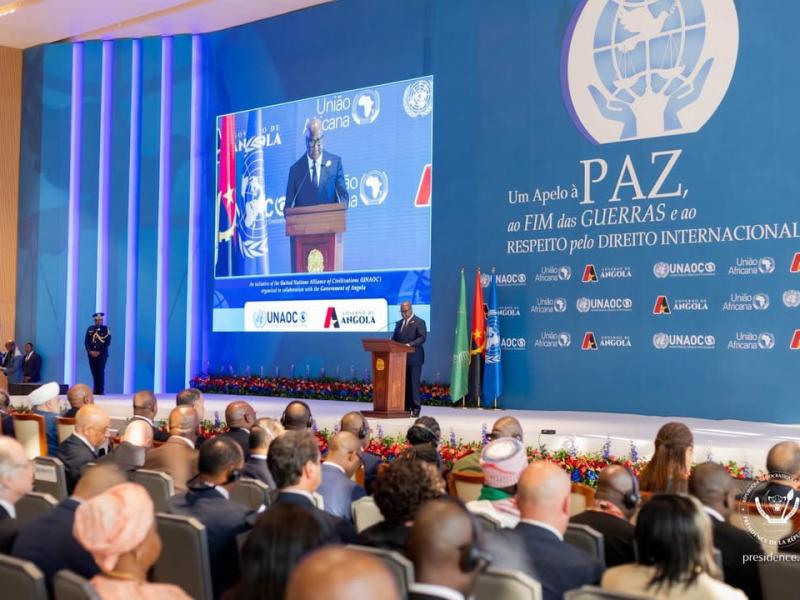
Luanda summit: Tshisekedi calls for verifiable peace in eastern DRC
- Security
On July 16 and 17, 2026, the third edition of the international initiative “A Call for Peace, an End to Wars and Respect for International Law” convened in Luanda, Angola. Organized by the United Nations Alliance of Civilizations (UNAOC) in partnership with the Angolan government, this high-level gathering brought together global leaders to address pressing security challenges threatening world stability.
The Democratic Republic of Congo’s President, Félix Tshisekedi, delivered a powerful address highlighting his nation’s ongoing struggle with armed violence in its eastern provinces. Drawing from direct experience, he emphasized how the DRC’s conflict has become a litmus test for both Africa and the international community.
DRC’s Eastern Crisis: A Test for Global Peace Efforts
Addressing fellow delegates, President Tshisekedi painted a stark picture of his country’s humanitarian crisis:
“The Democratic Republic of Congo knows the cost of war all too well. We understand the pain of displaced families, the terror of civilians trapped in violent zones, the indignities suffered by women, the grief of communities struck by massacres, and the trauma endured by children deprived of education, safety, and hope. We also witness how the illicit exploitation of natural resources fuels conflict instead of fostering development.”
He underscored the persistent security challenges in eastern DRC, where armed groups continue to destabilize the region despite ongoing diplomatic efforts:
“For years, our eastern territories have faced severe security and humanitarian challenges marked by armed group activity, massive civilian displacement, human rights violations, threats to territorial integrity, and external interference. This crisis is not merely a national ordeal—it serves as a critical test for our region, for Africa, and for the international community.”
Diplomatic Commitments and Ground Realities
While acknowledging the diplomatic initiatives led by the African Union and supported by regional and international partners, President Tshisekedi stressed that lasting peace requires more than promises—it demands tangible, verifiable actions on the ground.
“Peace cannot remain an empty pledge. It must translate into concrete measures that restore state authority, protect civilians, enable the dignified return of displaced persons, and pave the way for justice, reparations, and reconciliation. The Luanda Call must not be just another declaration. It should represent a high-level commitment to defend international law wherever it is under threat, prevent conflicts before they escalate into tragedies, protect civilians without exception, support credible mediation, combat impunity, and dismantle war economies.”
A Plea for Human-Centered Peace
President Tshisekedi called for renewed global commitment to prioritize human dignity in peacebuilding efforts. He urged world leaders to replace indifference with responsibility, force with law, propaganda with truth, impunity with justice, and resignation with peace.
“As we mark the 80th anniversary of the United Nations Charter’s entry into force, our duty is not merely to celebrate its legacy but to fulfill its promise. This promise—simple yet profound—is to shield future generations from the scourge of war. It remains as urgent today as ever. The time to act is now. Only by restoring the primacy of international law and applying it consistently can we deter the law of the strong and build a more just, secure, and peaceful world order for generations to come.”
His remarks come at a critical juncture, as the security and humanitarian situation in eastern DRC continues to deteriorate despite agreements like the Washington Accord and the Doha Process. With negotiations stalled and commitments unfulfilled, the urgency for verifiable peace has never been greater.