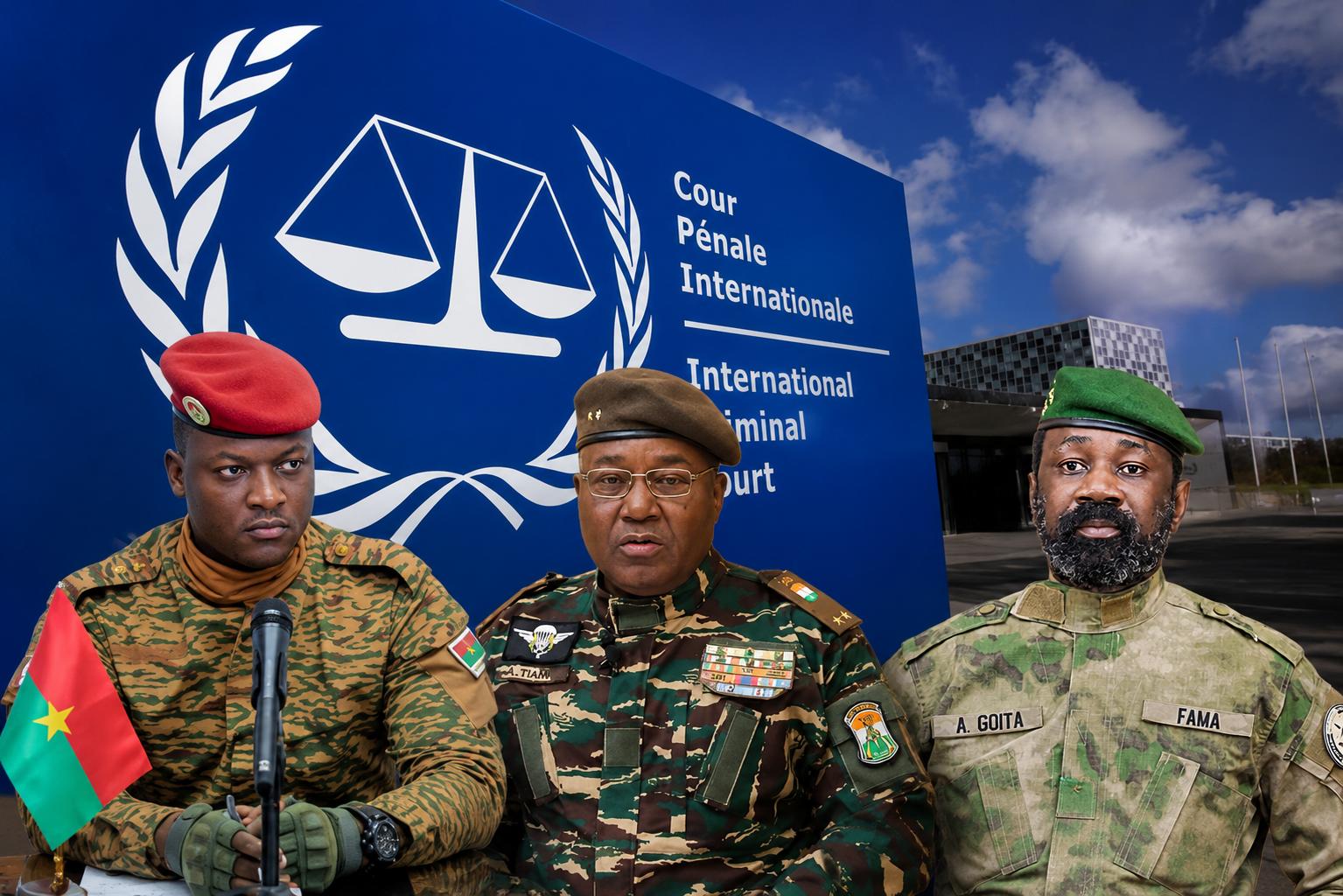
The recent decisions by the governments of Mali, Burkina Faso, and Niger to formally withdraw from the International Criminal Court (ICC) mark a decisive break with global accountability frameworks. Following in the footsteps of Niger, the military-led regimes in Bamako and Ouagadougou have now completed the process of notifying the United Nations of their intention to exit the Rome Statute, the foundational treaty of the court.
a calculated move toward unchecked authority
At first glance, the stated justification—defending national sovereignty against a supposedly biased and “neo-colonial” justice system—appears designed to resonate with local and regional narratives. Yet this rhetoric, while convenient, obscures a far less noble motive: the desire to shield leaders and their forces from accountability for serious crimes. By severing ties with the ICC, these regimes are not merely asserting independence—they are erecting a legal firewall to protect individuals accused of war crimes, crimes against humanity, and other grave violations.
The ICC exists to fill gaps where national judiciaries fail to act, particularly in cases involving mass atrocities. In the Sahel, where armed groups and state forces alike have been implicated in horrific abuses, the withdrawal sends a chilling message: that impunity will be institutionalized, not challenged. Reports from human rights organizations have repeatedly highlighted not only the brutal tactics of jihadist factions but also the escalating abuses committed by national armies and allied paramilitary units—including foreign mercenaries operating in Mali.
populist rhetoric masks a fear of justice
The claim that the ICC unfairly targets African nations is a decades-old refrain, one that once carried some weight. However, in recent years, the court has expanded its investigations beyond the continent, including into conflicts in Ukraine and the Middle East. This evolution renders the argument of “selective justice” increasingly hollow, particularly when leveled by regimes whose primary concern is avoiding scrutiny.
History shows that states abandoning the ICC typically do so in the aftermath of authoritarian crackdowns, mass violence, or when leaders face credible threats of prosecution. The precedent set by Burundi in 2017—when its government withdrew amid accusations of state-sponsored repression—serves as a cautionary tale for the Sahel. Today, the juntas in Mali, Burkina Faso, and Niger are following the same playbook: silencing dissent, restricting press freedoms, and dismantling civil society structures to operate without oversight.
the real losers: civilians trapped in the crossfire
While the regimes of the Alliance of Sahel States (AES) tout their withdrawal as an act of defiance, the true victims are the civilians caught in the escalating violence. With no recourse to international justice, populations in the Sahel face a stark reality: they are left vulnerable to both extremist groups and state-sponsored abuses, with no legal avenue to hold perpetrators accountable.
It is important to note that exiting the ICC does not erase past crimes. Cases already opened or crimes committed while the Rome Statute was in force remain within the court’s jurisdiction. However, the decision sends a dangerous signal to future leaders: that violence, once unleashed, can go unpunished. History has repeatedly shown that impunity does not bring stability—it merely postpones reckoning, often at a far greater human cost.