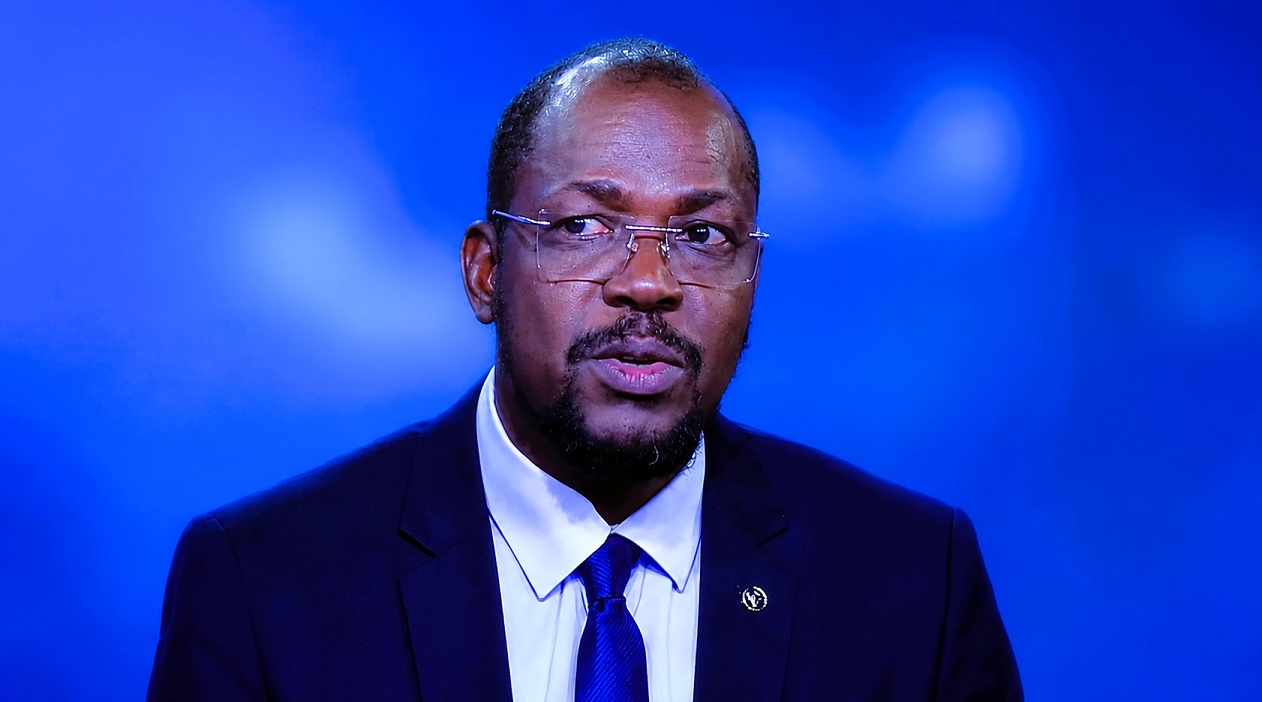
The security situation in Mali, particularly in Bamako, remains tense as civilians bear the brunt of a blockade that has crippled daily life. Étienne Fakaba Sissoko, spokesperson for the Coalition des Forces pour la République (CFR), argues that such a strategy inflicts suffering rather than resolves the crisis. «This blockade doesn’t work—it only deepens the hardship for Malians», he states. The CFR rejects this approach, emphasizing that a purely military response has failed and that a political solution is urgently needed to protect civilians and restore sovereignty.
Malians yearn for peace, not endless conflict
Launched in December 2025, the CFR has quickly gained traction as a platform for national salvation. «Malians want peace and a way out of this crisis», Sissoko explains. Unlike traditional political parties, the CFR positions itself as a unifying force between military rule and societal collapse. Its goal is to offer a credible alternative: a civilian-led transition that restores public freedoms, secures the population, and paves the way for constitutional reform and elections. «The presidency should not be the starting point but the outcome of a broader process», he insists, warning that elections held without security or consensus would only repeat past failures.
Dialogue is not an alliance—clarifying the CFR’s stance
Questions often arise about the CFR’s relationship with armed groups, particularly the Front de Libération de l’Azawad (FLA). Sissoko dismisses the idea of a formal alliance: «Dialogue does not mean coordination or military partnership». The CFR engages with all stakeholders but refuses to blur the line between political advocacy and armed struggle. Its core principles are clear: no partition of Mali, no military involvement, and a strictly republican framework for governance.
The Groupe de Soutien à l’Islam et aux Musulmans (JNIM)’s recent offensive has raised concerns about potential state collapse. While acknowledging the gravity of the situation, Sissoko rejects the notion that armed groups should automatically inherit political power. «A violent takeover provides no legitimacy», he argues. Instead, the CFR advocates for a civilian-led transition tasked with restoring stability, facilitating national dialogue, and organizing elections under safe conditions.
The role of religious leaders in a transition
Speculation surrounds the involvement of Imam Mahmoud Dicko in any future governance. Sissoko clarifies: «He is not a political leader but a moral authority». Dicko’s potential role would focus on reconciliation and trust-building, not executive power. «The legitimacy of leadership must come from the people and the ballot box, not from any single figure», he emphasizes.
No compromises on national unity or republican values
The CFR’s proposed dialogue with armed groups is not a concession or reward—it’s a pragmatic tool to end the war. However, its red lines are non-negotiable: Mali’s territorial integrity must be preserved, the republic’s institutions must remain intact, and fundamental freedoms cannot be sacrificed. The JNIM’s ties to Al-Qaïda further complicate negotiations, as such affiliations clash with the CFR’s vision of a strictly national peace process.
Regarding rumors about Iyad Ag Ghali abandoning transnational jihad, Sissoko remains cautious: «We don’t build strategy on assumptions». Actions—not words—must prove any commitment to peace: halting attacks on civilians, ensuring humanitarian access, and severing ties with foreign militant agendas. The CFR stresses that Mali’s crisis extends beyond its borders, making local solutions essential.
Decentralization, not division: a federalist vision within unity
Opponents often misrepresent the CFR’s push for decentralization as a call for theocracy or partition. Sissoko counters this: «The real issue is the collapse of local governance». In many regions, the state has vanished, leaving communities to rely on customary or religious leaders. The CFR does not promote Sharia law but seeks to restore a functional state that integrates local mediation within constitutional boundaries.
Its federalist model prioritizes resource allocation, democratic control, and regional autonomy while maintaining Mali’s unity. «A Mali that concentrates power in Bamako is ineffective», Sissoko argues. The state must retain its sovereign functions while empowering regions to manage their own affairs—securing services, justice, and economic development where they matter most.
A structured transition plan for Mali’s recovery
The CFR has developed a detailed transition program focused on «restoring a functional state». Key priorities include reopening schools, strengthening the judiciary, and protecting civilians. «Security, education, and justice are not luxuries—they are the foundation of reconstruction», Sissoko states. The plan also calls for securing economic corridors, restoring energy access, and addressing the humanitarian crisis.
On regional coordination, the Alliance des Démocrates du Sahel (ADS)—formed alongside the CFR—represents a civic convergence among Malian, Burkinabé, and Nigerien democrats. «This is not a military command but a shared commitment to defending public freedoms and solidarity», Sissoko clarifies. The ADS’s role is advocacy and coordination, not centralized political control.
The CFR’s vision rejects vengeance, partition, or a return to the past. Instead, it champions a transition led by civilians, a national dialogue grounded in transparency, and a recommitment to democratic choice. «The Mali we seek will not be saved by a strongman but by a strong national pact».