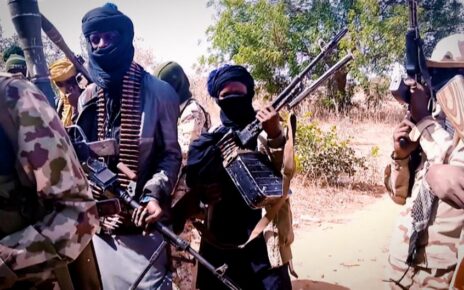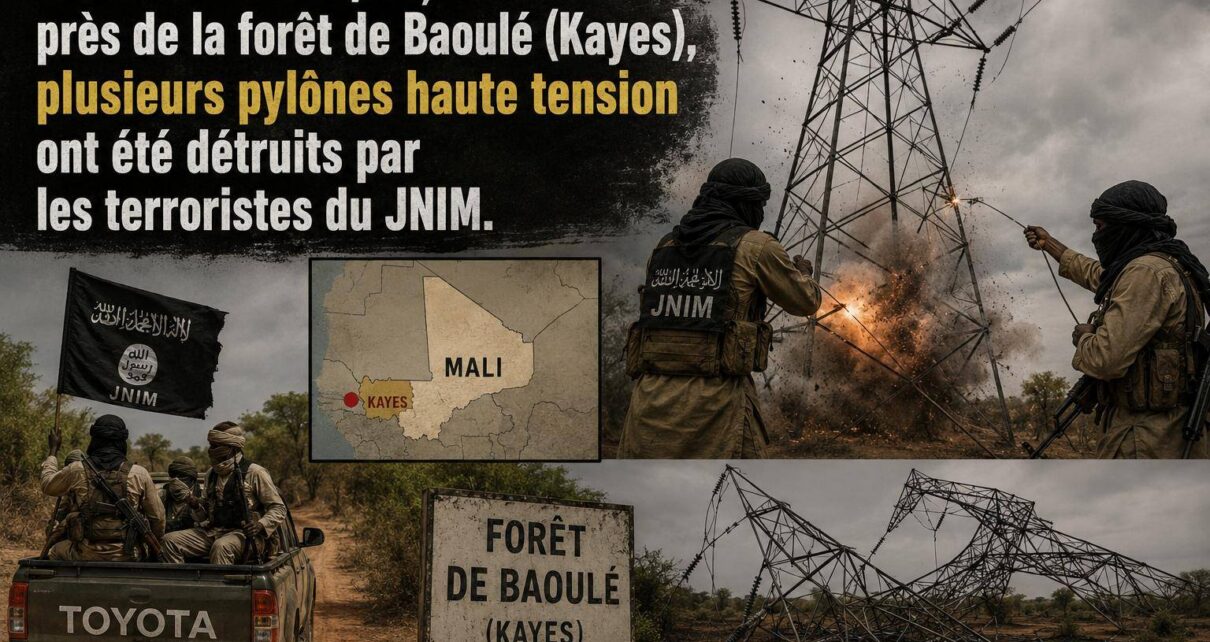
The weekend of May 10-11, 2026, has been etched into Mali’s energy crisis as a period of unprecedented sabotage. In the forested region of Kayes, near the Baoulé forest reserve, militants from the Group for the Support of Islam and Muslims (JNIM) destroyed multiple high-voltage transmission towers. This strategic attack unfolded under the watch of Africa Corps personnel, raising serious questions about the effectiveness of Russia-backed security operations in the country.
Energy sabotage targets Mali’s economic lifelines
What began as sporadic insurgent activity has evolved into a calculated siege on Mali’s infrastructure. After disrupting key road networks into Bamako—burning commercial trucks and civilian buses—the JNIM has escalated its campaign. By targeting power lines in the Kayes region, the group has directly threatened the daily lives of Bamako residents and the stability of the transitional government.
The attack was executed with disturbing precision. Towers near the Baoulé forest, located in remote terrain, were brought down using advanced explosive techniques. The resulting blackout plunged entire neighborhoods in the capital into darkness, exacerbating an already fragile energy situation. With temperatures soaring above 45°C, the loss of electricity has crippled water pumps, air conditioning, and medical services, turning basic survival into a daily struggle.
Africa Corps struggles to protect critical power assets
The irony is stark: the sabotage occurred in areas claimed to be secured by the Africa Corps and Malian armed forces. How insurgents managed to transport explosives, plant charges, and escape undetected raises concerns about the real-world effectiveness of this security partnership. Despite high-profile deployments and urban security demonstrations, the paramilitary group’s ability to prevent hybrid attacks on power infrastructure remains critically limited.
Drones and joint patrols have failed to detect or intercept the sabotage, casting doubt on their operational utility. For Bamako’s residents, this failure is the final straw. Government promises of fuel convoys and generator distributions ring hollow when the scale of destruction far exceeds available emergency responses. Hospitals, including emergency wards and maternity units, are operating with reduced capacity, putting countless lives at risk.
Regional threat looms over Manantali and Sélingué dams
The most alarming development is the JNIM’s shifting focus toward the Manantali and Sélingué hydroelectric dams. These facilities are not just Mali’s energy backbone—they are vital to the entire West African region. A successful attack could plunge not only Bamako into prolonged darkness but also trigger a cascading crisis affecting Senegal and Mauritania, both dependent on shared energy agreements.
The sabotage of trucks, then power towers, now dams reflects a deliberate escalation in insurgent strategy. The government and its Russian allies now face an existential challenge. Months of costly deployments have not secured national infrastructure or restored essential services. The rhetoric of territorial control clashes with the reality of crumbling power grids and collapsing public trust.
The time for bold statements has passed. The survival of the Malian state now hinges on urgent, real protection of its critical infrastructure. If the dams fall, so too will the credibility of the transitional government—and the dignity of the people it claims to serve.