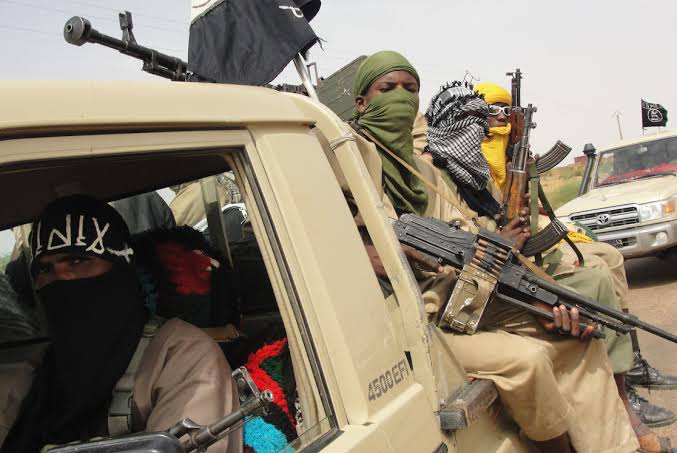
The people of Mali stand at a crossroads, trapped between the unyielding grip of the military junta and the advancing forces of the JNIM, an affiliate of Al-Qaida. With the capital Bamako under siege and the government’s credibility crumbling, citizens face an impossible decision: surrender to extremist rule or endure the failures of a regime that has lost control.
Junta’s hollow assurances amid growing jihadist dominance
General Assimi Goïta’s abrupt reappearance after the coordinated attacks on April 25 did little to reassure a skeptical public. In a televised address, he declared the situation “under control,” yet the facts tell a different story. The Front de Libération de l’Azawad (FLA) has reclaimed Kidal, while the JNIM has tightened its stranglehold on Bamako, enforcing a crippling blockade. The general’s insistence that Mali’s military remains capable of defeating these armed groups rings hollow, given that six years after seizing power, his administration still relies on defensive posturing rather than decisive action.
The junta’s repeated claims of military superiority ring increasingly hollow as the balance of power shifts in favor of the jihadists. With each passing day, the prospect of the JNIM seizing state control—once unthinkable—grows more plausible. The group’s stated goal, as outlined in a recent communiqué, leaves no room for doubt: once in power, their first priority will be the imposition of sharia law across the country. In areas already under their control, this transition is already underway, with civilians subjected to the group’s harsh interpretation of Islamic law.
Between a collapsing junta and a radical alternative
Some opposition figures, desperate for change, have floated the idea of a temporary alliance with the JNIM to oust the current regime. They speculate that a “softer” version of sharia might emerge from such a partnership. Yet the JNIM has shown no inclination to compromise. Their vision for a “new Mali” is one where democratic institutions are replaced by a theocratic order—one that offers no concessions to secular governance or human rights.
The junta’s own mismanagement has played a direct role in this crisis. By dismantling political opposition, silencing dissent, and imprisoning critics, the military leadership has inadvertently paved the way for the very forces it now claims to oppose. The vacuum created by authoritarian rule has been filled not by reformers or democrats, but by extremists who promise order through force. For the people of Mali, the choice between two oppressive futures has never been more stark.
The junta’s repression fuels instability
Rather than addressing the growing threat, the regime has doubled down on repression. Following the joint offensive by the JNIM and the FLA, several military officers were detained under murky circumstances. The abduction of prominent lawyer and political figure Mountaga Tall on May 2 symbolized the junta’s descent into lawlessness. Reports of state security agents carrying out such acts have drawn sharp criticism, with human rights advocates warning that the government’s crackdown on civic space is accelerating the country’s collapse.
The JNIM’s call for a united front against the junta, issued ahead of their April 25 offensive, underscored the depth of public frustration. The group framed their campaign as a patriotic effort to restore peace and inclusivity—ironic, given their own extremist agenda. Meanwhile, the junta’s promises of a “new Mali” have long since lost credibility. Both sides now offer only one certainty: a future where Mali’s sovereignty and stability are further eroded, and where the people bear the brunt of the consequences.
With no clear path to resolution, the nation remains suspended in uncertainty. The military’s failure to restore order has left citizens with a bleak dilemma: resist the extremists and risk further violence, or accept their rule and abandon hope for a democratic future. The longer this standoff persists, the more entrenched both the junta and the JNIM become—leaving Mali on the brink of irreversible transformation, whether by force or by faith.