Chahana Takiou summoned by cybercrime court in Bamako
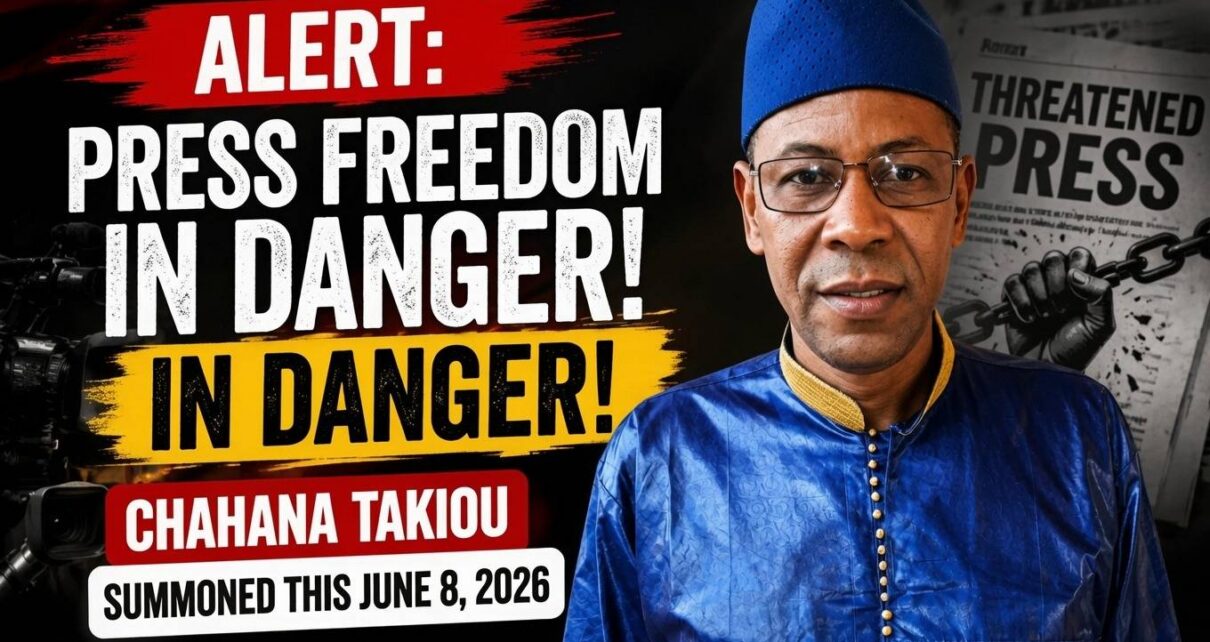
The director of the Le 22 Septembre newspaper, Chahana Takiou, has been ordered to appear before the cybercrime unit of Bamako’s prosecutor’s office on June 8, 2026, at 1 PM. The move follows his recent public statements criticizing the military junta’s handling of political, security, and economic affairs during the transition period.
The timing and context of this summons leave little room for interpretation: it is a direct response to journalistic integrity in a climate where dissent is increasingly criminalized. The cybercrime division, originally designed to combat digital offenses, has become a tool of judicial intimidation against media professionals who refuse to toe the official line.
Press freedom under siege in post-coup Mali
Once a beacon of press freedom in West Africa, Mali now faces a severe crackdown on independent journalism. The once-vibrant media landscape has shrunk under relentless pressure from the military-led government, which demands unconditional loyalty to its narrative. Reporters who dare to ask probing questions or challenge state policies face immediate retaliation—suspensions, fines, or administrative harassment orchestrated by the Haute Autorité de la Communication (HAC).
For Chahana Takiou and his colleagues, practicing journalism has become a high-stakes act of defiance. Every article published, every analysis shared, carries the risk of judicial persecution. The message from Bamako is unambiguous: only one version of reality is acceptable.
Enforced silence: repression beyond the courts
The intimidation extends far beyond legal proceedings. A disturbing pattern of abductions and forced disappearances has emerged across the country. Citizens, activists, and even casual social media users who voice dissent are being targeted by unidentified armed groups—widely believed to be linked to state intelligence services. Detainees are held in secret locations for weeks, their families left in the dark, creating an atmosphere of pervasive fear.
This systematic silencing is not just an attack on free speech; it is a calculated strategy to crush any potential for public dissent. By instilling terror, the junta aims to paralyze civil society and erase all traces of opposition, leaving no space for alternative perspectives.
Journalists unite against judicial harassment
In the face of such repression, Mali’s press corps is pushing back. Professional organizations and unions have rallied around Chahana Takiou, issuing urgent calls for solidarity and condemning the weaponization of justice to silence critics. Yet, their efforts are met with the brute force of a militarized state, where constitutional protections are routinely ignored.
Media advocates argue that constructive criticism is not a crime—it is the lifeblood of a functioning democracy, especially in times of crisis. But the current authorities in Bamako see dissent as treason, shutting the door on any possibility of pluralistic debate.
A nation at a crossroads
The June 8 summons is more than a personal ordeal for Chahana Takiou; it is a stark warning to all who dare to challenge the regime. By targeting a respected journalist, the military leadership is sending a chilling message: compliance is mandatory, and resistance will be met with repression.
As Mali grapples with deepening security and humanitarian challenges, this suppression of truth will not resolve its crises—it will only deepen them. The future of independent journalism and civic freedoms in the country now hangs in the balance, with the courts of Bamako serving as the frontline in this battle for democracy.