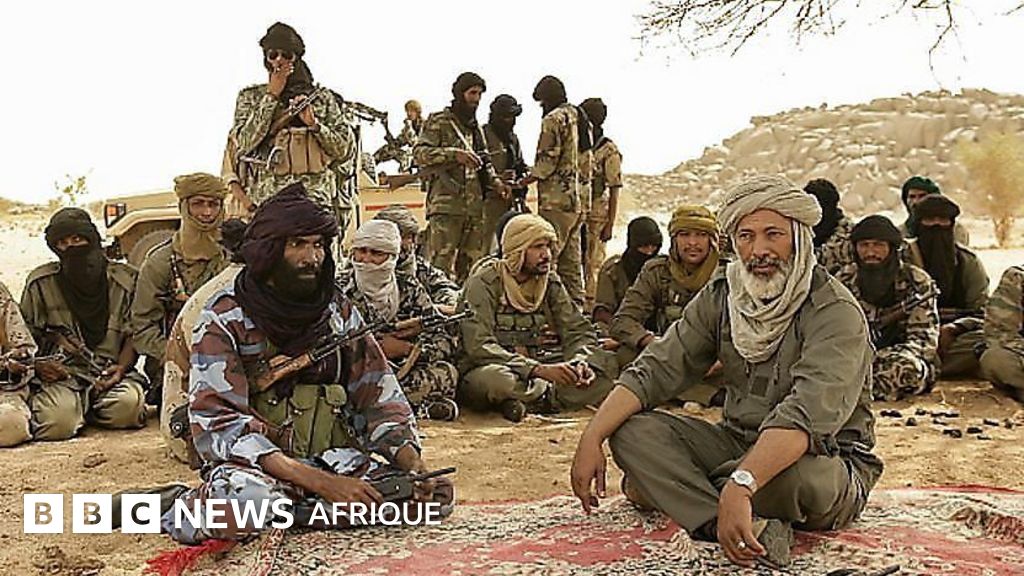
The Azawad Liberation Front (FLA), a prominent separatist movement, has recently launched a second military offensive this weekend, aligning itself with the Jamaat-e-Nosra al-Islam wal-Muslimin (JNIM). Their joint objective is to reclaim control over northern and central regions of Mali, currently held by government forces.
This latest push follows coordinated assaults initiated by the FLA and the Al-Qaeda-linked JNIM on April 25, which targeted various areas across Mali, including its northern, central, and southern territories.
The April attacks notably reached Kati, a critical stronghold for Mali’s military leadership, severely destabilizing the government under Assimi Goïta. The Minister of Defense, Sadio Camara, tragically lost his life, while intelligence chief Modibo Koné sustained grave injuries.
During those initial attacks, the FLA successfully retook Kidal, a city that had become a highly symbolic fortress for the Malian army and the Russian Africa Corps (AFRICC) troops following its capture in 2023, marking a significant military triumph in the country’s north.
However, the Malian army subsequently announced that it had regained control of Kidal after a swift counter-offensive launched in the wake of the April 25 assaults.
Reports from various social media channels and specialized security blogs focusing on the Sahel region indicate a renewed mobilization by the FLA, including the recruitment of local inhabitants in northern Mali, in preparation for their next offensive.
In response to the escalating threat, Malian authorities announced on June 4 a substantial reward totaling 12.4 million dollars for any information leading to the apprehension or demise of the leaders of both JNIM and FLA.
The Malian army, supported by the Africa Corps, has intensified its operations across the northern territories. Concurrently, significant investments are being channeled into military equipment to bolster defenses against potential future attacks.
Who comprises the FLA?
The Azawad Liberation Front (FLA) was established on November 30, 2024, in Tinzaouatene, a small town in northern Mali situated on the Algerian border. It emerged from the merger of various Tuareg and Arab separatist armed groups, all united by the common goal of achieving independence for Azawad.
Azawad refers to a vast region encompassing the cities of Gao, Timbuktu, Kidal, and Ménaka. This area was first declared an independent state in 2012 by the National Movement for the Liberation of Azawad (MNLA), one of the foundational groups that later formed the FLA.
The FLA succeeded the Permanent Strategic Framework for Peace, Security, and Development (CSP-PDA), which itself was a coalition formed by the amalgamation of several separatist factions.
These predecessor organizations included the MNLA, the High Council for the Unity of Azawad (HCUA), rebel elements of the Arab Movement of Azawad (MAA), and the pro-government Imghad Tuareg Self-Defense Group and Allies (Gatia).
The roots of Tuareg unity can be traced back to 1988 in Libya, where the Popular Movement for the Liberation of Azawad (MPLA) was founded by Algerian and Libyan exiles. This early movement was led by Iyad Ag Ghaly, who is now the current leader of the JNIM.
Bilal Ag Acherif, born in Kidal in 1977, serves as the President of the FLA, playing a pivotal role in the movement’s political direction and governance.
Alghabass Ag Intalla, Acherif’s trusted deputy, holds the position of FLA military chief and is responsible for reconciliation efforts and managing relations with the JNIM. Intalla is the son of the late traditional Ifoghas chief, Intallah Ag Attaher, who passed away in 2014.
Mohamed Ramadane acts as the group’s official spokesperson.
What are the FLA’s objectives?
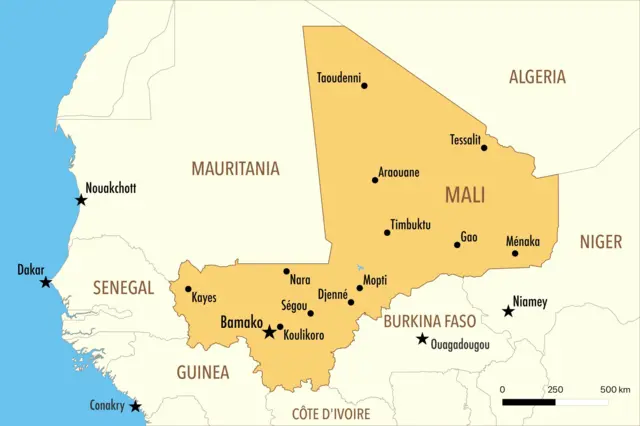
Since Mali gained independence in 1960, certain Arab and Tuareg communities have maintained opposition to the Malian government, leading to recurrent armed rebellions in 1962, 1990-1996, and most recently in 2012.
The FLA’s overarching goal is the establishment of a “Republic of Azawad.” This proposed homeland aims to unite approximately two million Tuaregs who are currently dispersed across West and North Africa, a fragmentation largely attributed to historical colonial influences.
The FLA asserts that the Malian government has subjected these communities to systemic political, economic, and cultural marginalization.
Despite the northern regions of Mali possessing rich reserves of valuable resources such as salt, uranium, gold, diamonds, and phosphates, government investment in fundamental infrastructure – including schools, health centers, water and electricity supply, and roads – remains notably insufficient.
Acherif recently articulated the movement’s rationale for independence, contending that Azawad “was annexed to Mali without due consideration for its history as an independent civilization.”
The Malian government has accused neighboring Algeria and Mauritania of providing support to the FLA. Algeria previously played a mediating role in the 2015 Algiers Accords, an agreement between the Malian government and northern armed groups, which Mali unilaterally abandoned in January 2024.
Additionally, Ukraine, Mauritania, and France have faced accusations of backing the FLA’s cause.
The precise number of FLA combatants remains unconfirmed. However, Ramadane has stated that the group maintains a “strong military presence extending from the Mauritanian border to the Algerian border.” Their primary camps are reportedly located near the Algerian frontier, particularly in Kidal and Tinzaouatine.
Between 2024 and 2025, the FLA primarily deployed kamikaze drones in their attacks. Nevertheless, the FLA frequently releases images depicting armed fighters, equipped with rifles, traversing the desert in long convoys of pickup trucks.
How have FLA and JNIM relations evolved?
JNIM leader Ghaly himself was a prominent figure in the Tuareg rebellion before shifting his allegiance to radical Islamist groups in the late 1990s. The current relationship between the JNIM and the FLA, however, solidified around mid-2024.
In May 2024, Ag Intalla reportedly indicated that the CSP-DPA had initiated discussions aimed at fostering a closer relationship with the JNIM. Ramadane later clarified that the FLA and JNIM had reached a “tacit non-aggression pact.”
Later, in July 2024, the CSP-DPA, with assistance from the JNIM, inflicted heavy casualties on Malian soldiers and Russian Wagner mercenaries during the Battle of Tinzaouatene.
The armed group subsequently criticized the FLA for allegedly failing to acknowledge the “sacrifices and generosity” demonstrated by the JNIM during these engagements.
By March 2025, Malian media reported that following talks held in late February 2025, the two groups had agreed to jointly combat the Malian army and Russian troops. This partnership was publicly acknowledged by both factions after the widespread attacks across Mali on April 25.
The FLA characterized this agreement as a “strategic convergence” aimed at overthrowing the Malian military government. Conversely, the JNIM asserted that this collaboration became feasible after the Tuaregs expressed their readiness for the “establishment of Sharia law.”
Acherif, in an interview with Al Arabiya Al Hadath, explained that the FLA and JNIM operate within the same geographical region and confront a common adversary.
He affirmed, “Ideological differences exist, but we are actively discussing local solutions to our shared challenges.”
Despite this declared alliance, the long-term viability of their partnership remains uncertain, primarily due to the inherent ideological divergences and distinct objectives of the two groups.