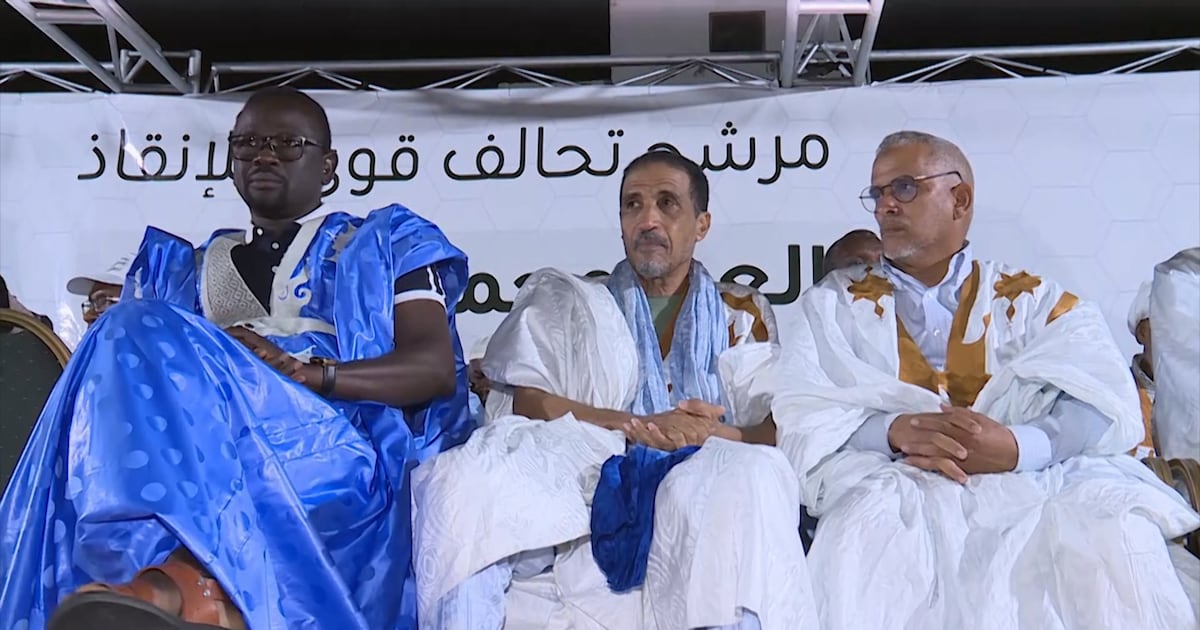
Professor Mohamed Maouloud steps into his new role as president of Mauritania’s opposition coalition at a pivotal moment in the nation’s history, following a massive public gathering in Nouakchott that drew tens of thousands of citizens.
The road ahead for Mauritania’s opposition
Mauritania stands at a crossroads, facing a cascade of pressing challenges that demand immediate attention. The stalled national dialogue process has been frozen for months, identity-based rhetoric has resurfaced with alarming intensity, and the eastern border regions with Mali remain under severe security strain. Meanwhile, ordinary Mauritanians grapple with soaring living costs that have pushed daily survival to the brink of impossibility.
Maouloud expresses deep concern about Mauritania’s current trajectory, particularly the blocked dialogue framework where critical national issues remain unresolved due to the exclusion of key stakeholders. “We cannot move forward when the very mechanism designed to unite our nation is deliberately obstructed,” he emphasizes.
Key priorities for the new coalition leader
Breaking this impasse tops Maouloud’s agenda. He has issued a formal appeal to President Mohamed Cheikh El Ghazouani, urging decisive action to prevent attempts by the ruling majority to introduce constitutional amendments that would enable a third presidential term—despite clear constitutional prohibitions and the absence of such provisions in any national roadmap.
The opposition leader warns that the deliberate sidelining of the national dialogue process by the ruling bloc threatens to destabilize Mauritania further. “This concertation isn’t just important—it’s the foundation for resolving every other crisis we face,” he states.
Urgency in national unity and border security
Maouloud paints a stark picture of a nation under multiple pressures. Rising ethnic divisions fueled by divisive rhetoric are tearing at the social fabric, while social media amplifies tensions. In the eastern regions, the spillover from Mali’s instability has worsened insecurity, displaced thousands of refugees, and forced the closure of borders—cutting off vital grazing routes for Mauritania’s herders and exacerbating food shortages nationwide.
These interconnected crises have become the focal point of the opposition coalition’s strategy. Restoring national unity, securing the border regions, and easing economic hardship now stand as non-negotiable priorities for Mauritania’s future stability.